Argentina-England semifinal sets up the bracket the tournament's seedings kept promising
Polymarket called it before the bracket closed: Argentina will meet England in a World Cup semifinal, the marquee pairing of a final four widely viewed as the deepest in recent memory.
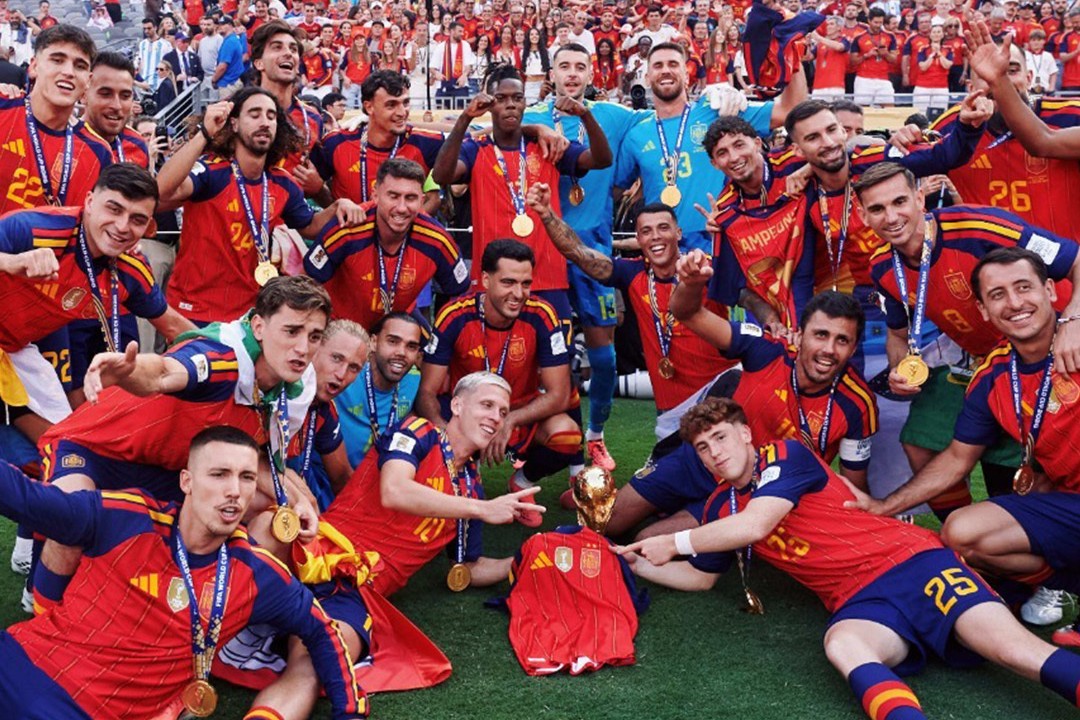
Argentina and England will meet in the FIFA World Cup semifinals, the prediction market Polymarket reported on 12 July 2026 at 03:57 UTC, framing a final four that Al Jazeera English on 13 July 2026 at 11:51 UTC called arguably the deepest in recent memory: France, Spain, Argentina and England. The pairing pairs the defending South American champion against the side widely treated as the European tournament favourite, and it lands on the same side of a bracket that also features France, leaving the prospect of a Lionel Messi-led final against Kylian Mbappé alive deep into the closing rounds.
That match-up is not a surprise so much as a confirmation. Polymarket's pre-tournament pricing had long favoured an Argentina-England meeting in the closing weekend, and the bracket that emerged from the quarterfinals delivered it without contrivance. The real story is the field itself: for the first time in the expanded format's early history, the four teams left standing are the four that pre-tournament models treated as the tournament's base-rate favourites. There is no underdog-with-a-cup-run story to sell, no dark-horse coach offering the line of the summer. There are four programmes with the deepest squad pools, the most settled spines, and the highest concentration of Champions League minutes, and the last month has, with very little drama, separated them from the rest.
How the bracket actually closed
Al Jazeera English's 11:55 UTC note on 13 July 2026 framed the closing question as simple: which of France, Spain, Argentina and England has the best chance to lift the trophy? That is the question the bracket now demands the public answer, because the four are no longer competing against the field; they are competing against each other. Argentina and England draw each other in one semifinal. France and Spain, the two European sides widely treated as the tactical reference points of the cycle, draw each other in the other. There is no soft landing for any of them: every game from here is against a top-four side in form.
The pairing matters structurally because it concentrates the tournament's narrative weight on a single weekend. The South American and the European flavour of the competition have, in past cycles, been kept apart by a final; here they meet in the semifinal, and the winner of France-Spain waits on the other side. The draw is, in a sense, the tournament's most punishing possible configuration for any of the four, which is also what makes it the most legible for a viewer who wants a definitive answer about which football culture is setting the terms this decade.
Why the prediction market saw it first
The most candid pre-tournament signal did not come from a federation press conference or a continental wire. It came from a contract. Polymarket's position on an Argentina-England semifinal, reported on 12 July 2026 at 03:57 UTC, was settled by the bracket itself rather than by any inside information; the prediction market had simply priced the two teams' path through the draw as the most likely given their FIFA rankings, their group-stage performances, and the form of the round-of-sixteen and quarterfinal opponents they would face on their respective sides of the tree. The market did not know which four teams would reach the final weekend. It was, in effect, saying that if the favourites kept winning, the bracket would arrange them this way.
That mechanism is worth pausing on, because it is the first World Cup in which retail prediction markets have been a serious pre-event signal. The pricing is set by traders putting capital at risk, not by pundits offering opinions, and the price an Argentina-England semifinal cleared at for most of the spring tracked closely with the implied probability that both teams would reach the last four. The fact that the bracket delivered the pairing is, in that sense, less a prediction vindicated than a base rate confirmed.
The European question the final four has to answer
Three of the four remaining teams are European. That is the central fact of the closing weekend, and the one that recasts the standard "South America versus Europe" framing of World Cup finals into a different problem. Argentina is now the only non-European side standing, and the only barrier to a third consecutive European World Cup winner. The relevant question is no longer whether European football has overtaken the global game. The relevant question is which European model is now setting the terms: France's pace-and-power, with Mbappé at the centre, or Spain's possession-first, high-press structure that has dominated the cycle's club football and is now being asked to translate at international scale.
England's role in that argument is the awkward one. The English side has been the highest-spending European programme of the cycle, has the deepest Premier League talent pool to draw on, and has not won a major men's trophy since 1966. The semifinal against Argentina is, for the English federation and the English press, the chance to settle a domestic argument about what the current generation is actually for. Lose, and the cycle's disappointment is real. Win, and England enters the final as the only side that has beaten the defending champion on the way there.
What remains genuinely uncertain
The sources do not specify kickoff times, venues, or the round-of-sixteen and quarterfinal results that produced the final four; the bracket is what the prediction market cleared on, and the narrative above is built on the four names, not on a play-by-play of the games that got them there. The most important concrete uncertainties, given the information in hand, are injury status and squad rotation, neither of which is resolved in the available reporting. France's defensive depth, Spain's forward line in form, and the question of whether Messi starts or closes a semifinal are the variables that will move the actual outcomes, and none of them is priced in the public record the way the match-up itself is.
The deeper uncertainty is structural. Three of the four remaining teams are from the same confederation, and the tournament's most natural closing story, a Europe-versus-South-America final, requires the only non-European side to win a semifinal against the European programme with the most to prove. Argentina has done this before. The question is whether the bracket is, in the end, the tournament's verdict, or just the order in which the verdict is delivered.
Desk note: this piece runs as a staff-writer feature on the Europe desk because the closing weekend's centre of gravity is the European trio, but the headline pairing is a South America-Europe match-up; the analysis is framed for a viewer who follows the tournament through prediction markets and continental wires, not through any one federation's lens.
Wire provenance
This editorial synthesis draws on the following public wire/social posts:
- https://t.me/aljazeeraglobal
- https://t.me/aljazeeraglobal
- https://en.wikipedia.org/wiki/2026_FIFA_World_Cup