Missiles hit Abha: another Saudi airport attack tests the Yemen ceasefire framework
Flights were suspended and passengers evacuated at Saudi Arabia's Abha International Airport on 13 July 2026 after reports of incoming Yemeni missiles, the latest in a string of strikes on southern Saudi aviation infrastructure.
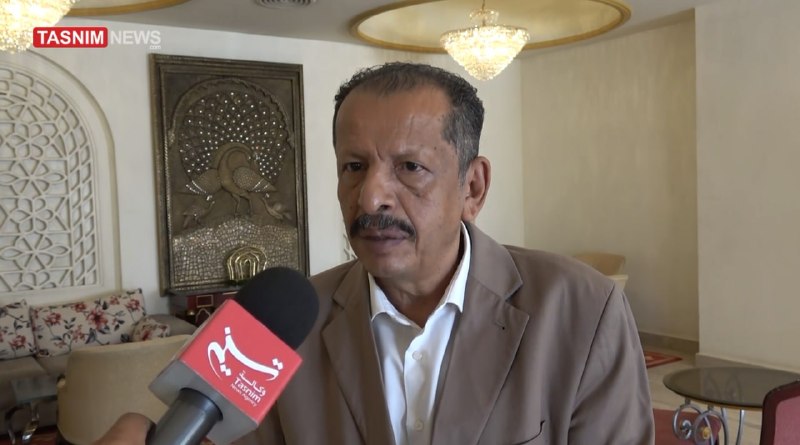
Flights were suspended and passengers cleared from Abha International Airport in Saudi Arabia's Asir province on Monday, 13 July 2026, after multiple Telegram channels reported incoming Yemeni missile fire and eyewitnesses described columns of smoke rising from the facility. Iran's English-language Press TV said six missiles had been fired from Yemen toward the kingdom, with Abha named as the target. Flight-tracking data circulated on the same channels showed aircraft diverting from the airport. No Saudi or Houthi official confirmation had been published at the time of writing.
The strike, if confirmed, lands inside a year of repeated long-range attacks on southern Saudi aviation and energy infrastructure. It is also the first major missile incident of July, following a relatively quieter stretch in June. For Riyadh, the operational question is no longer whether Yemeni projectiles reach Asir, but how many more critical nodes on the kingdom's southern flank absorb the cost before a sustainable deterrence arrangement takes hold.
What was reported, and by whom
The first wire-style alerts surfaced around 16:50 UTC on 13 July, when Tasnim, the English feed of Iran's semi-official Tasnim News Agency, said some news sources were reporting an attack on Abha International Airport. By 17:01 UTC, Press TV reported that six missiles had been fired from Yemen toward Saudi Arabia and named Abha as the target. Three further channels, intelslava, GeoPolitical Watch, and the Yemen-focused wfwitness feed, posted within the next ten minutes, citing eyewitness accounts of smoke rising from the airport and flight diversions visible on Flightradar24.
The sourcing is uneven. Tasnim and Press TV are Iranian state-affiliated outlets; intelslava is a conflict-tracking channel; GeoPolitical Watch and wfwitness are open-source intelligence aggregators that frequently cite on-the-ground accounts in Yemen. None of the six items carried an official statement from the Saudi-led coalition, the Houthi movement, or any Western military spokesperson. Saudi state media had not, at the time of writing, confirmed a strike; Houthi channels had not claimed responsibility. The picture is consistent with a missile impact at or near the airport, but the institutional record is still being assembled.
Abha's place in the targeting pattern
Abha is not new ground. The airport and the surrounding Asir air base have been struck repeatedly since 2019, when cross-border missile and drone attacks became a defining feature of the Yemen war's spillover phase. The airport serves both civilian traffic into Saudi Arabia's southwestern mountain region and military users, including the coalition's air operations into northern Yemen. Earlier strikes have prompted temporary shutdowns, runway inspections, and flight cancellations at neighbouring facilities including Jizan and Najran.
The pattern matters because each successful impact resets a Saudi calculation: how much sovereign airspace a regional power can credibly contest, and at what price. Civilian airports are high-salience targets. They generate international media attention, disrupt tourism and business travel, and force the kingdom to either escalate, striking Yemen harder, or absorb the cost and continue a diplomatic track that has, since 2023, alternated between prisoner exchanges, UN-mediated talks, and renewed Houthi attacks on shipping in the Red Sea and Bab el-Mandeb.
The ceasefire framework, and what is left of it
A fragile arrangement, brokered by Oman and the UN special envoy for Yemen in late 2023 and renewed piecemeal through 2025, had by mid-2026 reduced but not eliminated Houthi strikes on Saudi territory. The framework traded restraint on cross-border fire for a phased de-escalation in Yemen's internal front lines and a partial reopening of road access to Houthi-held areas. Critics inside Yemen, including the internationally recognised government's Presidential Leadership Council, have long argued that the deal implicitly recognised Houthi control of population centres in the north without securing a comparable political concession.
The 13 July incident tests whether the de-escalation survives. If the missiles are confirmed as Houthi-launched, Riyadh faces three options. It can treat the strike as a violation to be answered with a renewed air campaign, the playbook of 2019-2022. It can press for a stronger UN Security Council condemnation and tighten enforcement on arms flows into Houthi-held territory. Or it can absorb the strike and treat the framework as durable enough to ride out. The cost-benefit depends on a question the public reporting does not yet answer: whether Sanaa intends the 13 July strike as a tactical escalation or as a negotiating signal.
Stakes, and what to watch next
The immediate stakes are local. Abha's civilian flights matter to the kingdom's southwest, a region whose economic integration with the rest of Saudi Arabia rests on functioning air links. Disruption compounds across a week of cancelled tourism, delayed medical transfers, and insurance repricing.
The regional stakes are larger. Iran's position in this story is structural rather than operational: its state-affiliated outlets reported the strike first and most prominently, framing it as a Yemeni act of resistance rather than an Iranian-directed provocation. Whether that framing reflects the operational reality on the ground is a separate question. Houthi missile production has advanced substantially since 2019, with longer-range Burkan variants and a domestic drone programme now widely assessed as partly indigenous. The link to Tehran is a matter of degree, not of presence.
What to watch in the next 72 hours: a Saudi coalition statement; a Houthi military spokesperson's claim or denial; flight-tracking data confirming diversions and resumptions; and any movement on the UN-led political track that might indicate whether the strike is being absorbed into diplomacy or used to break it. Until at least one of those arrives, the reporting rests on Telegram-channel wire and eyewitness accounts, useful for timing and direction, less useful for attribution.
This publication framed the strike through the Yemeni and Saudi record rather than the Iranian one, and read Press TV and Tasnim as primary sources on Iranian framing while declining to treat their characterisations as factual claims about operational control.
Wire provenance
This editorial synthesis draws on the following public wire/social posts:
- https://t.me/wfwitness
- https://t.me/GeoPWatch
- https://t.me/intelslava
- https://t.me/JahanTasnim
- https://t.me/presstv
- https://t.me/tasnimnews_en