Venezuela's twin earthquakes leave a death toll climbing past 4,300, and a housing question Caracas cannot yet answer
Two quakes struck northern Venezuela last month. The official death toll now sits above 4,300, and authorities are racing to erect temporary housing before the rains return.
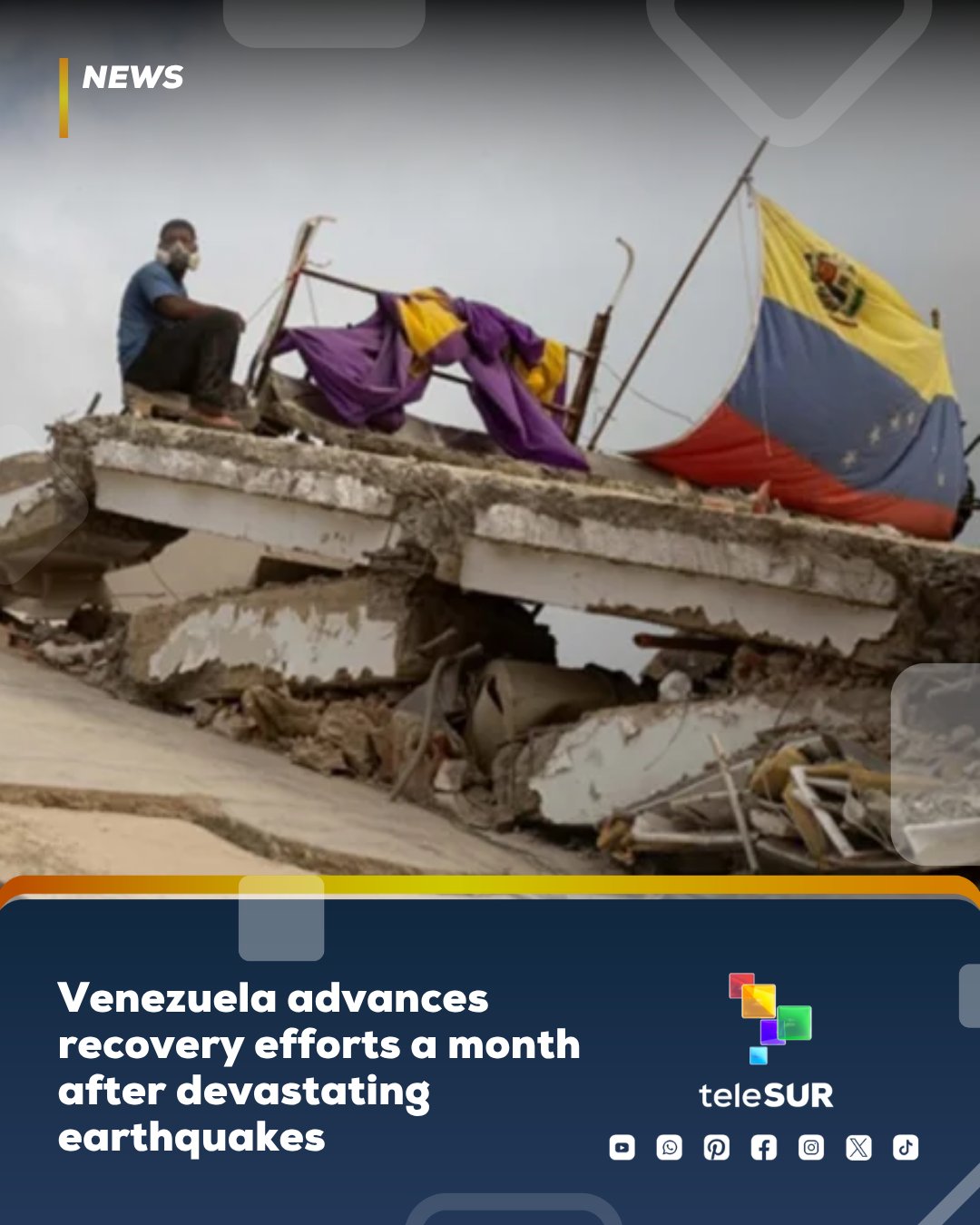
A teenager pulled alive from beneath the wreckage after 17 hours has become the most recognisable face of northern Venezuela's catastrophe, a disaster that, as of 12 July 2026, has killed more than 4,300 people and left thousands more without a roof. The figure is climbing, not because new temblors are striking, but because medical teams, municipal crews and forensic workers are still completing the count in towns that, two weeks after the first shock, remain reachable only by convoy.
What began as a pair of earthquakes in the country's north has hardened into a slow-moving humanitarian emergency, and the next phase is shelter. Caracas says it is preparing temporary housing for thousands of displaced families. The arithmetic, on paper, is straightforward. On the ground, in the hillside neighbourhoods that bore the brunt of the shaking, it is anything but.
A toll that keeps moving
Reuters reported on 12 July 2026 that the dual earthquakes had killed over 4,000 people, citing a survivor's account from a teenager who spent 17 hours trapped under debris before being pulled out. By the same afternoon, Deutsche Welle, citing Venezuelan authorities, placed the official death toll at 4,300 and rising, with the government sketching out plans for temporary accommodation for thousands of residents left homeless in the disaster's wake.
The gap between the two counts, more than 300 dead in a matter of hours, is not a contradiction so much as a snapshot of how disaster tallies move in a country where the institutional machinery for counting the dead is itself under strain. Bodies are still being identified in hospital morgues that ran out of refrigerated space within days of the first shock. The teenage survivor's testimony, distributed through Reuters, is the kind of human detail that pins an abstract number to a name and a neighbourhood, the difference between a statistic and a story a foreign desk can file.
The housing arithmetic
Temporary housing, in a disaster of this scale, is not a construction programme. It is a logistics exercise measured in weeks, not months. The Venezuelan government's plan, as described in Deutsche Welle's 12 July dispatch, is to erect enough transitional shelter to absorb the families who lost everything when their homes pancaked in the seconds between the first and second shocks. The plate tectonics of the disaster are not the only constraint: the political economy of who can import sheeting, who can truck it to remote municipalities, and who can staff the receiving centres is.
For a government already managing sanctions, currency controls and a contracted oil sector, the supply chain for even the most basic disaster response is non-trivial. The country that once exported its way to regional influence is now a net recipient of humanitarian assistance for events that, in better-funded neighbours, would be met from domestic reserves. The two facts coexist, and the reporting on the ground has to hold both at once.
What the wire coverage is leaving out
The dominant Western framing of Venezuela's disasters has, for two decades, been filtered through the country's political crisis. Earthquakes become a backdrop for arguments about sanctions, about the legitimacy of the government in Caracas, about the diaspora and the opposition. Reuters and Deutsche Welle have both, in this case, led with the human and the operational: a rescued teenager, a death toll, a housing plan. That is the right instinct.
What the available reporting does not yet address, and what the next 72 hours of coverage will have to grapple with, is the question of access. Which international agencies are on the ground? Which are still negotiating entry terms? Which opposition-led municipalities are coordinating with the central government, and which are not? The disaster is national; the response is unavoidably political, and the gap between those two facts is where the story will move next.
What to watch before the rains return
The northern coast's rainy season does not pause for reconstruction. The temporary housing Caracas has announced will be tested first not by its design, but by whether it can be sited, staffed and supplied before the next sustained downpour turns the displaced into the flooded. The official death toll will keep moving upward as forensic teams close out their caseloads; the housing count, in contrast, only matters if it moves in the other direction, toward more families under cover rather than fewer.
Two dates are worth marking. The first is whatever deadline the Venezuelan government sets for the completion of the first phase of temporary accommodation, a number the Deutsche Welle dispatch hints at but does not name. The second is the next regional coordination meeting of the humanitarian agencies already operating in-country, a forum that will, in effect, ratify whether Caracas is running the response on its own terms or ceding operational ground to outside bodies. Both are decisions that will outlast the news cycle this disaster has so far generated, and both will determine whether the teenager who survived 17 hours under the rubble has a country left to come back to.
This piece foregrounds the operational shape of the disaster, casualty accounting, shelter logistics, and the political economy of humanitarian access, rather than reopening the broader debate over Venezuela's sanctions regime. Monexus treats the crisis on its immediate terms first, while flagging the structural questions the next round of reporting will have to answer.
Wire provenance
This editorial synthesis draws on the following public wire/social posts:
- https://reut.rs/4w0mgfS