US launches third round of strikes against Iran after IRGC seizes Cyprus-flagged ship in Strait of Hormuz
US Central Command says it struck Iranian targets for the third time in a week after IRGC navy forces seized a Cyprus-flagged container ship in the Strait of Hormuz, leaving one civilian crew member missing.
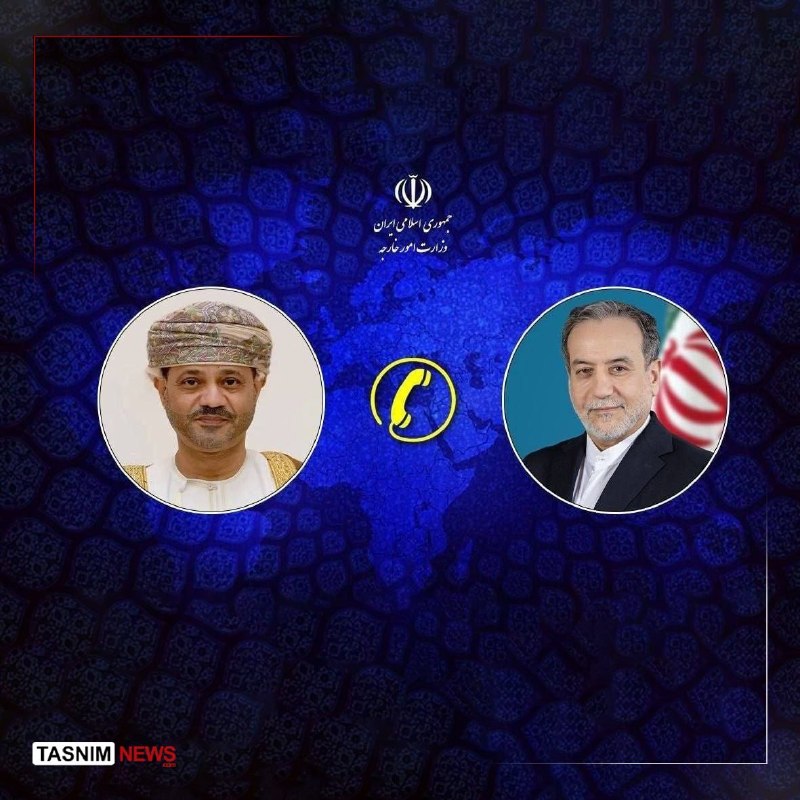
At 19:15 ET on 11 July 2026 (23:15 UTC), US Central Command forces began a third round of strikes inside a single week against targets in Iran. The trigger, according to CENTCOM's own statement circulated on Telegram, was an attack hours earlier by Iran's Islamic Revolutionary Guard Corps navy on M/V GFS Galaxy, a Cyprus-flagged container ship transiting the Strait of Hormuz. CENTCOM said one civilian crew member from the vessel is missing. The IRGC navy separately announced the closure of the strait, citing a vessel that had ignored its orders. The escalation puts roughly a fifth of global seaborne oil shipments on a military footing, and it places the United States and Iran on a glide path toward direct, sustained combat rather than the calibrated shadow war of the past eighteen months.
What changed on 11 July was not the fact of US-Iranian confrontation; that has been running in slow motion since the first round of strikes earlier this week. What changed was the type of incident at the centre of it. Shipping in the Strait of Hormuz had been harassed, not boarded. Iranian fast boats had directed traffic; they had not seized vessels under foreign flags. The reported seizure of M/V GFS Galaxy, and the simultaneous announcement that the waterway is closed, moves the dispute from coercion to interdiction. CENTCOM's third-round framing, "after Islamic Revolutionary Guard Corps forces blatantly attacked," is also unusually pointed in its diplomatic register. The American statement does not describe a probe, an interception, or an incident under investigation. It describes an attack, and it uses the word as a predicate for fresh strikes the same evening.
What CENTCOM says happened
The US command's account, as carried verbatim across multiple Telegram channels monitoring the region, runs as follows. At 19:15 ET on 11 July 2026, US Central Command forces began launching strikes against Iranian targets. CENTCOM attributed the decision to an attack by IRGC forces on M/V GFS Galaxy, described as a Cyprus-flagged container ship transiting the Strait of Hormuz. A civilian crew member is missing. The statement did not specify the number of strikes, the Iranian facilities hit, or the weapons used. It placed the operation explicitly in the sequence of a third round of strikes in a single week, indicating two earlier rounds preceded it inside the same seven-day window. The Iranian state-aligned channel Fars News International carried a complementary line, framing the American action as the launch of "the third round of attacks against Iran" by US Army forces, and identifying CENTCOM as the issuing authority.
The pattern of communication is itself part of the story. CENTCOM's statement circulated first on US-government-adjacent channels and was then re-broadcast across conflict-monitoring Telegram feeds, including Clash Report, RN Intel, and GeoP Watch, within minutes. Each carried the same wording, indicating a single source document and a deliberate release strategy designed for speed. Telegram channels with a sceptical posture toward US framing, such as DD Geopolitics, labelled the CENTCOM release "PR slop" but reproduced it in full. The uniformity of the underlying text across friendly and unfriendly channels is what gives it documentary weight: there is no ambiguity about what the American command claimed, even where the framing is contested.
What Iran says happened
Iran's account, filtered through IRGC-aligned channels, is shorter and earlier in the day. According to Intelslava's Telegram feed, the IRGC navy announced the closure of the Strait of Hormuz after firing warning shots at a vessel that "ignored orders and departed the designated" corridor. The incident preceded the CENTCOM statement by roughly an hour in published time. Iranian framing therefore presents a sequence: an Iranian interdiction order, a vessel's non-compliance, warning shots, and an American response framed as unprovoked escalation. The IRGC's own communications were not carried in full by the Western wire services in this thread; the available record is the Intelslava summary and the secondary Chinese-language DD Geopolitics channel. That asymmetry is worth naming. The Western-facing coverage of the evening of 11 July consists almost entirely of American statements. The Iranian counter-narrative is accessible primarily through Russian, Chinese, and Iranian-aligned aggregators.
The ship itself is a detail that both sides agree on. M/V GFS Galaxy is described as Cyprus-flagged. Cyprus's flag registry is one of the largest open registries in the world, with thousands of vessels under its colours owned by companies headquartered elsewhere. A Cyprus flag does not, by itself, identify the beneficial owner, the cargo, or the crew nationality. CENTCOM said a civilian crew member is missing. The Iranian-aligned channels did not, in the threads available here, address the missing crew member directly. The gap is consequential: it is the human cost claim that travels furthest in Western media, and the Iranian state has not, in this record, disputed it.
The shipping channel is now a theatre
The Strait of Hormuz is the most consequential energy chokepoint on the planet. The US Energy Information Administration has, in stable reference pages that have not materially changed for years, described the strait as the conduit for roughly a fifth of global oil consumption and a third of liquefied natural gas trade. That figure is structural; the precise percentage moves with supply, but the order of magnitude does not. When Iran says the strait is closed, and CENTCOM says it has struck Iran in response, the price of that closure is paid first by tanker operators, then by insurers, then by refiners, and last by motorists at the pump in countries that have no direct stake in the dispute. The shipping channel is not a metaphor. It is a 21-mile-wide corridor between Iran and Oman, and it has just become a theatre of operations.
Insurance markets will move first. War-risk premiums for transiting the strait were already elevated through the spring of 2026; a confirmed seizure of a Cyprus-flagged vessel, and a declared closure by the IRGC navy, will price that risk higher within hours. Charter rates for compliant tankers, the larger class owners that can reroute via Saudi Arabian east-west pipelines, will rise on the rerouting premium. Iranian crude exports, which have flowed at reduced but real volumes through the grey market of floating storage and ship-to-ship transfers, will be the supply-side casualty. The countervailing beneficiary is any pipeline system that bypasses the strait: the UAE's bypassing infrastructure, Saudi Arabia's Petroline, and Iraqi flows to the Mediterranean through Ceyhan. Each of those systems has spare capacity that will be booked out within days.
What we verified and what we could not
The hard floor of confirmed reporting for the evening of 11 July 2026 is narrower than the headline volume suggests.
Verified. That CENTCOM issued a statement at 19:15 ET announcing strikes against Iran. That the strikes were described as the third round inside a single week. That the stated trigger was an IRGC attack on M/V GFS Galaxy. That the ship is Cyprus-flagged. That a civilian crew member is reported missing. That the IRGC navy announced a closure of the Strait of Hormuz following warning shots at a non-compliant vessel. That Fars News International, an Iranian state outlet, framed the US action as a third round of attacks.
Not verified in this thread. The number or location of Iranian targets struck. The weapons used. The current status of M/V GFS Galaxy and the missing crew member. Whether other vessels were seized or merely warned. The Iranian government's formal response beyond the IRGC navy's closure announcement. Any independent corroboration of the casualty count on either side. The status of diplomatic back-channels, which Western reporting has consistently described as active even during open hostilities. Reuters, the Associated Press, the BBC, and Al Jazeera have not, in the threads available to this publication, carried independent confirmation of the third round. The record at this hour is the CENTCOM statement, the Iranian-aligned channel reporting, and the aggregator feeds that reproduced both.
The structural read
A pattern is visible underneath the day's headlines. The first two rounds of US strikes, earlier in the week, sat inside a recognisable template: limited objectives, named Iranian proxy assets, calibrated signalling. The third round, justified by a single maritime incident and a declared closure, breaks the template. It treats a tactical event, the seizure of one container ship, as the predicate for a strategic-level strike package. That is the language of escalation, not containment.
The plain editorial reading is this. The United States and Iran have moved from a regime of managed confrontation, in which strikes were episodic and reversible, into a regime in which any incident in the strait can be the trigger for the next round. The shipping channel is no longer a backdrop; it is the front line. The closure announcement gives Iran a lever it did not previously need to use: by declaring the strait closed, it forces every commercial and military vessel in the waterway to make a political choice about which flag to sail under, and which navy to defer to. CENTCOM's framing, in turn, gives the United States a casus belli that travels better than any of the proxy-related justifications that opened the week. Each side now has a self-contained argument for continuing. That is the condition under which wars, once avoided, become hard to stop.
The next 72 hours will test whether either side has an interest in de-escalation that exceeds its interest in continuing. Watch for three signals: a CENTCOM read-out with target detail, a Hormuz maritime authority statement that clarifies what "closed" operationally means, and any movement on the insurance and tanker markets that prices the closure as temporary or sustained. The price action will be the cleanest signal of how the market believes this ends.
How Monexus framed this: the wire record for the evening of 11 July 2026 is dominated by CENTCOM's own statement and by Iranian-aligned channels reproducing it. This publication treated the American statement as the primary document, the Iranian counter-narrative as a co-equal thread, and flagged the gap in independent wire confirmation rather than inferring it. The structural frame is the shift from managed confrontation to incident-driven escalation in the world's most important energy corridor.
Wire provenance
This editorial synthesis draws on the following public wire/social posts:
- https://t.me/thecradlemedia
- https://t.me/FarsNewsInt
- https://t.me/DDGeopolitics
- https://t.me/GeoPWatch
- https://t.me/ClashReport
- https://t.me/rnintel
- https://t.me/intelslava