US strikes on Iran's Qeshm Island: what is confirmed, what isn't, and why it matters
Iranian state-linked outlets report 10 to 20 US strikes on Qeshm Island on 12 July 2026. Independent corroboration is thin, the framing is contested, and the Strait of Hormuz sits nearby.
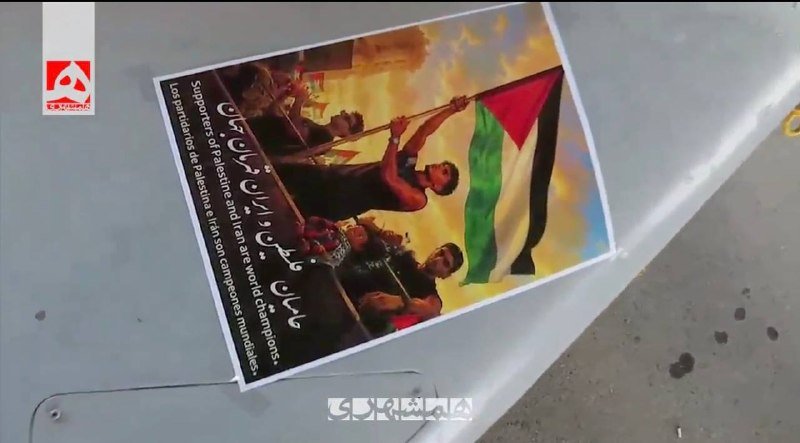
At 16:13 UTC on 12 July 2026, the Telegram channel Rerum Novarum posted geolocated footage it said came from Messen on Qeshm Island, framed as evidence of US strikes in retaliation for Iranian attacks on US vessels in the area. By 16:50 UTC, AP-cited reporting carried by Disclose TV said Iran was reporting new attacks on military targets on Qeshm. By 17:42 UTC, BRICS News was asserting a "new round" of US strikes on the island. By 17:46 UTC, the Telegram channel @englishabuali was aggregating Iranian-source claims of 10 to 20 American strikes inside the previous hour. The picture that emerges from the open-source wire in a 90-minute window is consistent in shape but loose in detail.
What is in motion is a US-Iran escalation that has moved from the maritime corridor into the territory of one of the Gulf's most strategically placed islands. Qeshm sits in the Strait of Hormuz, the chokepoint through which roughly a fifth of the world's traded oil moves. The framing now circulating, that Washington is hitting back at Iranian assets on Qeshm in response to Iranian action against US shipping, sets up a sequence whose next moves carry global commodity and diplomatic weight.
What the open wire actually says
Four distinct channels reported the Qeshm strikes within roughly an hour and a half. Their claims diverge in two ways that matter for any reader trying to gauge scale.
Rerum Novarum, an OSINT-oriented channel that geolocated footage from Messen on the island, framed the action as US retaliatory strikes for Iranian attacks on US vessels. That framing supplies motive but not a count. Disclose TV cited AP reporting that Iran was reporting "new attacks on military targets on Qeshm island," again without a tally or named target set. BRICS News used the strongest language, asserting a "new round" of US strikes, which suggests multiple waves but again gives no figure. @englishabuali, aggregating Iranian-source reporting, gave the most specific number on the board: 10 to 20 American strikes in the preceding hour.
No source in the cluster provides a US-side confirmation, no target list, no weapon system, and no casualty figure. The 10-to-20 range is an Iranian-source claim that has not, on the open wire at least, been independently corroborated.
The frame inside which this is being read
Reporting on US-Iran confrontation on the open wire has, for months, split along two consistent tracks. The first, dominant in Western wire reporting, treats Iranian action in the Gulf as the initiating variable and US or allied responses as defensive. The second, dominant in Iranian state-aligned and BRICS-aligned channels, treats US force posture in the Gulf as the initiating variable and Iranian action as responsive. Today's wire reads inside that second track: Iranian sources claim strikes; BRICS-aligned channels frame them as a "new round"; Iranian-aligned aggregators give a count.
Neither track is a neutral observer of the other. The honest editorial position is that motive is genuinely contested on the open record. Rerum Novarum's framing, that the strikes are retaliatory for Iranian attacks on US vessels, is a structural claim, not a documented one, and the channel's role is to publish and geolocate footage, not to adjudicate causation.
Why Qeshm specifically
Qeshm is not a random target and the geography matters. The island sits at the mouth of the Strait of Hormuz, just off Iran's southern coast, and hosts a mix of civilian infrastructure, Revolutionary Guard-affiliated facilities, and military positions that Western and Gulf-state analysts have long read as part of Iran's anti-ship and coastal-defence architecture. Strikes on Qeshm, if confirmed at scale, are not strikes on a peripheral site. They are strikes inside the perimeter that Iran treats as its own forward defence of the strait.
That is what makes the Iranian-source framing, which leans on the word "military targets," politically loaded. Iran has an interest in defining anything struck on Qeshm as a legitimate military site, both to insulate the strike narrative from civilian-harm critique and to signal that its forward-defence infrastructure is now in the crosshairs of a peer adversary.
What this would mean if it holds
If the strikes occurred at the scale Iranian sources are claiming, and if they are sustained beyond a single wave, the trajectory points in three directions at once. First, shipping insurance and freight rates through the Strait of Hormuz would reprice upward within hours, as they have on every previous escalation in this corridor. Second, Iran's own retaliatory menu widens: Iranian-aligned groups in Iraq, Syria, and Yemen have, on past record, been activated by events that Tehran frames as violations of its territorial depth. Third, the diplomatic off-ramp narrows. A strike set inside Iranian territory, even one framed as retaliation for a maritime incident, is the kind of event that pulls Gulf-state mediators off the phone and pushes European and Chinese capitals into emergency contact.
The counter-read is that the strike count may be lower than Iranian sources suggest, that the targets may be narrower than the framing implies, and that the reporting itself may be functioning as signalling in both directions. That counter-read cannot be confirmed on the open wire at this hour. It is, however, the read that any serious analyst would hold as a working hypothesis until either the US Department of Defense or an independent OSINT body publishes a corroborated target list and weapons-release record.
What remains uncertain
Three things are genuinely undetermined at the time of writing. First, the scale: the 10-to-20 figure is an Iranian-source claim, not an independent count. Second, the target set: no source in the cluster names specific facilities. Third, the casualty and damage picture: no source supplies one. The open-source channels that reported the strikes are operating off social-media footage, Iranian state-aligned reporting, and their own geolocation work; none of that is sufficient, on its own, to stand up a definitive picture. Readers should treat the headline as substantively real, the body of the reporting as Iranian-source-heavy, and the count as a claim rather than a measurement.
How Monexus framed this: the wire is reporting strikes on Qeshm through channels that lean Iranian-state-aligned or BRICS-aligned; Monexus has reported the claim, sourced the framing, and flagged the corroboration gap rather than adopting either side's framing as fact.
Wire provenance
This editorial synthesis draws on the following public wire/social posts:
- https://t.me/englishabuali
- https://t.me/bricsnews
- https://t.me/rnintel