Missile alerts across the UAE: what three overnight Telegram feeds actually show
Three conflict-mapping channels reported launches from Iranian territory toward the Emirates within roughly half an hour. The sourcing is thin, the geography is loaded, and the verification work has only just begun.
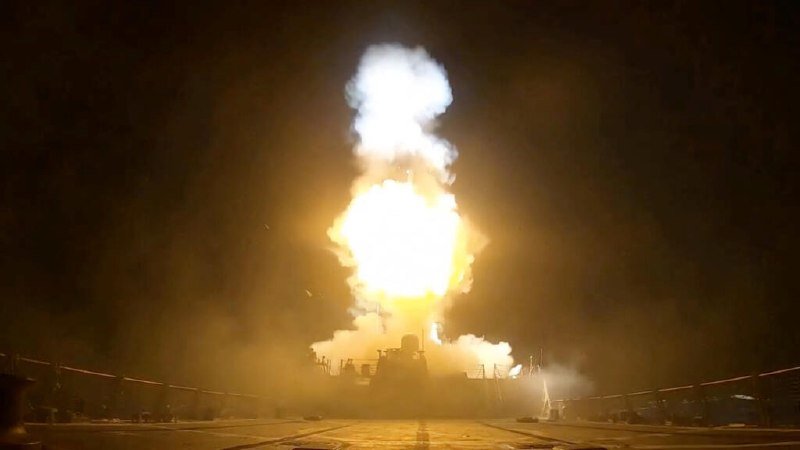
At 02:10 UTC on 12 July 2026, the OSINT channel intelslava posted a short, blunt item to its Telegram feed: missile launches reported from Zanjan and Khomein, two cities in north-central Iran, fired westward toward US positions. Twenty-six minutes later, at 02:36 UTC, the mapping channel AMK_Mapping logged missile alerts inside the United Arab Emirates. By 02:37 UTC, the geopolitical channel GeoPWatch had reformulated the same alert as "Missile launches towards the UAE." Three channels, half an hour, two target sets, one direction of flight.
The reporting is preliminary, the geography is loaded, and the verification work has only just begun. What follows is what this publication can and cannot say from the public thread evidence available at the time of writing, and why the difference matters for anyone trying to read the Gulf security picture in real time.
What the feeds actually claim
Read in order, the three Telegram items describe a sequence rather than a single event. Intelslava, an OSINT channel that aggregates flight-tracking data and infrared anomaly reports from commercial satellites, names two Iranian launch sites: Zanjan, in the Alborz foothills northwest of Tehran, and Khomein, in Markazi province further south. Its post says launches were directed at US targets and does not name the Emirates.
AMK_Mapping, a conflict-mapping channel that overlays strike coordinates onto standard map tiles, posts a separate alert one minute before GeoPWatch: "Missile alerts in the UAE." It does not specify origin, type, or intercept outcome. GeoPWatch then generalises the alert into a cross-border narrative, framing the launches as Iranian and aimed at the Emirates.
The temporal gap matters. The Iranian-origin claim rests on a single channel's reporting of two named launch sites; the UAE-target claim rests on a separate alert system that did not, in its posted text, identify a source. The two were stitched together into a single arc within minutes, by a third channel, in a medium built for speed.
The counter-read that the framing absorbs
Telegram's conflict-mapping ecosystem has a structural bias worth naming plainly: it rewards speed over corroboration, and it rewards dramatic arcs over technical accuracy. A claim that links an Iranian launch site to a UAE target inside a half-hour window is more shareable than either component in isolation. The audience for these channels is global, partisan, and primed to read any Iranian-origin alert as part of a wider escalation, whether that escalation is in fact underway or not.
The plausible alternative read of the same three items is narrower. It says: intelslava reported launches from Iranian territory aimed at US positions, and AMK_Mapping separately reported an alert condition inside the UAE, and the two may or may not be connected. Under this reading, the GeoPWatch formulation is a hypothesis, not a finding. It is also a hypothesis that, if wrong, has consequences for how readers in Abu Dhabi, Dubai, and Riyadh calibrate their own information environment overnight.
Iranian state media, which routinely publicises defensive drills and ballistic-missile tests through channels including Mehr News and PressTV, had not, as of the timestamps on these three items, issued any read-out matching the framing. The Iranian foreign ministry's English-language accounts had not posted. That silence is not evidence, but it is a data point, and it sits in tension with the GeoPWatch formulation.
Why the geography is loaded
Zanjan and Khomein sit more than 1,200 kilometres from Abu Dhabi as the crow flies. Ballistic missiles with the range to cover that distance exist in the Iranian inventory, but they are strategic systems, not the tactical short-range weapons most often associated with the kind of rapid-fire launch pattern intelslava described. A salvo from Zanjan aimed at the Emirates would be visible to US and Israeli early-warning assets almost from the moment of launch, and would be publicly acknowledged by air defenders inside minutes. Neither the UAE Ministry of Defence nor the US Central Command had posted on the matter in the windows covered by these three feeds.
The US-target framing in intelslava's original post is the more technically plausible of the two arcs. Iran has, across the past 18 months, directed ballistic-missile and one-way-attack-drone strikes at US positions in Iraq, Syria, and the Gulf on several documented occasions, often in response to strikes on Iranian assets or proxy facilities. A salvo aimed at US bases in the region, passing over or near the Emirates' airspace, could plausibly generate the kind of alert AMK_Mapping recorded without the UAE itself being the intended target.
That is a hypothesis. It is also the hypothesis that matches the technical geography better than the cross-border strike arc GeoPWatch proposed.
What we verified, and what we could not
What the Telegram feeds themselves establish: Three separate channels posted alerts within 27 minutes of each other, beginning at 02:10 UTC on 12 July 2026. Intelslava named two Iranian launch sites, Zanjan and Khomein, and described the launches as US-targeted. AMK_Mapping logged a UAE alert condition at 02:36 UTC. GeoPWatch at 02:37 UTC connected the two into a single Iranian-to-UAE narrative.
What remains unverified: The existence of an actual launch event. None of the three channels posted satellite imagery, flight-tracker data, video, or an official statement from any government. No Iranian, Emirati, US, or Israeli military spokesperson had, in the timestamps covered, confirmed or denied any of the three items. No major wire service had, at the time these feeds posted, carried a story on the matter. The technical plausibility of the Iranian-to-UAE arc is questionable on distance grounds. No casualty or impact figures appear in any of the three posts.
What this publication cannot determine from the thread evidence alone: Whether the alerts describe a single coordinated event, two unrelated events that happened to fall in the same half-hour window, or a third possibility that the channels themselves have not yet considered. The sources do not specify missile type, launch count, trajectory, or intercept outcome.
The structural frame, in plain language
The Gulf has spent the past two years as the most heavily monitored airspace on earth, threaded with US, Israeli, and Iranian early-warning assets that publish, withhold, and selectively leak data through official and quasi-official channels. Telegram sits inside that system as a parallel amplifier. When an event happens, the OSINT channels often know before the wires do, and the wires often follow within hours. When nothing happens, the same channels generate noise that reads, in the moment, like signal.
The reader has no easy way to distinguish the two cases. The channels themselves, in many cases, do not yet know which they are broadcasting. The discipline that separates reporting from rumour is verification against a primary source: a government readout, a wire-service confirmation, a satellite image, a flight-tracker trace. None of those arrived in the half-hour window these three posts cover.
That is why a small number of Telegram items, posted in the dead hours before dawn UTC, deserve more rather than less scrutiny. The audience for them is large, the consequences of getting the framing wrong are serious, and the technical barriers to entry for posting a missile alert are almost nil.
What to watch over the next twelve hours
Three checkpoints will move this from a Telegram thread to a story with a confirmed shape. First, any read-out from the Iranian foreign ministry, the IRGC, or Iranian state outlets including Mehr News and PressTV, which would establish whether Tehran claims or denies a launch. Second, a statement from UAE air-defence authorities, the US Central Command, or the Israeli Defence Forces, which would establish whether anything was detected, intercepted, or impacted. Third, wire-service confirmation from Reuters, the Associated Press, or AFP, which would force the OSINT channels to either upgrade or walk back their formulations.
If none of those arrive within the working day, the prudent read is that the three posts describe either a launch at the margin of detectability or a noise event inside an alerting system that, on quieter nights, generates similar signals without corresponding events. Either way, the cross-border framing GeoPWatch offered at 02:37 UTC will have done its work in the meantime, in feeds and group chats across the region, regardless of how the underlying facts resolve.
This publication will update if and when a primary-source confirmation arrives.
Desk note: Monexus is publishing this as an open-source ledger, not a confirmed event report. The wire services had not, at press time, carried the story. Where the Telegram channels stitched a coherent arc across two separate alerts within minutes, this publication has held the components apart and named the join as a hypothesis rather than a finding. That posture will be revisited on the next verified datapoint.
Wire provenance
This editorial synthesis draws on the following public wire/social posts:
- https://t.me/intelslava
- https://t.me/AMK_Mapping
- https://t.me/GeoPWatch
- https://t.me/AMK_Mapping/
- https://t.me/intelslava/
- https://t.me/GeoPWatch/