Two readings of the Strait of Hormuz on the same afternoon
Within two hours on 12 July 2026, the US military said the Strait of Hormuz was open to lawful transit. Iranian outlets said Iran is the one running it.
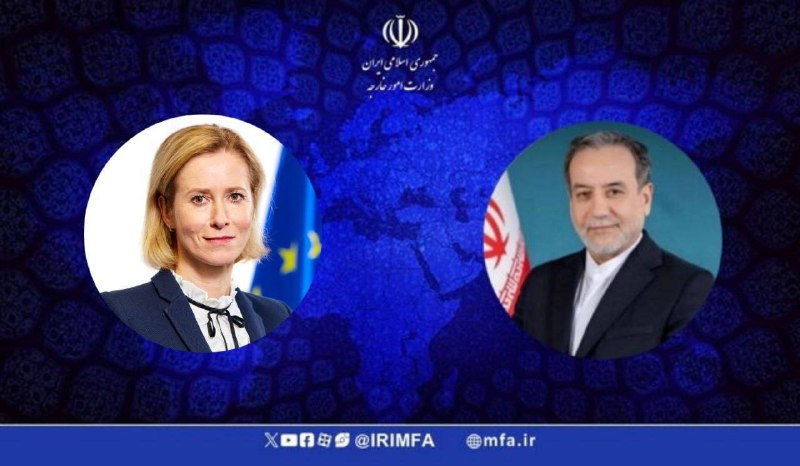
The two announcements landed within roughly an hour of each other on the afternoon of 12 July 2026, and they were not saying the same thing. At 12:46 UTC, BRICS News carried a US military statement that the Strait of Hormuz is open to all vessels lawfully transiting the international waterway. A Polymarket wire repeated the line at 13:36 UTC and again at 13:56 UTC, each time using slightly different phrasing. Then, at 14:19 UTC, Mehr News, an Iranian state outlet, pointed to "today's operation of the Islamic Republic in the Strait of Hormuz." Five minutes later, Tasnim quoted Ali Khazarian, a member of the National Security Commission of the Majlis: "The Islamic Republic of Iran manages the Strait of Hormuz with or without Oman."
This is not a contradiction in the usual sense. It is two orders of sovereignty, each laying claim to the same twenty-one-mile-wide chokepoint through which a significant share of seaborne oil moves. One announcement reads as a clearance for commercial traffic. The other reads as a doctrine of control. A reader sitting outside both briefings has to decide which grammar is doing the work today.
What Washington actually said
The US military statement, as carried by BRICS News, is narrow: the strait is open to vessels lawfully transiting. The verb choice is telling. "Open" presumes that the strait had, at some point, been treated as not open, or at least not unambiguously so. The qualifier "lawfully transiting" further narrows the addressees to commercial shipping behaving within the international maritime framework. The statement is a reassurance aimed at insurers, shipowners, and the oil futures market rather than a legal proclamation. It does not claim to administer the strait.
A separate Alalam item at 14:20 UTC, which references "Bazashkian" and praises fraternal cooperation with the Islamic Republic, sits adjacent to the other thread entries but reflects a distinct sub-story; it is not about the strait itself. The Polymarket wires repeat the US line verbatim, indicating that the news is being processed as a single discrete event.
The framing that emerges is transactional. Washington is signalling that, as of 12 July, the corridor is functioning for lawful commerce under US-led maritime security. It is the kind of statement that ends a market scare, not the kind that settles a sovereignty dispute.
What Tehran actually said
Mehr's anchor clip asks outright: "What is the message of today's operation of the Islamic Republic in the Strait of Hormuz?" The framing presumes an Iranian operation. Tasnim then puts words to it through Khazarian of the Majlis National Security Commission: Iran manages the strait with or without Oman. The qualifier "with or without Oman" is the load-bearing element of the sentence. It positions Iran as the residual sovereign of the corridor regardless of Muscat's role, implicitly contesting any architecture that would place the strait's security under a multilateral or GCC-led arrangement.
The two Iranian framings are not identical. Mehr speaks in operational terms, signalling to a domestic and regional audience that an Iranian mission in the waterway is underway. Tasnim's quote is constitutional: a Majlis commission member translating an event into a doctrine. Together, they construct a portrait of Iran as administrator rather than participant.
This is, at minimum, an asymmetric claim. The strait is legally an international waterway, and its security architecture has historically been a shared arrangement. Treating it as a unilateral Iranian jurisdiction is a posture, not a condition on the water. Whether shipping actually complies with that framing is a different question, and one the public sources so far do not resolve.
Two announcements, one strait
The interesting analytical move is to take both statements seriously without forcing them into agreement. The US military is telling commercial actors that the corridor is usable. The Iranian outlets are telling Tehran's audience that the corridor is administered. These can coexist if one is talking about behaviour and the other is talking about authority. The friction enters when a vessel, an insurer, or a foreign ministry tries to work out who has the last word when something goes wrong at sea.
The Omani subtext is worth pausing on. Khazarian's invocation of running the strait "with or without Oman" suggests Tehran is preparing for an arrangement that does not depend on Muscat's mediation. Oman has historically been a quiet broker on Hormuz-related diplomacy, a posture that served both Iranian and Gulf interests. The quoted Majlis position does not name Muscat as an adversary; it simply downgrades Oman's relevance in the explicit formula.
There is also a reading where Tehran's posture is reactive rather than assertive. A US statement declaring the strait open is, by its existence, an assertion of extraterritorial security responsibility in a waterway adjacent to Iran. Tehran's counter-language is partly about resisting the precedent the US statement sets, not just about controlling shipping.
What the wires don't tell us
The available sources do not specify what the Iranian "operation" entails, how many IRGC or regular navy assets are involved, or whether the operation overlaps with scheduled exercises. The US military's "open" formulation does not specify whether US naval units are escorting commercial traffic, which units issued the statement, or whether the wording reflects a posture change from earlier in the week.
A reader is also left to infer the implicit escalation ladder. If both statements are operational, a future incident will sort out who has the practical ability to enforce their version of events on a given tanker at a given hour. The filings as of 14:24 UTC are doing political work, not naval work.
For now, the most accurate summary is that the strait is being described twice over by the two powers with the most invested in how it is described. The next move belongs to whoever has to act, not speak, first.
This piece was written on staff-writer assignment from a four-item wire thread. Where Iranian and US framings diverge, both are presented; Monexus does not adjudicate the sovereignty claim, which is a matter of international maritime law beyond the scope of these filings.
Wire provenance
This editorial synthesis draws on the following public wire/social posts:
- https://t.me/s/BRICSNews
- https://t.me/s/mehrnews
- https://t.me/s/alalamarabic
- https://t.me/s/tasnimnews_en