Trump declares the Strait of Hormuz open. Iran's transit authority says it isn't.
A presidential declaration and an Iranian regulatory notice issued within the same hour contradict each other on whether commercial traffic can move through the world's most important oil chokepoint.
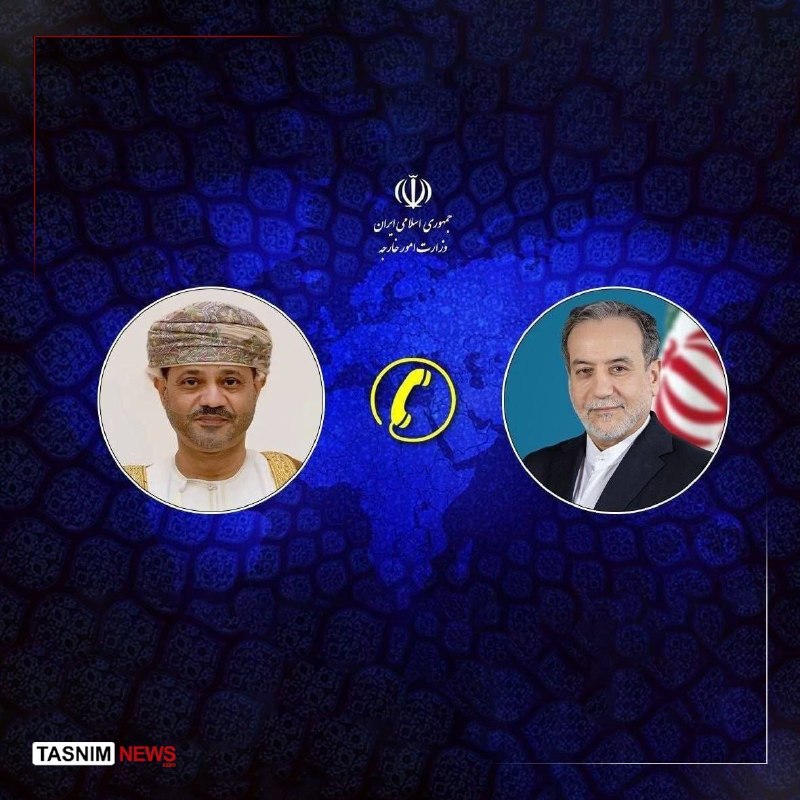
At 13:08 UTC on 12 July 2026, Iran's Strait Authority notified mariners that transit through the Strait of Hormuz was "temporarily suspended" in response to recent U.S. military actions in the region. Twenty-seven minutes later, reporting from Reuters carried a competing claim: President Donald Trump, declaring from a telephone interview with NBC News, said the Strait of Hormuz "is now open," with U.S. forces positioned to keep it that way. By 13:35 UTC, the same Reuters line had been pushed a second time. Two regulators, speaking inside the same half-hour from opposite ends of a 21-mile-wide waterway, had produced directly contradictory rulings on whether the world's most consequential oil chokepoint was passable.
The contradiction is not a news-cycle quirk. Roughly one-fifth of seaborne crude, and almost a third of seaborne liquefied natural gas, transits Hormuz on any given day. A traffic-control dispute inside that channel does not merely move paper prices in London and New York; it reroutes tankers, voids war-risk insurance, and forces buyers in Beijing, New Delhi and Tokyo to draw down strategic reserves. Whoever sets the rules of passage sets the tempo of the global energy market.
Two readings inside one chokepoint
The U.S. framing, as relayed by Reuters and repeated by the WarMonitors channel citing the NBC call, treats Hormuz as an international waterway whose freedom of navigation has been physically secured. The presence of U.S. forces off the Iranian coast is described as the operative fact: positioned and prepared to keep traffic moving. The implicit predicate is that threats to passage, whether Iranian or third-party, are being deterred rather than accommodated, and that commercial vessels may proceed on the strength of that deterrence.
The Iranian framing, issued by the Strait Authority and relayed by the ClashReport channel, treats the same waters as conditionally closed. The notice frames the suspension as a direct response to recent U.S. military action, which positions the closure as retaliation rather than assertion of sovereignty over the channel itself. Tehran has historically been careful to insist that Hormuz remains an international waterway even when Iranian forces have disrupted traffic in it; the language tracks that posture.
Both claims cannot be operationally true at the same time. Either the channel is open, in which case vessels may transit and insurers price war-risk accordingly, or it is suspended, in which case hull and cargo underwriters add premia in hours, charterers seek alternative routing, and Lloyd's List begins flagging the diversion. The market will price whichever version proves enforceable on the water.
Why the gap matters more than either version
The dispute exposes something structural about how chokepoint politics now works. Incumbent sea powers no longer rely on a formal blockade doctrine to control a strait; they rely on coordinated statements, naval positioning, and the willingness of commercial operators to act on one set of signals. Iran's Strait Authority regulates the bureaucratic perimeter: pilotage, transit windows, port-state clearances. The U.S. Navy regulates the physical perimeter: the actual capacity to interdict. For a tanker in the Gulf of Oman, both perimeters have to clear before a transit is viable. When those perimeters diverge, the burden of resolution falls on the master of the ship, the charterer paying the bill, and the underwriter pricing the risk.
This is also why a presidential declaration, however emphatic, does not by itself reopen a waterway. The signal matters because it tells markets, insurers and shipping desks that the U.S. is asserting navigational rights; it does not, on its own, instruct the Strait Authority to lift its notice. Iranian regulators can continue to suspend transit while U.S. naval commanders escort vessels through, producing a paradoxical environment where the channel is both closed and open depending on which authority you ask.
What the next seventy-two hours will tell us
The decisive evidence will not be a press conference; it will be AIS data on tanker tracks out of the Persian Gulf, war-risk insurance quotations from Lloyd's and the IG P&I clubs, and the first confirmed transit by a VLCC under a published notice of readiness. If at least one sanctioned, insured voyage completes the corridor under U.S. escort while Iranian pilots refuse to board, the market will treat the U.S. assertion as the operational fact. If, instead, vessels divert around the Cape of Good Hope or hold station outside the Gulf, the Iranian suspension will be treated as binding regardless of what is said in Washington.
There is also a collateral question that the sources do not resolve: whether "recent U.S. military actions in the region" refers to operations already in the public record, or to a new round of strikes whose details have not yet been disclosed. The Iranian notice frames the closure as a retaliatory measure; that framing presupposes an action. If that action is undisclosed, the suspension may be the first confirmation of it.
The stakes behind the signalling
For Tehran, the suspension demonstrates that Hormuz remains a card it can play, even if play is partial. For Washington, the counter-declaration demonstrates that the card can be refused. The dispute is being staged in public, in real time, for the benefit of three audiences: Beijing and New Delhi, whose energy imports depend on the corridor; Brussels, which is still recalibrating its sanctions architecture; and the oil futures market, which reprices within minutes of any credible disruption notice.
What remains contested is the part that determines everything else: which side's words will be matched by the behaviour of the next hull to enter the Strait.
Desk note: The wire services led on Trump's declaration; the Telegram channels led on the Iranian counter-notice, which preceded it by twenty-seven minutes. Monexus held both versions in the same paragraph rather than sequencing them, because the order in which the claims were issued is itself the news.
Wire provenance
This editorial synthesis draws on the following public wire/social posts:
- http://reut.rs/4wB2Eil
- https://t.me/ClashReport
- https://t.me/ClashReport
- https://t.me/WarMonitors
- http://reut.rs/4wB2Eil