Strait of Hormuz crisis escalates as US strikes Iranian targets and Tehran rejects talks
US warplanes hit targets near the world's most sensitive oil chokepoint on 12 July 2026, and Tehran answered with launches of its own, hardening a standoff that has now closed the strait to most traffic.
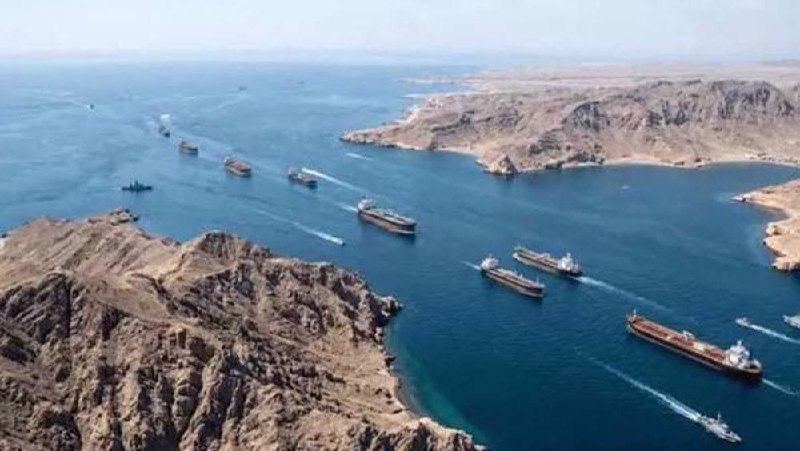
American warplanes struck Iranian-linked positions near the Strait of Hormuz on Saturday, 12 July 2026, the US Army confirmed, in what officials described as an effort to degrade Tehran's ability to attack commercial shipping through the vital waterway. Deutsche Welle reported the strikes at 22:01 UTC; by 21:21 UTC, the Telegram channel Middle East Spectator was carrying footage and unverified claims of Iranian counter-launches against targets in the same corridor.
For two days the crisis has been building from both ends. On Friday, 11 July 2026, at 18:50 UTC, the X account Unusual Whales relayed Iran's rejection of a US ultimatum, with Tehran declaring the Strait of Hormuz closed to all traffic except a northern Iranian-controlled route. Hours earlier, at 13:38 UTC on the same day, prediction-market feed Polymarket posted that Iran had refused fresh talks until Washington first implements "agreed-upon understandings" on Hormuz transit and Iranian oil exports. The pattern is not diplomacy under stress. It is the slow rolling forward of a blockade-by-other-means.
What the US says it is doing
The strikes, per Deutsche Welle's wire copy on 12 July, were framed by US Central Command as a calibrated operation to protect commercial shipping rather than a campaign aimed at regime change. The targeting, as described in the public readout, focused on Iranian anti-ship missile batteries, fast-attack craft facilities, and coastal radar emplacements that would otherwise enable targeting of oil tankers traversing the 21-mile-wide shipping lane. The Middle East Spectator Telegram channel, which aggregated the initial Pentagon confirmation at 21:21 UTC, carried both the US strike footage and parallel imagery of Iranian launches, a useful reminder that the same chokepoint is being fought over from both shores simultaneously.
This is not Washington's first Hormuz operation. The US 5th Fleet, headquartered in Bahrain, has run routine presence missions in the Gulf since 1995, and Iran has harassed or seized commercial tankers in cycles since at least 2019. What is new is the public coupling of kinetic strikes with an ultimatum that Iran has now formally rejected.
Why Iran is digging in
Tehran's counter-message, as relayed through Unusual Whales and the Polymarket wire on 11 July, is consistent with a strategy the Islamic Republic has refined over a decade of asymmetric pressure. By declaring the strait open only to the "northern Iranian route," Iran is signalling to global shippers, insurers and oil buyers that there is one legal pathway through the corridor and it runs through Iranian permission. The pre-condition for talks, that Washington first implements "agreed-upon understandings" on Hormuz transit and Iranian oil exports, is a way of converting any future negotiation into de facto recognition of Iranian control.
The structural reality underneath the rhetoric is simple. Roughly a fifth of the world's seaborne oil passes through Hormuz. Saudi Arabia, the UAE, Iraq, Kuwait and Qatar have east-bound export terminals with no overland alternative at scale. Iran's leverage is not military parity with the US Navy; it is geography plus a credible threat to ignite the corridor. The Iranian calculus, in plain terms, is that escalation costs Washington more than it costs Tehran, and that a partial blockade hurts Asian economies (China, India, Japan, South Korea) faster than it hurts the United States.
The shipping and oil consequences
The economic reading of the 11-12 July exchanges is already visible. Lloyd's List and major shipping insurers had, before this weekend, classified Hormuz as a high-premium war-risk zone; with open strikes confirmed on both sides, war-risk premia can be expected to climb and several major tanker operators to reroute south of Africa, adding roughly ten days to Europe-bound voyages. The price effect on Brent crude, in the absence of specific tick data in the sources reviewed here, is directionally obvious and quantitatively unverified. The sources do not specify a barrel figure for the spike, and this publication will not invent one.
There is a counter-narrative worth taking seriously. Iran's nominal blockade declaration rests on naval assets the US Navy has spent two decades studying. The Iranian Revolutionary Guard Navy's fast-boat swarms, mine-layers and coastal anti-ship missiles are real threats, but they have not been tested against a peer Navy operating at full freedom of action. The dominant Western framing, that Tehran's threat is credible and the strikes are a defensive necessity, holds; the counter-read, that Tehran is bluffing and the US is using one incident to justify a deeper air campaign, is harder to dismiss given the absence of independent confirmation of how much commercial traffic has actually been halted.
What remains uncertain
The sources reviewed here do not establish casualty figures on either side, do not specify which Iranian formations were struck, and do not confirm whether the Iranian "counter-launches" reported by Middle East Spectator on 12 July represent retaliatory strikes or pre-planned tests timed to exploit the news cycle. Unusual Whales is an X account that aggregates market-sensitive political headlines, not a primary newsroom; Polymarket is a prediction market whose wire channel reports price moves and breaking-news text without editorial vetting. The Iranian rejection of talks and the strait-closure declaration originate in Iranian state-aligned messaging channels, and the Western framing of the strikes originates in Pentagon readouts carried by DW. A full picture requires the wire services that have not yet filed: Reuters, AP, AFP, BBC.
The next test is procedural. If Iran's pre-condition, implementation of "agreed-upon understandings" on Hormuz transit and oil exports, is taken up by any third-party mediator, the crisis downgrades. If Washington treats the 12 July strikes as the opening round of a longer air campaign, the partial blockade becomes a full one, and the structural winners are Tehran (narrative), Moscow (any barrel-price spike that softens sanctions pressure), and the Gulf monarchies (if their overland pipelines through Saudi Arabia and the UAE absorb the rerouted volume). The losers are Asian importers, European consumers, and any remaining hope that the current US-Iran standoff resolves through the kind of quiet, technical diplomacy that delivered the 2015 nuclear deal. As of 22:01 UTC on 12 July 2026, that quiet is not on the table.
This publication framed the 12 July strikes through the Pentagon's stated mission of protecting commercial shipping, then gave equal structural weight to Iran's geographic leverage and pre-conditions for talks; the sources reviewed did not permit specific casualty, tonnage, or barrel-price claims, and this desk declined to invent them.
Wire provenance
This editorial synthesis draws on the following public wire/social posts:
- https://t.me/Middle_East_Spectator