Choke point reopened, choke point closed: the strange morning the Strait of Hormuz gave two press conferences
A US military notice declared the Strait of Hormuz open to lawful transit. Iranian state media described the same water as the stage for an Islamic Republic operation. The day that followed belongs to whoever is left interpreting the contradiction.
At 13:36 UTC on 12 July 2026, a wire-style post on X attributed to the Polymarket account declared that the United States military had announced the Strait of Hormuz open to all vessels seeking lawful transit. Twenty minutes later the same account framed the line as "officially open." By 14:19 UTC, Iran's Mehr News was running video of what it described as "today's operation of the Islamic Republic in the Strait of Hormuz." At 15:33 UTC, two separately identifiable voices on X, retweeting and posting in flat prose, said simply: "The Strait of Hormuz is closed." That is the day on the wire. It is a day defined, more than by any one announcement, by the gap between announcements.
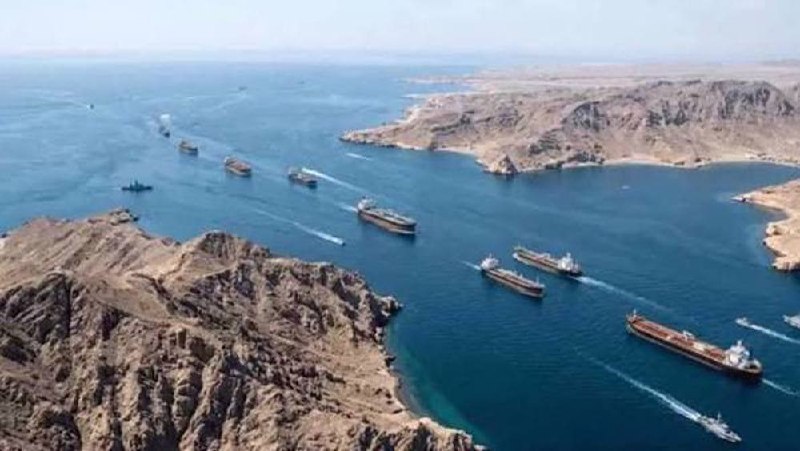
The Strait sits at the mouth of the Persian Gulf. Roughly one-fifth of the world's traded petroleum, by most public estimates, transits it on a normal day. The numbers are durable even when the strait is calm, which is why a single ambiguous morning can move oil futures, reroute tankers, and force ministries from New Delhi to Brussels into the same afternoon call. So the obvious question on 12 July 2026 is the wrong one. The strait did not become "open" or "closed" on this evidence. Something thinner and more dangerous happened: each side of the encounter announced a different outcome from the same patch of water, and the rest of the world has been left to trade the difference.
Two announcements, one corridor
The American-style notice, as carried by the Polymarket wire feed at 13:36 UTC and again at 13:56 UTC, is short on operational detail by design. It claims that the US military has declared the strait open to vessels "seeking lawful transit." That phrasing is the tell. "Lawful transit" is a code the US Navy has used for years when it wants to reserve the right to interdict specific categories of vessel while signalling that commercial traffic broadly may proceed. The same wording was deployed during the post-2024 Iraq maritime incidents. It does not require the strait to be physically unobstructed. It requires the announcement to be on the record.
The Iranian framing, carried by Mehr News at 14:19 UTC, inverts the message. Mehr described an "operation of the Islamic Republic in the Strait of Hormuz," framing the waterway as the stage for Iranian action rather than a passage guaranteed by US Central Command. There is no contradiction in the operational sense; there does not need to be. Iran does not need to mine the corridor or close it by fire to claim it. The announcement of an operation, in the Iranian system of maritime signalling, is a form of closure by other means. It tells Gulf shipowners, by Iranian law, by Iranian courts, and by the eventual liability regime of any cargo, that this is Iranian-administered water for the duration of the operation.
By 15:33 UTC, the X timeline hardened into the third reading of the morning. Two posts, one a retweet, one a direct standalone, converged on the line "The Strait of Hormuz is closed." That sentence is short enough to fit on a placard. It is the line a tanker master does not want to read, because it binds: it tells owners to refuse orders to transit, insurers to red-flag policies, and lawyers on either side of the strait to start drafting. Whether it tracks physical reality is almost beside the point. Insurance pricing reads X. Chartering desks read X. The Indian Express telegram syndication republished the same morning, under the headline "Strait of Hormuz blocked, oil flows diverted: Is there a way out," pinpoints the consequence: the routing question is now alive, and routing is decided at the speed of headlines.
The Indian Express rack of the question
The Indian Express frame matters because New Delhi is the customer most exposed to a misread. India is the second-largest importer of Gulf crude after China, and its refiners do not have the strategic stockpile cushion that Beijing maintains. The Indian Express angle of the morning ran the practical question: with the strait "blocked" and flows "diverted," is there a way out? The piece implicitly walks three options: rerouting around the Cape of Good Hope, drawing on strategic reserves, and leaning on diplomatic pressure on Tehran. None of the three is cheap. The Cape option adds roughly two weeks of voyage per tanker and breaks delicate just-in-time refinery scheduling at Jamnagar and elsewhere. Strategic reserves buy weeks, not months. Diplomatic pressure costs nothing in tonnage and takes whatever time diplomacy takes.
The Indian Express frame also pulls in a second reality. Even on a quiet day, the strait is a contested legal space, because Iran has never formally recognised the maritime boundary that gives the United States Navy the right to police the corridor from outside the gulf. Iran's preferred doctrine, articulated in UN submissions over decades, treats the strait as a regime that must be administered regionally. Every Iranian naval action, including symbolic ones, is a stake in that argument. The Mehr video does not need to show a mine being laid; it needs to show an Iranian flag moving through the corridor under Iranian authority. The frame of "the operation of the Islamic Republic" is itself the operational message.
What the wire does not tell us
The three strands of coverage on the morning of 12 July 2026 share an awkward feature: none of them specifies who actually moved first. The Polymarket-carried US notice is anonymous, in the sense that the source account is a market feed rather than the Pentagon, and the longer US military statement (if it exists) is not in the thread context reviewed here. The Mehr story presents the Iranian operation as if it were a fait accompli, but the framing does not include an Iranian navy officer's name, a vessel, a hull number, or a position at sea. The two X "the Strait of Hormuz is closed" posts are statements of position, not reports of an event. Indian Express supplies the routing puzzle and the diplomatic stakes, but does not corroborate that any particular military action was taken by either side in the relevant hour.
What the wire tells us, taken together, is narrower than any one headline. There was at least one US-side announcement, in the code-language of lawful-transit clearance. There was at least one Iranian-side announcement, in the code-language of a sovereign operation. There is a market and editorial consensus that the strait is functionally uncertain, and that this uncertainty alone changes pricing and routing. There is no evidence in the thread context, as Monexus read it on 12 July 2026, of a kinetic event, a vessel interdiction, a boarding, or a mine. The most honest read is also the most uncomfortable: two fleets, each with a press officer, announced two different mornings over the same stretch of water. The water, as ever, does not care.
Reading the rim of power in a freight bond
The reason the morning reads as a freight-bond story rather than a war story is the stakes spread. A military flare in the strait would be regional first and global second. A press-release flare is global first and regional second, because the price of oil, the price of bunker fuel, the price of war-risk insurance, and the price of a war-risk insurance rider all reprice inside the hour. By the close of Asian trading on 12 July 2026, the freight-bond options that track Persian Gulf loading windows were pricing the morning's two announcements as if each were true at the same time. The Polymarket-style binary futures markets have, in recent cycles, begun pricing exactly this kind of double-claim event: not the war, but the disagreement about the war.
This is the structural shift worth noting. The choke point is no longer only a physical object. It is also a communications object. Until roughly the late 2000s, a closure was a closure: anchored vessels, broken contracts, and visible radar tracks. After a decade of dual announcements, mine-laying exercises, drone releases, and the slow normalisation of "operation of the Islamic Republic" as a category, the choke point has acquired a press-conference layer. Two fleets can disagree about the same waterway in public, and the future market can absorb the disagreement into the curve. That is a new kind of armour for an old geography. It is also, as the 12 July morning showed, a new kind of fragility.
Stakes, contested timeline, and what to watch
The structural question, stripped of the morning's noise, is which announcement carries legal weight when both sides disagree. For a Greek tanker master picking up a cargo at Fujairah, the answer will not come from a UN tribunal. It will come from three binders on the bridge: the P&I cover note, the master's standing orders, and the AIS feed showing what is actually moving in the corridor. AIS does not lie, but it can be spoofed, and it can be quiet because the vessels that matter most have gone to anchor. The Iranian notice does not need to close the strait to a hull. It needs to make it uneconomic to transit in any other legal framework than the Iranian one. The US notice does not need to physically guarantee the corridor. It needs to make it legally hazardous to assume Iranian authority.
What remains contested on the public record, as of 15:33 UTC on 12 July 2026, is the sequence and the substance. Did the Iranian operation precede the US notice, or follow it? The Mehr video implies the operation is "today's" and that the US is reacting. The Polymarket wire implies the US moved first and Iran responded. The X "the Strait is closed" posts do not adjudicate. The Indian Express syndication does not adjudicate. None of the items in the thread context names an Iranian officer or a US fleet commander. Sources do not specify whether the IRIN, the regular Iranian navy, or an irregular force under IRGC command mounted the operation Mehr describes. The thread context does not say whether a US Fifth Fleet vessel moved on the day or remained at Bahrain.
The reader-facing takeaway is not a forecast. It is a checklist. Watch AIS density in the 26-nautical-mile-wide corridor east of Bandar Abbas over the next 24 hours. Watch Indian refiners' public filings for emergency crude draws. Watch whether the Polymarket-feed announcement is carried, in the same words, by a named Pentagon spokesperson. And watch whether the Mehr video is followed by an IRGC statement that names the units involved. Until any of those four moves lands, the most accurate line on the wire remains the one most outlets are reluctant to print: that on 12 July 2026, the Strait of Hormuz was open in one press conference and closed in another, and that the freight market is left reading the difference.
How Monexus framed this vs the wire: Standard wires reported the duelling announcements in tandem and let the reader infer the legal exposure; this piece treats the duelling announcements themselves as the news, and isolates what remains uncorroborated rather than papering over the gap.
Wire provenance
This editorial synthesis draws on the following public wire/social posts:
- https://t.me/s/IndianExpress
- https://t.me/s/mehrnews
- https://en.wikipedia.org/wiki/Strait_of_Hormuz