Sheikh Hamad's long shadow: Qatar's former emir and the diplomacy that outlived him
Sheikh Hamad bin Khalifa Al Thani, who ruled Qatar from 1995 to 2013, has died at 74. His mediation record, from Beirut to Gaza to Khartoum, set the template that his son now operates inside.
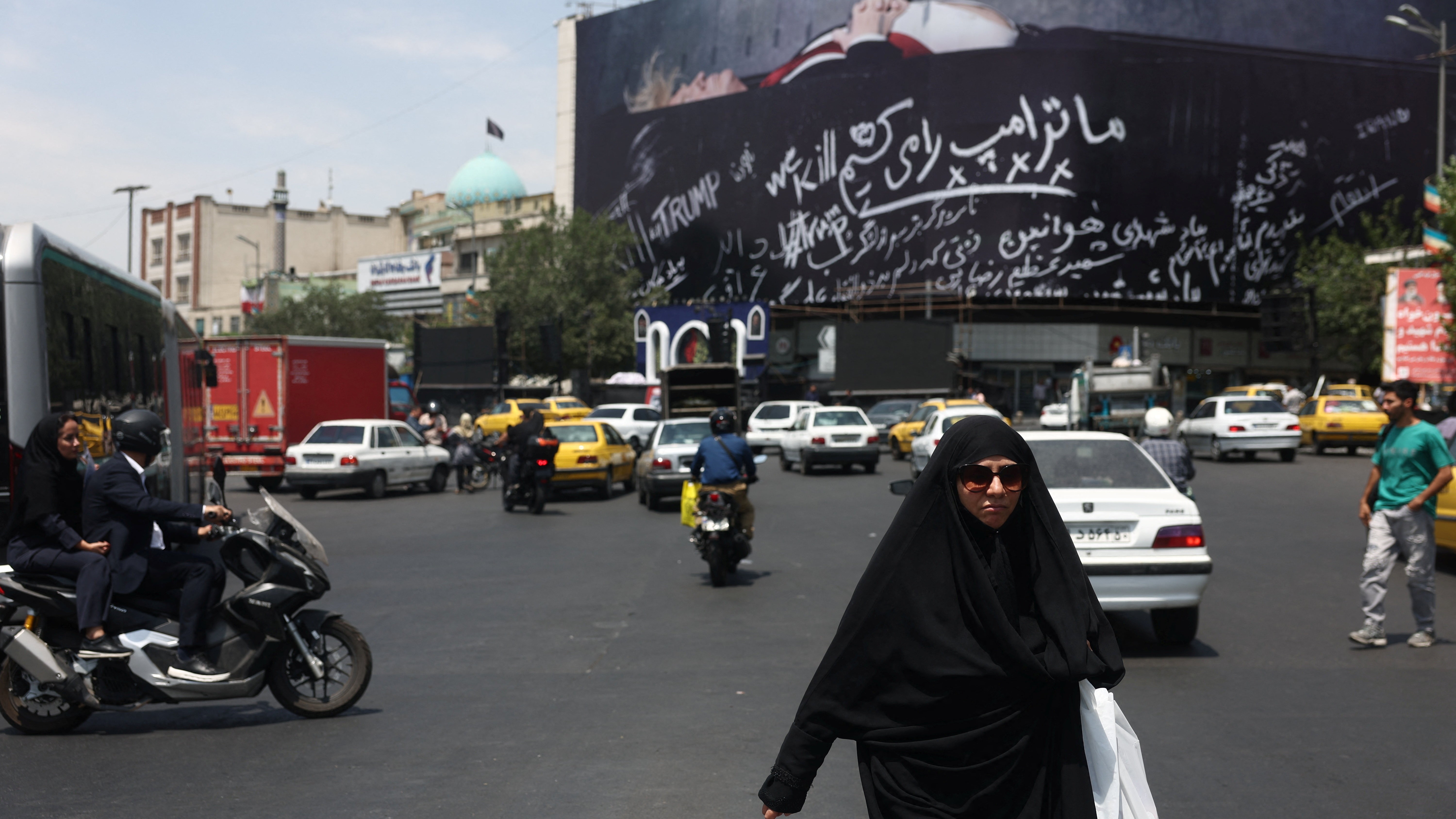
Doha announced on 12 July 2026 that Sheikh Hamad bin Khalifa Al Thani, the emir who ruled Qatar from 1995 until his voluntary abdication in 2013, had died at the age of 74. State-linked outlets suspended programming, flags went to half-mast across the Gulf, and tributes began arriving within minutes from Riyadh, Abu Dhabi, Ankara, Cairo and Ramallah. The al Jazeera global wire carried the breaking notice at 11:21 UTC; a longer report on the national mourning followed at 12:10 UTC; a piece cataloguing his mediation record at 13:04 UTC; and a separate dispatch on his legacy in Palestine at 13:21 UTC.
What dies with him is not a court but a method. Sheikh Hamad built, over eighteen years on the throne and a decade in retirement, a diplomatic instrument that no other small Gulf state has matched: an insistence on talking to every armed faction, every occupied population and every rival capital at once. His son, current Emir Sheikh Tamim bin Hamad Al Thani, inherits the platform, the airline, the broadcaster and the contact list, but the philosophy that held the project together was his father's.
The 1995 turn, and what it cost
Qatar was a Saudi-aligned backwater when Sheikh Hamad took power in June 1995, sidelining his father in a bloodless palace move while the heir apparent was abroad. Within months he had launched al Jazeera, with an initial grant of around 137 million Qatari riyals, and was cultivating contacts with every Islamist movement from the Muslim Brotherhood to Hamas to the Taliban. The bet was that visibility, not quiet deference, was the only asset a state of Qatar's size could monetise.
That bet produced a long bill. In 2014 Saudi Arabia, the United Arab Emirates and Bahrain withdrew their ambassadors from Doha, accusing Qatar of interfering in their internal affairs through al Jazeera and its ties to the Brotherhood. The 2017 blockade, led by the same trio plus Egypt, cut land borders, expelled Qatari citizens and imposed an air and sea siege that lasted until the January 2021 al-Ula reconciliation. The price of Sheikh Hamad's network was twenty-three years of intermittent pariah status in his own neighbourhood.
He kept going anyway. Through the blockade, Doha hosted the U.S. Central Command forward headquarters at al-Udeid, signed multi-billion-dollar liquefied natural gas contracts with Korea, Japan and China, and opened a second mediation front: reconciliation between the United States and the Afghan Taliban that produced the February 2020 Doha Agreement.
Mediations that outlived the meditator
The most consequential file was Lebanon. Sheikh Hamad intervened personally after the 2006 Israel–Hezbollah war to broker the prisoner-exchange framework that yielded the 2008 release of Samir Kantar and the remains of Israeli soldiers Eldad Regev and Ehud Goldwasser, and laid the groundwork for later deals. Doha's role as the only capital where Iranian, Syrian, Saudi, American, French and Hezbollah figures could appear in the same week became a structural fact of Middle Eastern diplomacy, not a favour anyone was doing Qatar.
Sudan was the second pillar. Doha hosted the negotiations between the government of Omar al-Bashir and the Sudan People's Liberation Movement that produced the Darfur Peace Agreement in May 2006, then the Doha Document for Peace in Darfur the following year. When Sudan fragmented after April 2019, Sheikh Hamad worked the file from retirement; the August 2019 constitutional declaration that put the country on a transitional path was negotiated in Khartoum but brokered from Doha.
Palestine was the third, and the one that has shaped the contemporary moment most directly. Sheikh Hamad hosted Khaled Meshaal of Hamas in Doha from the late 1990s, and his successor has held the relationship ever since. The current pause-and-hostage arrangements under negotiation since late 2025 have all run through Qatari intermediaries in coordination with Egyptian and American counterparts. The Hamas political bureau remains headquartered in the Qatari capital.
Why small states mediate
The structural logic is unglamorous and worth stating plainly. A monarchy of fewer than three million people, sitting on the world's third-largest natural gas reserves, cannot win a regional contest by force. Its only durable export is relevance. To be useful, a small Gulf state must be willing to talk to actors that larger capitals refuse to host, and must be seen as credible by both sides of every fight.
That credibility costs real money. The Qatar Fund for Development and the Qatar Red Crescent have, over two decades, delivered humanitarian aid across Gaza, Syria, Lebanon, Sudan and Yemen at a scale disproportionate to the country's population. The same willingness to engage politically extended to Iran, with which Qatar shares the massive South Pars / North Dome gas field. Doha hosted Iran's foreign minister multiple times while sanctions were at their tightest, and the January 2024 prisoner-swap arrangement that freed Iranian funds held in South Korea was a Qatari-orchestrated transaction.
The opposite reading, which dominates the Gulf Arab and Egyptian commentary since 2017, is that Sheikh Hamad's network functioned as a permanent destabiliser: that hosting the Brotherhood, sustaining Hamas and courting Tehran exported instability into countries that could not retaliate. The Saudi-Emirati blockade was, in this reading, a long-overdue correction. Both readings contain evidence, and the truth is that Doha's diplomacy was both genuinely useful to populations under siege and genuinely threatening to regimes whose own authoritarian bargains it implicitly questioned.
What the son inherits
Emir Sheikh Tamim, who took over in June 2013, has operated inside the same framework while tactically de-escalating the regional profile. Al Jazeera's editorial line has softened. Relations with Riyadh and Abu Dhabi were restored, formally, at the 2021 al-Ula summit. Yet the structural assets, the Hamas office, the Afghan file, the Iranian gas relationship and the gas-funded sovereign wealth, remain in place.
The Palestine file is the one most directly on the desk. Mediations on a ceasefire and hostage arrangements are running through Doha as this article publishes, with Qatari officials shuttling between Cairo, Ankara and Washington. A mediator's death, even a former one, adds an emotional variable to a negotiation that already had too many. The networks Sheikh Hamad built will outlast him. Whether his son can keep them inside the tightening constraints of Gulf realpolitik, with a Trump-administration-brokered regional order consolidating around a Saudi-Israeli-American core, is the open question.
The limits of the method
Doha's mediation record is also, on inspection, a record of limited outcomes. The Darfur file has unravelled into civil war. Lebanon remains broken. The Afghan deal produced a Taliban government that the United States no longer recognises. The Hamas relationship has not delivered Palestinian statehood. The Iranian gas relationship has not changed Iran's regional posture.
What Sheikh Hamad's diplomacy did do was keep channels open that closed everywhere else. In a region where mediation is often a euphemism for alignment with one side, Doha talked to everyone and asked for very little in return. That posture was always going to be tested by a Gulf that was itself reordering. It is being tested now.
This piece drew on the breaking-news thread from al Jazeera's global wire; the longer history of Qatari mediation is established record, not the wire's own discovery, and Monexus reads it as the structural fact that it has become.
Wire provenance
This editorial synthesis draws on the following public wire/social posts:
- https://t.me/aljazeeraglobal/1
- https://t.me/ajm breakingnews/1
- https://t.me/ajbreakingnews/1
- https://t.me/ajbreakingnews/2
- https://en.wikipedia.org/wiki/Hamad_bin_Khalifa_Al_Thani
- https://en.wikipedia.org/wiki/2021_Qatar_diplomatic_crisis
- https://en.wikipedia.org/wiki/Doha_Agreement_(2020)
- https://en.wikipedia.org/wiki/Darfur_Peace_Agreement
- https://t.me/aljazeeraglobal/1
- https://t.me/ajm
- https://t.me/ajbreakingnews/1
- https://t.me/ajbreakingnews/2
- https://en.wikipedia.org/wiki/Hamad_bin_Khalifa_Al_Thani
- https://en.wikipedia.org/wiki/2021_Qatar_diplomatic_crisis
- https://en.wikipedia.org/wiki/Doha_Agreement_(2020
- https://en.wikipedia.org/wiki/Darfur_Peace_Agreement