Moscow's latest leak: how a Telegram post on German UAV trainers in Ukraine is being spun across Europe
A short post from a Russian-aligned Telegram channel claiming German instructors operate inside Ukrainian drone factories has been amplified across pro-Kremlin networks. The post itself is thin on evidence; the political reaction is not.
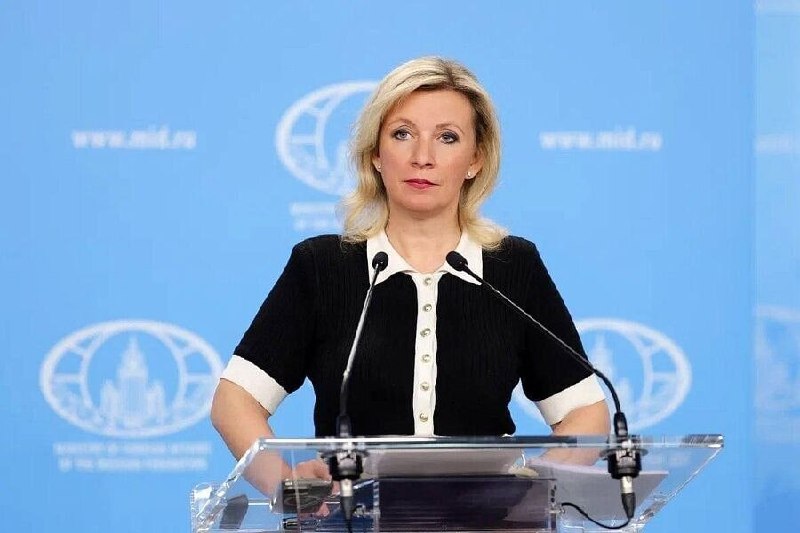
On 12 July 2026 at 13:06 UTC, the Telegram channel @rybar_in_english, a pro-Kremlin military-blog feed read widely inside the Russian information space and parsed by Western analysts, published a short post titled "Secrets for All to Know: How to assemble UAVs in secret so everyone knows about it." The text argued that German involvement in what it called a Ukrainian drone "laboratory" is "a long-known fact for Russian citizens," and accused European and US audiences of being kept in the dark about it. The post ran without documentary evidence, named sources, or on-the-record quotes from any German official.
That thinness is the story. A two-paragraph Telegram item, with no corroborating imagery and no primary documents, has nevertheless been designed to seed a much larger claim: that Berlin is operating, or tacitly hosting, a covert training-and-assembly footprint inside Ukraine's rapidly expanding unmanned aerial vehicle sector. The speed at which such posts travel, and the political reflexes they trigger in European capitals, tell readers more about the state of the information war around Ukraine than about any individual instructor.
The claim, and what is actually verifiable
Rybar's framing rests on three moving parts: a German footprint in Ukrainian UAV development, secrecy of that footprint, and Western media complicity in keeping it quiet. None of the three is, on the public record, controversial on its face. Germany is a major supplier of military and dual-use equipment to Ukraine; Ukrainian industry has, since 2024, hosted international specialists helping to integrate Western components into locally assembled strike and reconnaissance drones; and the specifics of those programmes are, for obvious operational reasons, not publicised by Berlin or Kyiv.
What Rybar adds is the inference that this routine cooperation must be clandestine and therefore damning. The post does not name a base, an instructor, a unit, or a contract. It offers no timestamped coordinates, no intercepted communications, no document scan. By the standards of any Western wire, it would not pass an editor's desk. By the standards of Telegram's military-blogosphere, that absence is a feature: the gap is what gets filled by sympathetic readers and downstream outlets.
How the Russian-aligned ecosystem handles a leak
The Russian state-aligned information space has spent two years normalising a specific pattern: short, unverifiable claims from channels such as Rybar, WarGonzo and Two Majors are picked up within hours by larger aggregators, then echoed by Russian-language state media and, occasionally, surfaced in Russian foreign ministry briefings. None of that is visible in the 13:06 UTC post itself; the post is the seed, not the harvest.
For European readers, the practical effect is that by the time a claim reaches a German tabloid or a French-language Telegram channel, it has already acquired the patina of consensus. The mechanism is not new. What is notable is how cheaply the seed now costs. A channel with no institutional backing, posting in English for an export audience, can in a single afternoon produce a talking point that Berlin's Bundespresseamt will be asked about at the next press briefing.
What Berlin's silence does and does not prove
The German government has, since the start of the full-scale invasion, declined to detail most of its bilateral defence cooperation with Kyiv. That posture is shared by most NATO members. Industrial contracts for drone components, joint training rotations, and specialist secondments are routinely undisclosed on security grounds. The pattern gives Rybar's claim exactly the ambiguity it needs: silence is read as concealment, and concealment as confirmation.
That reading is not, however, the only one available. Routine operational security in a war zone looks, from the outside, indistinguishable from the kind of secrecy Rybar is alleging. Ukrainian strike-drone production has scaled into the hundreds of thousands of units a year, much of it on a deliberately decentralised model designed to survive Russian targeting. Foreign specialists embedded in that ecosystem are a small, plausible and explicitly legal component of the partnership. The question is not whether such specialists exist, they do, but whether their work is the covert operation Moscow wants European publics to imagine.
The structural pattern
What this episode exposes is the gap between the tempo of the Russian-aligned information environment and the slower, evidence-bound tempo of Western wire reporting. Telegram channels post in real time, often within minutes of a claimed event; verification, when it comes, arrives hours or days later, by which point the political damage is done. The pattern is asymmetric by design. The Russian side does not need its claims to be true; it needs them to be undecidable in the short window during which public attention is formed.
For European governments, the implication is uncomfortable. Every legitimate act of bilateral cooperation with Kyiv, a trainer rotation, a parts shipment, a joint simulation, is now potential raw material for the same treatment. The choice for Berlin and its peers is not whether to be more transparent; most of this material cannot be disclosed without compromising operations. It is whether to invest in faster, sharper counter-communications, or to accept that the seam between secrecy and accusation will keep being exploited at marginal cost.
The Rybar post is, by itself, a minor data point. Read against the wider pattern of how such posts land, it is a useful reminder that in the information contest around Ukraine, the evidence rarely travels as fast as the claim.
This piece relied on a single primary item from the Russian-aligned Telegram channel @rybar_in_english (12 July 2026, 13:06 UTC). Where Rybar asserts German involvement in Ukrainian UAV work as a "long-known fact," no corroborating documents, named instructors, base locations, or on-record German statements were provided in the post itself. Broader claims about the structure of the Russian-aligned information ecosystem draw on the established public record of channels such as Rybar, WarGonzo and Two Majors being read by Western OSINT analysts and, in some cases, cited with explicit caveats by mainstream outlets. The article does not assert that any specific German individual is operating inside Ukraine; it examines how a low-evidence post can be designed to seed a larger political claim.
Wire provenance
This editorial synthesis draws on the following public wire/social posts:
- https://t.me/rybar_in_english