Russia Pulls S-400s into the Strike Role, and Ukraine's Air Defence Math Goes From Tight to Tilted
Moscow has adapted a long-range air-defence system for the strike role, firing S-400 land-to-land missiles at Kyiv and Odesa. The move lands while Patriot interceptors are running short and Europe's drone-makers are still scaling in secret.
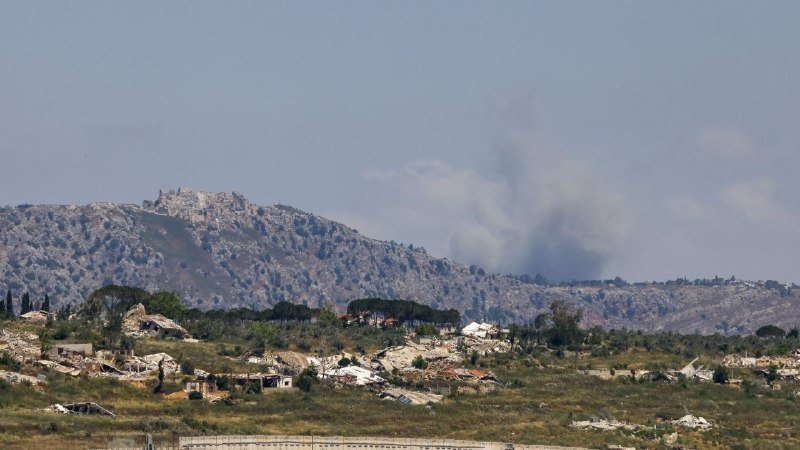
Russian forces fired missiles repurposed from the S-400 long-range air-defence system at Kyiv and the Odesa region in the early hours of 12 July 2026, marking the latest and most awkward entry in a short list of Russian adaptations to stretch a dwindling missile inventory. The strikes, first reported by the OSINTdefender monitoring channel at 05:43 UTC, used land-to-land variants of a system built to shoot down aircraft, not level cities. The shift is small in tactical terms and large in what it says about the air-defence balance on either side of the line.
Ukraine's interceptor stocks, particularly the Patriot surface-to-air missile system, are running thin at exactly the moment Moscow has begun improvising new strike options. The combination is the kind of arithmetic that does not need exaggeration: one side reaches deeper into its own air-defence stockpile to generate launches, the other side runs short of the missiles meant to meet them. Below that arithmetic sits a slower-moving European problem: the continent's drone production is no longer a planning exercise. It is a covert industrial footprint under non-disclosure agreements and the ability to power down.
A system built to defend, pressed into offence
The S-400 is a fourth-generation Russian long-range surface-to-air missile system designed for the air-superiority and anti-ballistic role. Using it to strike ground targets is not novel, but it has become more common as Russia has worked through its inventory of dedicated cruise and ballistic missiles. The OSINTdefender relay on 12 July is the most recent data point in that pattern. Two takeaways matter. The 48N6 family of missiles the S-400 fires has been reported in ground-attack use before, which limits the surprise value. The signalling value is what stands out: Moscow is willing to deplete a strategic air-defence asset to sustain a strike campaign, on the calculation that the trade is worth it.
Kyiv and Odesa were the named target sets in the 05:43 UTC report. Coverage did not specify which districts or which infrastructure was hit. Ukrainian authorities have not yet, as of the time of this filing, published a consolidated damage assessment through the channels Monexus monitors. The single most important caveat: the briefing originates with an open-source intelligence account, not a Ukrainian general staff release. The fact pattern is consistent with prior reporting on S-400 employment; the operational specifics are not yet on the public record.
Patriot stocks, and the calculus of interception
The S-400 strike lands inside a wider squeeze. OSINTdefender reported at 06:01 UTC on 12 July that Ukraine is facing a Patriot interceptor shortage, with Russian ballistic-missile attacks escalating into the gap. Patriot is the most capable Western system in Ukrainian service for high-altitude ballistic and aero-ballistic threats; each engagement burns interceptors that cost more and arrive slower than the incoming round. Interceptor consumption has been the dominant constraint on Ukraine's air-defence story since at least mid-2024.
There is a counter-reading worth naming. A Patriot shortage is not a Patriot vacuum. Ukraine fields a layered network: NASAMS, IRIS-T, Gepards, older Soviet systems and now indigenous interceptors. The shelf life of any given Russian salvo is determined by the cheapest available Ukrainian counter, not the most expensive. The S-400 ground-launch role complicates that calculus because the threat arrives on a flat, predictable trajectory that Patriot handles cleanly. That is precisely the engagement profile Patriot stocks cannot afford to lose.
Western planners have known this curve for some time. Two things have changed recently. First, interceptor deliveries have lagged commitments. Second, Russian tactics have produced more salvos per night, more decoys per salvo, and more angles of attack. The S-400 conversion is the latest in that arc.
Helsing's hidden footprint, and the European drone surge
Behind the interceptor question is the parallel question of strike capacity. OSINTdefender reported at 06:16 UTC that Helsing SE, a Munich-based defence company, operates a secret drone production facility in southern Germany under tight security, including non-disclosure agreements and the ability to shut down and clear visitors on short notice. The post did not identify the site, the drone model, or the customer list.
Three things can be said with confidence. Helsing is a real company, founded in 2021, with a public mission around AI-enabled defence systems. It has raised capital on European venture markets. It has been linked in prior reporting to Bundeswehr procurement pilots and to UK Royal Navy programmes. Whether the southern-Germany site is producing loitering munitions, UAV body frames, or payloads is not in the public record. The secrecy is not, in itself, the story. The story is that a NATO member is hosting production that is judged sensitive enough to require legal walls around its own workforce.
That is the new European defence posture in one image: every capital wants the headline industrial policy; the production line runs behind one. The political economy follows. Domestic voters see jobs and contracts. Neighbouring services see capacity. Hostile intelligence services see a target.
What the next four weeks look like
If the pattern holds, three things will be true by mid-August 2026. First, Russian S-400 ground-launch employment will recur, on a tempo dictated by the price Moscow is willing to pay in lost surface-to-air coverage. The cost-benefit is shifting: the closer Ukrainian interceptor stocks get to a hollow core, the larger the fraction of Russian sorties that reach their aim point, and the higher the marginal value of any additional Russian launch.
Second, Patriot resupply will dominate the diplomatic calendar. The relief valve is partly in Washington, partly in Berlin's RAT-31H discussions, and partly in the indigenous-interceptor pipeline Ukraine is now funding at speed. The bottleneck is production rate, not diplomacy. That distinction matters because production rate is the slow variable.
Third, the European drone footprint will continue to be a story shaped by what is not on the public record. Facilities operate under restricted access; supply chains route through subsidiaries that did not exist twelve months ago; export licences carry confidentiality clauses. The trend line is the point. Covert industrial capacity is no longer a wartime improvisation. It is becoming the routine European defence business model.
A note on what remains uncertain. The intercept rates of the 12 July salvo are not in the source material at the time of this filing. The model and serial range of the S-400 missiles used have not been confirmed from Ukrainian imagery in the threads Monexus has reviewed. The location and capacity of Helsing's southern-Germany site are deliberately opaque. Those gaps are not a reason to withhold the pattern. They are a reason to hold the conclusions at the level the evidence supports.
Monexus framing: the wire cycle on 12 July led on the strike itself. The more durable story is in the second paragraph: a Ukrainian interceptor shortage, a converted Russian strike platform, and a hidden European drone line. Monexus has fronted the structural frame and held the operational specifics to what the open-source record supports.
Wire provenance
This editorial synthesis draws on the following public wire/social posts:
- https://t.me/s/osintdefender
- https://t.me/s/osintdefender
- https://t.me/s/osintdefender
- https://en.wikipedia.org/wiki/Helsing_(company)