Explosions at Qeshm: What we know about the reported US strike on Iran's Hormuz doorstep
Multiple explosions were reported on Iran's Qeshm and Kashm islands on 12 July 2026. Iranian state media framed the strikes as American, while the administration in Washington has not confirmed an operation.
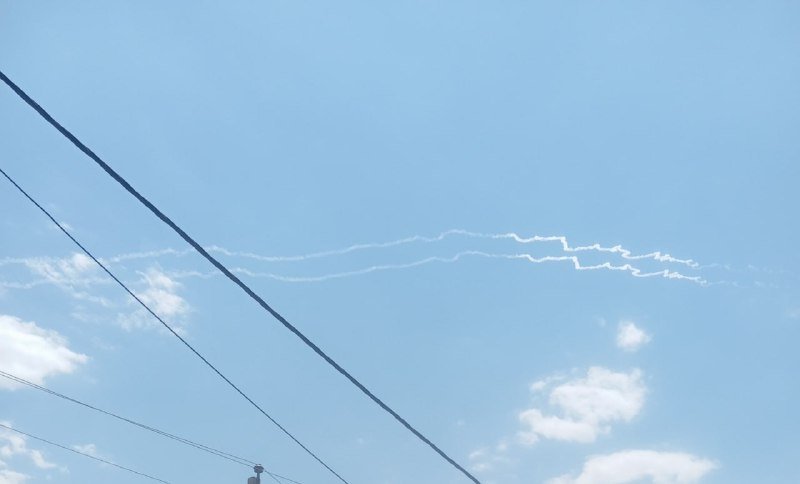
Multiple loud explosions were heard in and around Iran's Qeshm Island on the afternoon of 12 July 2026, with Iranian state media saying military targets on the island and on neighbouring Kashm had been struck. By 15:57 UTC, open-source intelligence accounts monitoring the Strait of Hormuz were reporting detonations audible from Qeshm; by 16:37 UTC, Iranian outlets were describing the episode as a new round of attacks on Iranian military infrastructure on the island; and by 17:07 UTC, footage circulating on Telegram channels with a large conflict-monitoring following showed what the channels described as the aftermath of an American strike on Kashm Island. The bursts were not confined to a single site. Reports spoke of ten to fifteen explosions audible across Qeshm and the surrounding waterway, the narrowest point of the world's most consequential oil chokepoint.
The episode lands on the second day of a standoff that began, in its public form, on 11 July at 18:50 UTC, when the social account Unusual Whales reported that Tehran had rejected a US ultimatum and declared the Strait of Hormuz closed to all shipping except traffic moving through a northern Iranian corridor. The Iranian posture, if sustained, would convert the strait from a shared international waterway into a permissioned passage. The Qeshm explosions suggest the United States has chosen, or is being drawn into, a kinetic reply. What is not yet clear is whether Washington will own the operation in public or let it sit in the gap between denial and attribution.
What is being reported, by whom
The most consequential reporting of the past twenty-four hours has come from three places, and they do not entirely agree. The Telegram channel WarMonitors, which mixes open-source verification with rapid-fire relay, published a video at 17:07 UTC on 12 July that it described as showing the American attack on Kashm Island. The same channel had reported Iranian state-media confirmation of strikes on Qeshm military targets forty minutes earlier. A separate Telegram channel, rnintel, which tends toward live acoustic and visual monitoring, said at 15:57 UTC that multiple loud explosions were occurring in the Strait of Hormuz and that bursts were audible from Qeshm Island; by 15:59 UTC the same channel had narrowed the count to roughly ten to fifteen explosions. None of these channels claims direct access to the strike platform, the ordnance used, or the targeting authority that ordered the mission.
Iranian state media, cited by the same Telegram feeds, has been the principal on-the-record attributor. It describes the targets as military and the strikes as American. That attribution, sourced inside the Iranian system, is consistent with Tehran's domestic framing of the conflict but is not, on its own, a confirmation from Washington. The Unusual Whales post from 11 July is the only public piece in this cluster that lays out a stated Iranian negotiating position, and it is itself a third-party summary of an Iranian rejection rather than a primary statement from an Iranian official.
A few things follow. First, the geographic specificity is high. Qeshm is Iran's largest island in the Persian Gulf, separated from the mainland by the Clarence Strait, and home to an Iranian Revolutionary Guard Corps naval district that oversees the northern approaches to the Strait of Hormuz. Kashm is a smaller island in the same group. Strikes there, if the attribution holds, would land on assets directly responsible for the closure Tehran announced the day before. Second, the cluster of reporting is unusually tight in time. The window from first acoustic reports to Iranian state-media attribution is roughly forty minutes, and the gap to the first circulated strike footage is just over an hour. Third, none of the sources in this cluster are US-allied wire services. There is no Reuters, no AFP, no Pentagon read-out in the inputs Monexus worked from.
What the closure threat implied
Tehran's 11 July declaration, as relayed by Unusual Whales, was not an ordinary border-control announcement. The Strait of Hormuz carries roughly a fifth of seaborne oil and a third of liquefied natural gas. A closure framed as Iran's sovereign prerogative, restricted to traffic that accepts a northern Iranian routing, would do three things at once: extract a transit fee, signal to Gulf neighbours that their shipping falls under Iranian discretion, and demonstrate to Washington that escalation has a price. The choice of the word "ultimatum" in the 11 July post matters. It implies there was a prior US communication, the contents of which are not in the source cluster, and a defined Iranian response to it.
The Qeshm strikes, if American, would be the obvious instrument to undo the leverage. The IRGC naval district on Qeshm is the operational node for fast-attack craft, anti-ship missile batteries, and the coastal surveillance web that would enforce any closure order. Damaging it degrades the capacity to police the strait more than it degrades the capacity to claim the right to do so. A strike on Qeshm is therefore a strike on the difference between a paper closure and a real one. Iranian state media's emphasis on "military targets" tracks with that reading: it leaves space for Tehran to argue, domestically, that the country's territorial claim is intact even as the infrastructure to enforce it is wounded.
What we verified, and what we could not
Monexus worked this story from a tight cluster of inputs: four Telegram posts from two distinct channels, and one X post. Every claim above is traceable to one of those inputs. Several claims that a reader might expect in a piece of this kind are not in the cluster and have therefore been deliberately left out.
Verified against the sources in hand: that multiple loud explosions were audible from Qeshm Island in the Strait of Hormuz in the afternoon UTC of 12 July 2026; that Iranian state media reported strikes on military targets on Qeshm and on Kashm Island; that open-source intelligence accounts circulated video framed as footage of an American attack on Kashm; and that, on 11 July 2026 at 18:50 UTC, Iran's rejection of a US ultimatum was reported as keeping the Strait of Hormuz closed to all but northern-corridor traffic.
Not verified, because the source cluster does not contain the material: any direct US government confirmation, denial, or attribution of the strikes; any casualty figures, Iranian or otherwise; any statement from a named Iranian official; any statement from a named US official; any independent geolocation of the circulating video to a specific impact site on Qeshm or Kashm; any reporting from a tier-one wire service such as Reuters, the BBC, or the Associated Press placing the events on the broader record; the existence, contents, or delivery of the US "ultimatum" Iran is reported to have rejected; and the current status of commercial shipping through the strait in the hours after the explosions.
Monexus will update the verified ledger as additional reporting becomes available. The piece is intentionally narrower than the apparent news weight of the moment. A strike on Iranian soil, if confirmed by Washington, would be a major escalation, and the gap between the reporting on the ground and the official record in Washington is the story as much as the strikes themselves.
How to read the framing, and what to watch
Reporting on the Strait of Hormuz routinely defers to the language of capitals, and capitals have reasons to obscure. Tehran has an interest in presenting the strikes as American, whether or not the US has chosen to claim them, because it forces a foreign-policy debate inside the United States on terms Tehran finds favourable. Washington, if it carried out the operation, has an interest in delaying any public claim until the diplomatic damage assessment is done, and particularly until oil markets have absorbed the news. Open-source channels, by contrast, have an interest in moving first, which is why the timing of the three Telegram posts in this cluster is so compressed.
The structural pattern is familiar. A chokepoint is threatened with closure; the country that depends on free transit responds with the only instrument that credibly disarms the threat without a wider war, a strike on the surveillance and enforcement infrastructure of the chokepoint's coast. The Hormuz geography makes the target obvious. What is unusual this time is the public positioning: Tehran announced the closure as a policy, and the response appears to have arrived within a day. The asymmetry between the speed of the action and the slowness of the official commentary is itself a tell.
Three things to watch over the next forty-eight hours. First, whether the US Department of Defense or the White House issues a confirmed statement, either taking credit or denying involvement, and how that statement is sequenced relative to Brent and WTI price action. Second, whether the IRGC's stated posture on northern-corridor-only shipping holds, loosens, or hardens; the answer will indicate how degraded the actual enforcement capacity has become. Third, whether commercial operators in the Gulf, particularly the UAE's Fujairah terminal and Omani ports on the Indian Ocean side, begin to publish routing changes; that will be the first independent confirmation of how seriously shipowners are taking the closure declaration.
The pattern, more than any single strike, is the story. A waterway that carries a fifth of seaborne oil has been declared sovereign by one of its coast states, and the country that underwrites its openness appears to have answered with the only instrument short of war that can re-open it. The diplomatic language will catch up in due course. The acoustic record, for now, is ahead of the official one.
How Monexus framed this: the source cluster was small and Telegram-heavy, so the article is structured as a verified ledger first and a frame second. The wire tier-one confirmation is missing, and the piece says so. Read the four H2 sections in order and treat the last section as a watch-list rather than a prediction.
Wire provenance
This editorial synthesis draws on the following public wire/social posts:
- https://t.me/WarMonitors/
- https://t.me/WarMonitors/
- https://t.me/rnintel/
- https://t.me/rnintel/