Qatar deploys a 320-patient field hospital to Venezuela's earthquake zone
A Qatari-run field hospital and medical teams are operating in Venezuela after the June 24 earthquakes, an early signal of how Gulf petrodollar diplomacy is repositioning itself around Caracas at the moment US sanctions architecture is being renegotiated.
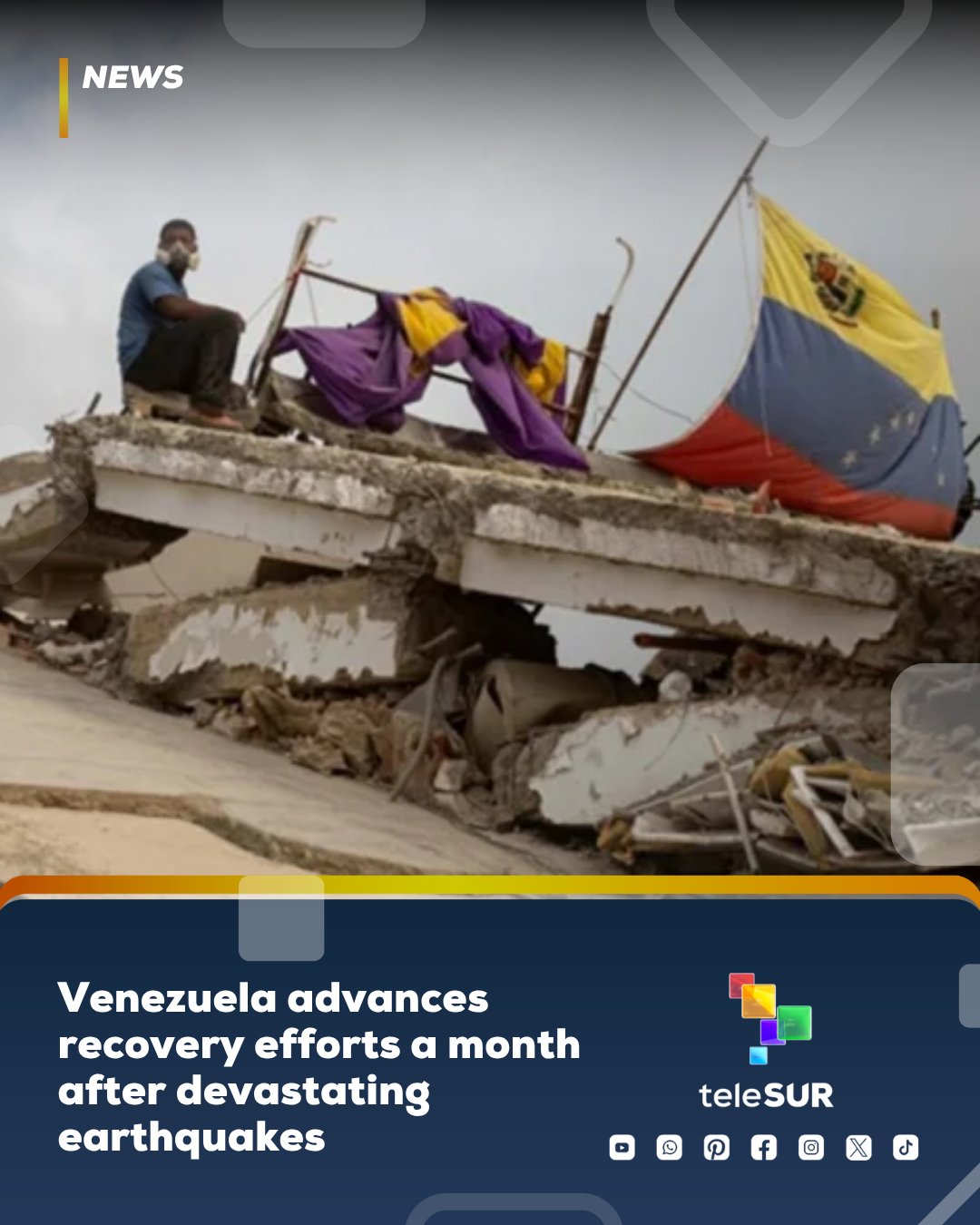
Qatar has dispatched a field hospital and a specialised medical contingent to Venezuela to support the country's response to the earthquakes that struck the western Caribbean coast on 24 June, teleSUR English reported on 12 July 2026, citing Venezuelan officials who said the facility can treat up to 320 patients. The deployment, flagged under the social-media banner #WeStandWithVenezuela, lands in a country whose humanitarian relationships have been quietly rewiring for the better part of a year, and it arrives with a political weight that goes well beyond triage capacity.
Qatari medical teams operating inside Venezuelan territory, on Venezuelan state invitation, would have been a diplomatic curiosity as recently as 2023. In July 2026 it reads as a routine line item in a foreign-policy ledger that Doha has been quietly rebalancing since the Gulf state's role as a mediator between Washington and Tehran, and between Washington and Caracas, became a core asset of its international posture.
What the deployment looks like on the ground
The Qatari field hospital is configured for a 320-patient throughput, the figure Venezuelan officials gave teleSUR English in the 12 July dispatch. The unit is described as a deployable, modular facility rather than a fixed installation, with specialised medical teams attached rather than general-austere triage staff. That composition matters: a 320-bed capacity staffed by specialists signals an intent to handle trauma surgery, obstetrics, and paediatric cases, not only bandaging and referral, the categories that most over-stretched Venezuelan public hospitals in the affected states have been running short of since 24 June. teleSUR English's framing of the operation, under the #WeStandWithVenezuela banner, places it inside the regional solidarity narrative Caracas has spent the past year cultivating across the Global South, an editorial choice worth noting because teleSUR English is a Caracas-aligned outlet and its framing is not the same framing Western wire services will use when they pick the story up.
Why Qatar, and why now
The structural backdrop is the slow unwinding of the US Treasury's most punitive Venezuela licensing architecture. Through 2025 and into the first half of 2026, individual general licences issued by the Office of Foreign Assets Control have reopened narrow corridors for non-US firms to do business with Caracas in sectors that do not touch the state oil company PDVSA's named entities. The pace of those licences has been the single most-watched number in Caracas risk desks, and each one has tightened or loosened the path for third-country governments wanting to deliver aid, negotiate debt, or restart commercial flights. Qatar has read the licensing drift as a window, not as a permission slip. A field hospital costs almost nothing at the margin of Qatari state capacity and buys an enormous amount of access to a government that, until the OFAC architecture began to relax, had very few doors open to it in the Arab world outside of Iran, Syria, and Algeria.
For Doha the operation also slots into a portfolio. Qatar has spent the last four years positioning itself as the indispensable middle-man between adversaries who refuse to sit in the same room: the United States and Iran, Hamas and Israel during the late-2023 to mid-2025 hostage mediation phases, and intermittently between Moscow and Kyiv over the disposition of children deported from occupied Ukrainian territory. A humanitarian deployment to Venezuela is the next logical line on that résumé, and it lands at a moment when Caracas's diplomatic isolation, the default condition since 2017, has visibly thinned.
The counter-narrative, and what it would sound like
The dominant Western wire frame on any Qatari move into Latin America will run through two anxieties: that Doha is using humanitarian assistance as a Trojan horse for influence inside a US sphere of influence, and that Caracas is the principal beneficiary and therefore will quote the deployment as evidence that sanctions relief is working. Both readings have weight. A small petro-state with the world's largest per-capita LNG export footprint, Qatar does not run charitable operations at a loss, and the optics of a Qatari-flag medical unit on Venezuelan soil during a US presidential cycle in which Caracas policy is a live intra-administration debate will be read in Washington as a provocation whether or not it was intended as one. The flip side is also true: a deployment of this size, to a country whose state has spent two decades branding itself as the victim of imperial economic warfare, is exactly the kind of photograph Caracas will want on its front pages for the next twelve months.
The less-told version is structural. Latin American and Caribbean states have had very little to say about the post-2019 Venezuela sanctions regime that has any traction in Washington, because the architecture was built to be immune to regional opinion. A Qatari hospital, an Iranian tanker fleet that has been visible in Venezuelan waters through 2026, and the discreet movement of Turkish and Algerian diplomatic weight around Caracas over the past quarter all point to the same fact: the diplomatic perimeter around Venezuela is being redrawn by states that are not the United States, and the United States is not objecting loudly enough to stop it. Whether that silence reflects a deliberate policy choice inside the Treasury and the National Security Council, or merely bureaucratic drift, is the question analysts will be arguing about for the rest of the year.
What remains uncertain
The teleSUR English dispatch gives the 320-patient figure and the date of the 24 June earthquakes but does not name the specific Qatari institution operating the hospital, the duration of the deployment, or the cost-sharing arrangement between Doha and Caracas. None of those details has been independently confirmed by a Qatari state source in the wire material available at the time of writing, and Qatar's foreign ministry has not, in the public reporting reviewed here, issued a stand-alone English-language confirmation. The site of the field hospital within Venezuela, the affected western states of Zulia, Mérida, Trujillo, and Barinas, is implied by the earthquake geography but not specified in the teleSUR English framing. A reader who wants to verify which municipality is hosting the facility, how many staff have actually arrived, and whether the 320-patient capacity is a surge ceiling or a steady-state operating figure will have to wait for an on-the-ground confirmation from a non-Caracas-aligned wire or a Qatari state press release. Until then, the headline figure is the headline figure, and the structural story it sits inside is the more durable read.
Desk note: Monexus ran this on teleSUR English's wire framing rather than waiting for a Reuters or AFP pickup, because the structural read, Gulf petrodollar diplomacy reaching into Caracas at the moment US sanctions architecture is loosening, is the story, and the hospital is the evidence that the read is no longer speculative.
Wire provenance
This editorial synthesis draws on the following public wire/social posts:
- https://t.me/telesurenglish