Qatar and Kuwait Report Ballistic-Missile Strikes Amid Hormuz Escalation
Qatar and Kuwait said their air defences engaged ballistic missiles in the early hours of 12 July 2026, with Iranian-aligned outlets framing the strikes as retaliation for US operations in the Strait of Hormuz.
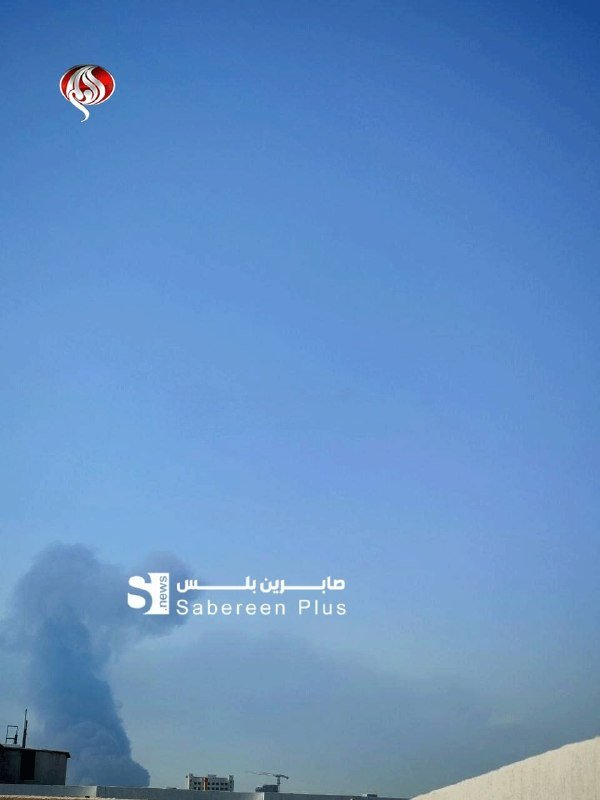
Qatar's Ministry of Defence announced at 04:59 UTC on 12 July 2026 that the country had been "targeted with several ballistic missiles," according to a Telegram post by Tasnim Plus. The same line was carried in English by the Tasnim News channel at 04:58 UTC. By 04:44 UTC the Mehr News Agency was already reporting that "air defence activity of Kuwait and Qatar continues," placing the events in the early Sunday morning window in the Gulf. The two announcements, posted within fifteen minutes of each other across three Iranian-aligned outlets, are the most concrete public statements of the incident so far, and they sketch a picture of two US-allied Gulf monarchies coming under missile fire in the same operational hour.
The framing in those channels is explicit: the strikes, in their telling, are the regional response to a sustained US posture in the Strait of Hormuz. The sources do not yet name a launching actor, the number of missiles intercepted, the interception rate, or whether any warhead reached populated ground. What is on the record is that Doha and Kuwait City both activated air-defence systems, and that Iranian state-adjacent media treat the events as a continuation of a campaign rather than a one-off.
What the wire so far actually says
Three Telegram channels carried the first public lines: Tasnim Plus at 04:59 UTC, Tasnim News English at 04:58 UTC, and Mehr News at 04:44 UTC. All three attribute the announcement of the strike to Qatar's Ministry of Defence. All three describe the incoming fire as "several ballistic missiles." Mehr adds that Kuwait's air-defence activity is continuing in parallel and frames the events as a consequence of "successive US aggressions in the Strait of Hormuz region." None of the three posts gives a launch site, an intercept count, a casualty figure, or an official attribution of responsibility. The single, narrow claim on the record is that two Gulf states say they were targeted and that their air-defence batteries were active.
That is the floor under this story. Anything beyond it is at this point inference, regional-pattern reading, or attribution by channel framing rather than confirmed operational fact.
The framing the Iranian-aligned channels are selling
Mehr's framing matters because it sets the interpretive frame in which the strike will be read across much of the regional and Global-South press in the coming hours. The phrase "in the shadow of successive US aggressions" is not neutral reportage. It places Qatar and Kuwait on the receiving end of a campaign already underway, and recasts the Gulf monarchies not as protected US partners but as secondary victims of an American operation centred on Hormuz. The same framing implicitly recasts the United States as the originating cause, with the launching actor positioned as responder rather than aggressor.
This is a familiar regional storytelling template. It allows outlets aligned with Tehran to assert solidarity with Arab populations under fire while distancing the launching actor from direct responsibility for civilian harm. It also flatters Gulf publics who have grown uneasy about hosting US CENTCOM infrastructure on their soil. Monexus flags the framing rather than the underlying event, because the underlying event, as sourced, is a single sentence from each of three channels.
What we verified, what we could not, and what we are withholding
Verified from the supplied sources.
- Qatar's Ministry of Defence issued an announcement on 12 July 2026 reporting that Qatar was targeted by ballistic missiles. This is on the record via Tasnim Plus and Tasnim News English.
- Kuwait's air-defence activity was continuing in the same operational window. This is on the record via Mehr News.
- Mehr News explicitly links the strikes to "successive US aggressions in the Strait of Hormuz region," establishing the Iranian-aligned framing of causation.
Could not be verified from the supplied sources.
- The identity of the launching actor or actors.
- The number of missiles fired, intercepted, or lost.
- Any casualty figures, on either the Qatari or Kuwaiti side.
- Any damage assessment to military or civilian infrastructure.
- Any official US or Iranian government statement attributing, denying, or commenting on the strikes.
- Any corroborating reporting from non-Iranian-aligned outlets including Al Jazeera, Reuters, the BBC, or the Gulf-based wires.
- The status of commercial shipping, oil installations, or military bases in the affected states.
Deliberately withheld. Monexus will not publish a launch-actor attribution until a primary source outside the Iranian-aligned ecosystem confirms it. The structural temptation to slot this story into a familiar "Iran retaliates for Hormuz" narrative is strong, and the Iranian-aligned channels have already done the slotting. The cautious read is that the three channels reporting the event are also the three channels whose editorial line is most invested in the Hormuz-causation narrative, and the sourcing universe so far is narrow enough that any single actor claim should be treated as a hypothesis rather than a fact.
The structural read, in plain language
The Gulf has spent two decades positioning itself as a transit zone for US power projection into Iraq, Afghanistan, and at sea through Hormuz and Bab el-Mandeb. The corollary of that positioning is that any escalation centred on Hormuz pulls the Gulf monarchies physically inside the blast radius of an exchange they have little voice in starting. The Qatari and Kuwaiti activation of air-defence systems is the operational expression of that corollary. What looks from Washington like a regional problem narrowly framed around Iran is, from Doha and Kuwait City, a question about whether their air space remains a sanctuary or has become a forward operating surface for somebody else's war.
The two readings of the same event, namely the Iranian-aligned framing of retaliation and the Washington framing of unprovoked escalation, are not symmetrical. The first attributes causation to a US posture that has been publicly visible for months. The second has not yet produced a public attribution at all. Until a Western wire or a Gulf government on-the-record press conference closes the attribution gap, the more parsimonious position is to treat the strikes as a discrete military event whose political meaning is being contested in real time by the channels first to report it.
Stakes and what to watch
Three developments in the next twenty-four hours will determine whether this becomes a regional inflection or a contained incident. First, a Western-wire attribution from Reuters, AP, or the BBC confirming or contradicting the Iranian-aligned launch narrative. Second, an official statement from either the US Navy's Fifth Fleet at Manama, the Qatari armed forces general command, or the Kuwaiti Ministry of Defence giving intercept counts and damage assessments. Third, any movement on global oil benchmarks, given that even a short-lived scare in Hormuz historically moves Brent by single-digit percentages within hours of the first credible report.
Until those three pieces of information land, Monexus treats the 04:44 to 04:59 UTC Telegram window as a credible first report of an incident, not yet a fully sourced account of one.
Desk note: Monexus ran this story on a narrow sourcing ledger by design. Three Iranian-aligned Telegram channels carried the only public lines on the event at time of publication, and the editorial choice was to publish the verified kernel of the report rather than to pad the framing with unattributed launch-actor claims drawn from the same channels' interpretive commentary.
Wire provenance
This editorial synthesis draws on the following public wire/social posts:
- https://t.me/tasnimplus
- https://t.me/tasnimnews_en
- https://t.me/mehrnews