Qatar says it intercepted an Iranian missile barrage in the early hours of 12 July
Witnesses reported explosions over Doha around 03:07 UTC; Qatar's government later said it had intercepted an incoming Iranian missile attack. The IRGC has not publicly confirmed the launch.
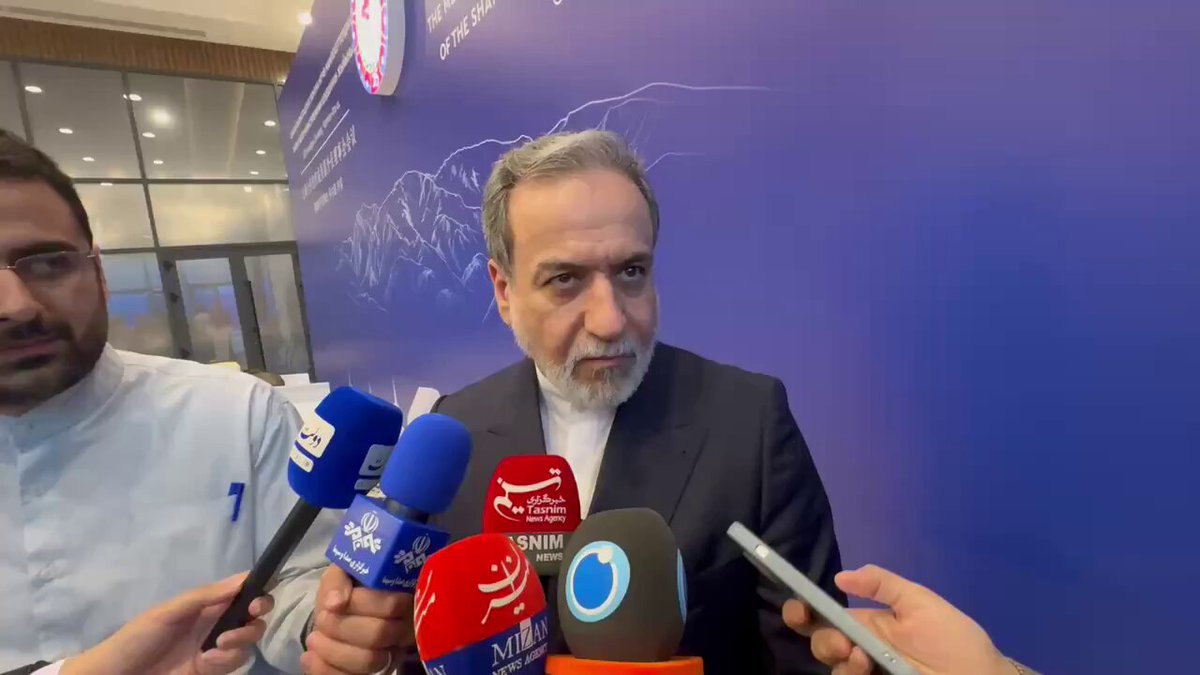
Explosions were audible over Doha in the small hours of Sunday, 12 July 2026, with witnesses posting to X from the Qatari capital at 03:07 UTC describing detonations whose origin could not immediately be distinguished between incoming projectiles and the interceptors fired to stop them. By 03:37 UTC, the picture had sharpened: Qatar said publicly that it had intercepted an Iranian missile attack on the country. An hour later, channels aligned with the Islamic Revolutionary Guard Corps were claiming a large-scale Iranian operation against the emirate, a claim Tehran itself had not, as of the latest reports, confirmed on the record.
The episode lands on a Gulf already on edge. Qatar hosts Al Udeid, the largest US air base in the Middle East and the forward headquarters of US Central Command's air operations. A missile exchange that touches Qatari soil, even one Doha says it stopped, is by definition an event with a Washington-shaped silhouette, whether or not the United States was the intended target. The early reporting is thin, the actors' accounts diverge, and the read-throughs will be drawn faster than the facts arrive.
What was heard over Doha
The first public signal came from Open Source Intel, an aggregator account on X, at 03:07 UTC on 12 July, citing multiple witnesses in Doha reporting explosions and noting that it was unclear whether the sounds were impacts or the air-defence rounds fired against them. Thirty minutes later, at 03:37 UTC, the same channel carried an update attributed to a contributor identified as @AZ_Intel_: Qatar had intercepted an Iranian missile attack targeting the country, per an official statement. A further thirty minutes on, at 04:07 UTC, additional reports of explosions in Qatar surfaced through the same feed. By 04:08 UTC, Open Source Intel was carrying a more dramatic claim, that the IRGC was "currently carrying out extensive and large scale attacks against Qatar," sourced from a single tweet that did not itself cite an Iranian official statement.
The asymmetry between those four timestamps is the story for now. The Qatari government's own confirmation, of an intercepted Iranian attack, came through a secondary aggregator citing an unnamed official statement. The louder IRGC-aligned claim of an ongoing large-scale operation is, at the time of writing, a social-media assertion without a parallel on-the-record statement from Tehran.
Why the timing matters
Qatar has spent the past three years positioning itself as a diplomatic broker, hosting talks between the United States and the Iranian government, brokering the January 2024 arrangement that paused Houthi strikes on Red Sea shipping, and quietly holding channels with both sides of the wider regional split. That positioning makes an Iranian missile trajectory toward Doha unusually difficult to read. Strikes at Gulf monarchies have, since 2019, more often travelled through proxies, primarily the Houthis in Yemen, rather than as direct launches from Iranian territory. A direct Iranian missile attack on a Gulf state that hosts US Central Command's air hub would be a meaningful escalation in form as well as substance, even if every round is brought down by interceptors.
Two readings are live. The first is that the launch reflects a deliberate signal from Tehran, aimed at Washington through a host that is hard to ignore but that has worked to keep channels open, designed to inflict cost without producing casualties. The second is that the missile fire reflects an Iranian calculation that no full-scale operation is in motion, and that the more aggressive framing on IRGC-aligned channels is overstating what was, in practice, a probing volley. Both can be true simultaneously; the same launch can be read as an operational probe and as a propaganda escalator.
The information picture, in plain terms
What is established is narrow. Explosions were heard over Doha around 03:07 UTC. Qatar's government, via an unidentified official statement relayed through a contributor to an OSINT channel, said by 03:37 UTC that it had intercepted an Iranian missile attack. Loud explosions were reported again around 04:07 UTC. An IRGC-aligned framing of an extensive ongoing operation was in circulation by 04:08 UTC, without a parallel confirmation from Tehran.
What is not established is wider. The number of missiles, the type, the launch location, the damage footprint on Qatari territory, whether any interceptor debris fell on populated areas, and the casualty status are not in the source record at this stage. Qatar's official statement was relayed through a third party; the original text was not in the feed. The IRGC framing has not been matched by Iranian state media in the items available. Mainstream wire reporting from Reuters, the Associated Press, the BBC, Al Jazeera and Bloomberg has not, as of the timestamps above, been published in the thread context; the sourcing pool is, for the moment, the OSINT channel and its contributors.
The reporting environment is also worth naming in plain language. OSINT aggregators pull together eyewitness posts, radio traffic, satellite imagery and official statements and present them as a single narrative thread; the speed is genuinely useful, but the chain of custody between an eyewitness in Doha and a public claim of an IRGC operation is, at each link, a contributor's read. When Doha's government and the IRGC's backers both have reason to amplify, the temptation to choose the more dramatic frame is built into the format.
What to watch over the next 24 hours
Three filings will settle the picture. First, a full read-out from the Qatari Ministry of Defence naming the number, type and apparent origin of the projectiles, and confirming whether any reached the ground. Second, an Iranian Foreign Ministry briefing, or its absence: silence is itself a signal, but so is a denial that names the launch location. Third, a US Central Command statement on whether Al Udeid was active in the engagement and whether US assets detected the launch independently, a confirmation that would push the event from a Gulf security story to a NATO-and-US-force-posture story.
For now, the prudent reading is that something flew at Qatar and was met, that Qatar has chosen to attribute the flight to Iran on the record, and that the more expansive IRGC framing is a claim in search of corroboration. The geography, the Gulf's military architecture, and the prior pattern of Iranian signalling all make it plausible that this was a calibrated test rather than a war's opening round. Plausible is not the same as confirmed, and the gap between the two is where Gulf policy is now being made.
Desk note: Monexus led with the Qatari government's own attribution, treated the IRGC-aligned framing as a sourced claim rather than a stand-alone fact, and held the casualty and damage detail until wire reporting or a primary statement arrives. The OSINT aggregator's role in the chain of custody is named because it is the sourcing lane the article is built on.
Wire provenance
This editorial synthesis draws on the following public wire/social posts:
- https://twitter.com/Osint613/status/20761383388812617
- https://twitter.com/Osint613/status/2076141821848076678
- https://twitter.com/Osint613/status/2076141821848076678/photo/1twee
- https://twitter.com/Osint613/status/2076141821848076678