Qatar halts maritime traffic as Iran widens missile strikes and Hormuz talks collapse
A maritime freeze in Doha, a multi-class Iranian missile salvo, and a stalled diplomatic track leave the Strait of Hormuz at the centre of an escalating standoff.
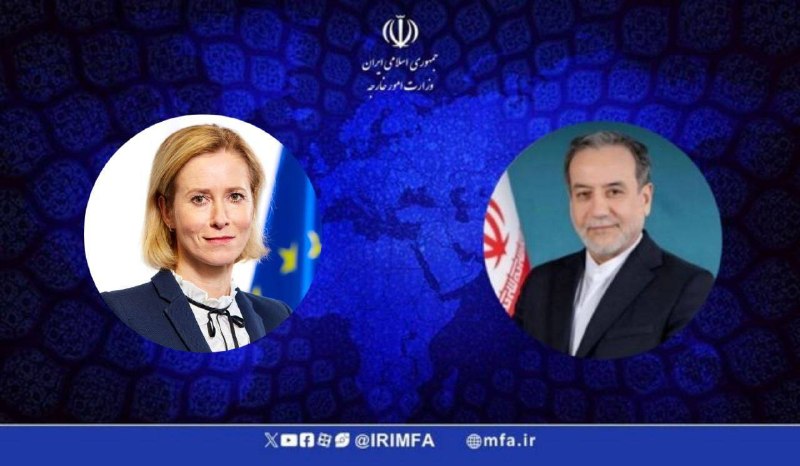
At 09:50 UTC on 12 July 2026, Doha issued an order no Qatari maritime notice in recent memory has quite matched: every vessel and fishing boat in Qatari waters was told to stop sailing until further notice. The advisory, carried by the BRICS News wire on Telegram, landed roughly thirty-four minutes after Iran announced it had fired several different classes of ballistic missiles in strikes that day, an escalation the same wire reported at 09:16 UTC. Together, the two notices drew a line across the western Gulf: a quiet, oil-exporting monarchy shutting down its sea approaches on the same morning an Iranian missile salvo widened in scope.
What is unfolding in the Gulf this week is less a single confrontation than the visible surface of a deeper argument over who controls the choke points of global energy. The Strait of Hormuz, through which a meaningful share of the world's seaborne crude transits, has become the venue for that argument. The diplomatic track that was meant to settle it is, by the public record, stuck.
The diplomatic wreckage, dated
On 11 July 2026 at 13:38 UTC, the Polymarket news desk relayed an Iranian position that closed a door the United States had been trying to push open. Iran, the wire reported, is rejecting talks unless Washington first implements what it described as "agreed-upon understandings" on Hormuz transit and Iranian oil exports. The phrase is diplomatic, but the substance is hard: Tehran wants movement on file before it negotiates the file itself.
Twenty-six hours earlier, on 10 July at 21:19 UTC, the same Polymarket feed carried the US counter-position in unusually blunt terms. Washington demanded Iran reopen all lanes of the Strait of Hormuz without tolls, and warned that the alternative was a "bad outcome." No deadline was attached, and no definition of "bad" was offered. The shape of the ultimatum is familiar from earlier rounds of Gulf coercion, but the combination, an Iranian precondition, a US threat, and now a Qatari shutdown of its own waters, has not been seen in this cycle.
What Qatar's order actually means
Qatari maritime advisories of this kind are usually precautionary and narrow. The 12 July notice, distributed via BRICS News, is the opposite of narrow: it covers all vessel classes, including fishing boats, and contains no end date. Doha has not, in the public record supplied here, named a specific Iranian action that triggered the order. The most plausible read, given the timing and the simultaneous Iranian missile announcement, is that Qatari authorities are reacting to the prospect of falling debris, drifting mines, or simply the operational uncertainty of being a small Gulf state's coast guard in a missile-active morning.
The order has commercial consequences regardless of intent. Qatari LNG loading at Ras Laffan and other terminals depends on scheduled tanker movements. A standing suspension, even one lifted within hours, pushes insurance underwriters to reprice Gulf transit risk upward. That repricing, not the headline diplomacy, is what reaches European and Asian importers first.
The Iranian missile claim
Iran's 09:16 UTC announcement, again via the BRICS News wire, was unusually specific: several different classes of ballistic missiles were used in the strikes. The plural matters. A single-class launch suggests a calibrated signal; a multi-class salvo suggests an attempt to defeat layered air defences by varying range, payload, and trajectory in a single barrage. The notice did not specify targets, and the Iranian framing, carried on a BRICS-affiliated channel, is best read as an Iranian-aligned assertion of capability rather than an independently verified battle damage assessment. The structural point holds either way: Tehran is signalling that any US-Israeli defence optimised for one missile type will face a catalogue, not a threat.
The structural frame, in plain prose
What is being negotiated in the Gulf is not, strictly, a missile for a tanker. It is the right of a regional power to monetise a transit corridor that the incumbent order treats as a global commons. Iran's demand, expressed through the "agreed-upon understandings" formulation, is that its oil exports and Hormuz transit rules be normalised before any broader deal. Washington's demand, expressed through the "no tolls" formulation, is that the corridor remain a free lane under existing rules. Each side is using leverage it already holds: Iran, the geography; the United States, the enforcement capacity and the sanctions architecture that follows from dollar-cleared energy trade.
The Qatari shutdown adds a third actor whose leverage is reputational. Doha's standing in the Gulf, and its role as a mediator in earlier US-Iran episodes, depends on appearing not to pick a side. Suspending all maritime traffic is the diplomatic equivalent of stepping back from the table; it tells both Washington and Tehran that Qatar will not absorb the spillover of their argument in its own waters.
Stakes, and what to watch
If the trajectory holds, three near-term prints will tell the story. First, the duration of the Qatari maritime order: hours means precautionary; days means the Gulf's LNG corridor is functionally impaired. Second, the specific Iranian missile targets named in subsequent reporting, which will indicate whether Tehran is signalling or attriting. Third, any movement on the "agreed-upon understandings" file, the precondition Iran has now made public, and which the US has not, in the available record, accepted.
The counter-read is real and worth naming. It is possible that the Qatari order is a routine safety measure, that the Iranian missile claim is rhetorical, and that the diplomatic freeze is a familiar pre-negotiation posture rather than a drift toward open confrontation. The same public record that carries the warnings also carries a long history of similar language resolving into quiet de-escalation.
What the sources do not specify is the target set of the 12 July Iranian strikes, the specific Iranian or US officials behind the public positions, or any third-party corroboration of the multi-class missile claim. Until those gaps are closed, the honest read is that the Gulf is operating under an explicit threat from Washington, an explicit precondition from Tehran, and an explicit maritime shutdown from Doha, three escalations in seventy-two hours that have, as of 12 July 2026 at 09:50 UTC, no public off-ramp.
This publication framed the standoff as a contest over corridor governance and diplomatic preconditions, with Qatari neutrality as the under-reported third variable, rather than as a missile-versus-defence story in isolation.
Wire provenance
This editorial synthesis draws on the following public wire/social posts:
- https://t.me/s/bricsnews
- https://t.me/s/bricsnews