Pakistan reaches for Tehran as the Gulf ceasefire arithmetic tilts
A same-day phone call between Deputy Prime Minister Dar and Foreign Minister Araqchi signals Islamabad's bet that quiet engagement with Tehran serves its own security calculus, not just Gulf patronage.
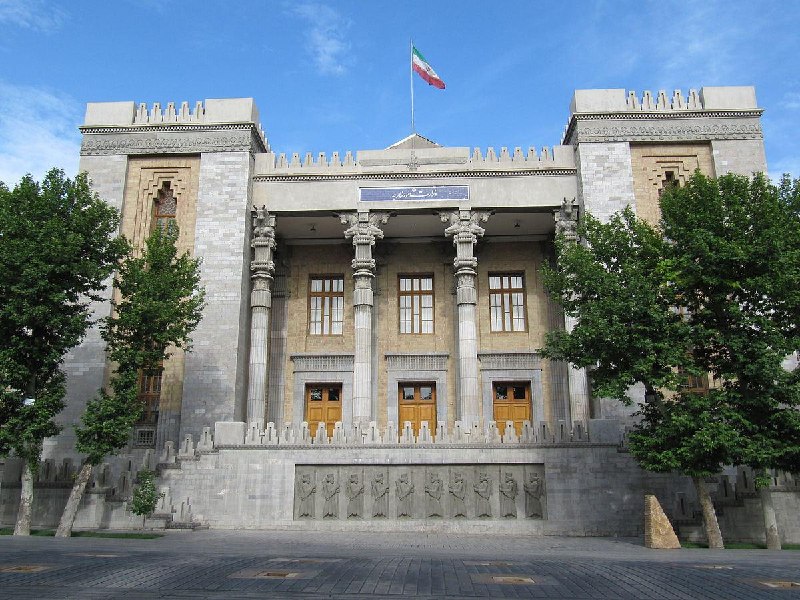
Pakistan's Deputy Prime Minister and Foreign Minister Ishaq Dar held a phone call with his Iranian counterpart Abbas Araqchi on 12 July 2026, the Iranian Arabic-language outlet Al Alam reported in identical urgent bulletins at 06:30 UTC and 06:36 UTC. The two-line state-media-style notice is, on its face, routine: a foreign minister picks up the phone, two men exchange greetings. The timing, though, is what makes the call worth reading more carefully than its terse wording suggests.
The conversation lands the same week that regional diplomacy around Iran's nuclear file, the post-ceasefire enforcement architecture, and the security of Gulf shipping lanes has visibly tightened. Pakistan is neither a frontline negotiator in those talks nor a bystander. It shares a roughly 900-kilometre border with Iran, hosts a sizeable Shia community in Balochistan and Khyber Pakhtunkhwa, and operates a long, poorly patrolled frontier that has been a recurring flashpoint between the two security establishments. That geography, more than any communiqué language, is what Islamabad and Tehran were reading against when the line connected.
What the call signals, and what it does not
Al Alam, the Iranian state broadcaster's Arabic channel, framed the exchange as a substantive policy contact. The brief item did not specify the agenda, the duration, or the readouts from either capital. That absence is itself the story. When Iran wants to broadcast substance, its outlets do so at length; when it wants to mark a channel without committing to a position, it produces exactly this kind of brief, two-line notice.
The most plausible read is that Dar and Araqchi were aligning messaging ahead of two overlapping calendars: the Organisation of Islamic Cooperation track, where Pakistan holds visible weight as a Sunni-majority Muslim state with operational ties to both Gulf monarchies and Tehran, and a quieter set of bilateral consultations around border security, energy imports, and the transit of goods through the western Iranian corridor. Pakistan has been buying discounted Iranian crude in defiance of US secondary sanctions for years, an arrangement that has drawn periodic Treasury scrutiny but never a sustained enforcement push. Reinforcing that channel through ministerial contact costs almost nothing and pre-empts any political surprise.
The Saudi-Pakistan-Iran triangle is being re-priced
It is impossible to read an Islamabad-Tehran call in mid-2026 without setting it against the warming Riyadh-Tehran relationship that Chinese-brokered talks in March 2023 set in motion. Pakistan is one of the few states with simultaneous strategic relationships with both Saudi Arabia and Iran. It hosts a significant Pakistani military and labour presence in the kingdom, took an early investment stake in Saudi Vision 2030-aligned projects, and runs joint naval exercises with the Royal Saudi Navy. On the Iranian side, it has continued to import sanctioned crude, signed electricity-supply memoranda, and periodically hosted Araqchi's predecessor on visits to Islamabad.
For most of the past decade, Pakistani diplomacy treated that balancing act as a quiet asset. Under the current federal coalition, however, the calculus has tilted. The Gulf monarchies, with Saudi Arabia foremost, have signalled that any escalation against Iran, whether direct or via the US sanctions regime, will be a Saudi-Pakistani bilateral problem, not just an American one. Pakistan has, in turn, stepped up visible neutrality: voting patterns at the UN General Assembly on Iran-related resolutions have become harder to read, and high-level visits to Riyadh and Tehran have been spaced more deliberately. A Dar-Araqchi call on 12 July fits that pattern almost too neatly.
What is left out of the public record
Three things the brief does not contain are worth flagging. First, there is no reference to the Joint Economic Commission, the bilateral trade body that has not met in formal session since 2021, when it last produced a communique. Second, the call is framed as a routine foreign-minister contact, not as a heads-of-state conversation; Pakistan's prime minister and Iran's president did not, on the public record, speak on the same day. Third, the channel through which the call was disclosed, Al Alam's Arabic service, with the Telegram post carrying identical text, strongly suggests the Iranian side treated this as the news of the morning rather than the Pakistani side.
That asymmetry matters for how the call should be interpreted. When the Iranian Arabic-language service pushes a brief twice within six minutes, the audience being addressed is the Gulf, the Levant, and the wider Arab street. The intended reader is not in Islamabad; it is in Riyadh, Doha, Abu Dhabi, and Baghdad. The signal is that Tehran is keeping its lines to Pakistan warm at exactly the moment those Gulf capitals are reassessing their own regional posture.
Stakes for the next quarter
If the 12 July contact is followed, as the public calendar suggests it might be, by an OIC foreign-minister meeting later this summer and a quiet Araqchi visit to Islamabad before September, then the Dar-Araqchi call will be remembered as the opening note rather than the event itself. If it is not followed, it will read as a one-off reassurance call, the kind that bilateral relationships require periodically but that does not move markets or shift alignments.
The more important audience for the call is in Washington. US policymakers have spent the better part of two years trying to construct an effective sanctions regime against Iran's energy exports that does not break the relationships Pakistan, Iraq, and Turkey currently maintain with Tehran. Each ministerial contact of this kind raises the political cost of any future American enforcement action. That is the structural frame the brief Al Alam notice sits inside: not a diplomatic breakthrough, but a quiet vote in an ongoing contest over who sets the price of doing business with the Islamic Republic.
What the sources do not establish, and what this publication cannot verify, is whether the call touched the Iranian nuclear file, the situation in the Arabian Sea, or any specific consular matter involving Pakistani Shia pilgrims. Those are the questions regional desks will be asking Tehran and Islamabad over the coming days.
Desk note: Monexus treats the brief Al Alam notice as a wire item of record, not as analysis. The reading here, that the call signals a quiet rebalancing rather than a substantive policy event, is based on the timing, the channel of disclosure, and the established pattern of Pakistani diplomacy under the current federal coalition. Where the sources are silent, this piece says so rather than filling the gap.
Wire provenance
This editorial synthesis draws on the following public wire/social posts:
- https://t.me/alalamarabic
- https://en.wikipedia.org/wiki/Ishaq_Dar
- https://en.wikipedia.org/wiki/Abbas_Araqchi
- https://en.wikipedia.org/wiki/China-brokered_2023_Saudi%E2%80%93Iran_agreement