Lindsey Graham dies suddenly, ending a 25-year run at the centre of US foreign policy
The South Carolina senator died on 12 July 2026, hours after reports he had clashed with the Trump administration over the direction of the Iran war. The death removes a rare Senate voice on intervention and reshapes a chamber Trump can no longer take for granted.
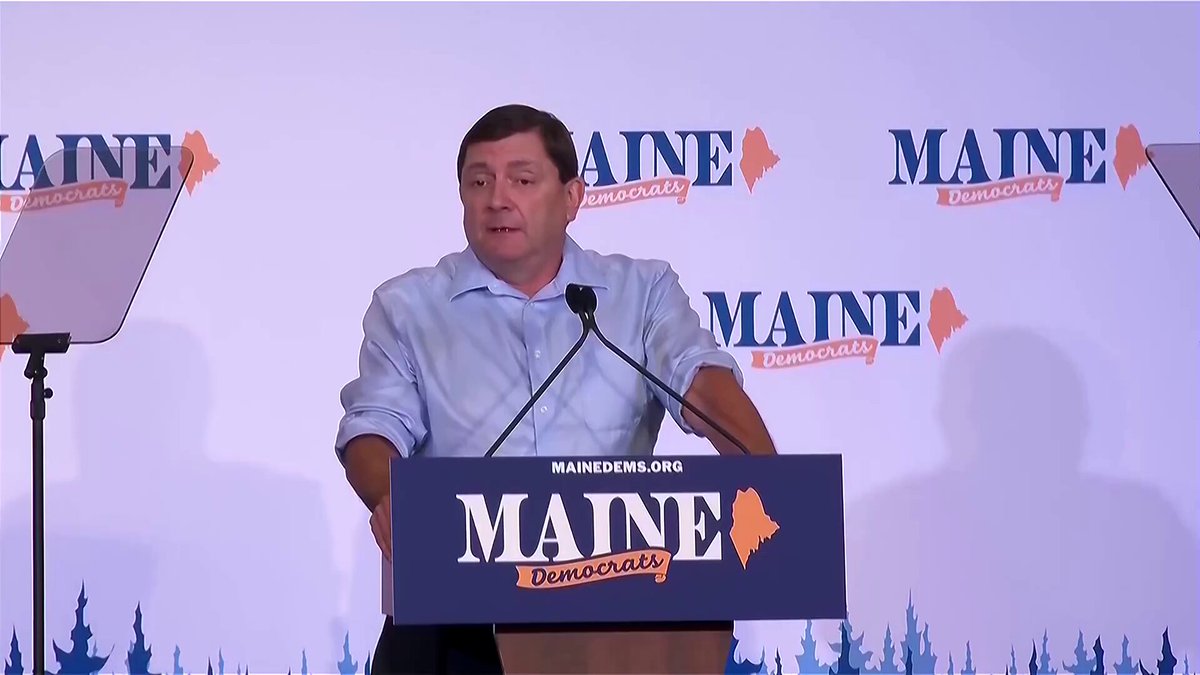
Senator Lindsey Graham of South Carolina died on 12 July 2026, his office confirmed in a brief statement carried by Telegram channels monitoring Washington shortly after the news broke. The cause of death has not been disclosed publicly; the announcement was described as sudden. Graham had been in open conflict with the Trump administration for weeks over the conduct of the war with Iran, and the timing puts a 25-year Senate career at the centre of the American national-security state to an abrupt close.
The death closes the chapter on a politician who, by any honest accounting, helped set the post-2001 Republican foreign-policy template and then became one of its loudest salesmen in the Senate. It also reorders a chamber that, after June 2026, had already shown signs of strain under the weight of an administration at war on two fronts. The immediate question is who replaces Graham at Armed Services and Judiciary, and whether his seat stays Republican when South Carolina's governor makes the appointment.
A senator built for the interventionist consensus
Graham entered the Senate in a January 2003 special election and never left the conversation. He voted for the Iraq war authorisation, championed the 2007 troop surge, toured Iraq and Afghanistan repeatedly with John McCain, and emerged after McCain's death in 2018 as the Republican Party's most identifiable hawk on cable news. In office he chaired and later sat on the Senate Judiciary Committee, and he held seats on Armed Services, Budget, and Foreign Relations at various points, giving him unusually broad reach into both the security and domestic-law portfolios.
That breadth is what made him useful to two very different presidents. He worked closely with the Obama administration on Iranian nuclear negotiations, then broke with Trump on the 2017 decision to redeploy US forces away from the Syrian border, and rebroken with Trump again over the 2026 Iran war. Graham's foreign-policy identity was always larger than any single administration; it was structural, located inside the foreign-policy establishment that has staffed Republican administrations from Reagan forward and staffed Democratic ones from Clinton forward. In Washington terms, he was bipartisan in a specific way: useful to whoever wanted the machine running.
The 2026 break with Trump
The break this year was unusually public. According to the Telegram channel myLordBebo, which has been tracking commentary around Graham in real time, the senator "was in conflict with Trump, among many other things recently" and "pushed for continuing the Iran war aggressively," even as the administration signalled it wanted a negotiated off-ramp. The channel framed Graham as having "basically ran Trump's foreign policy in 2026 and failed, throwing the US into another failed war with Iran," a reading that places him at the operational centre of a war whose public rationale has frayed.
If accurate, that reading is consequential. It implies Graham was not merely a vote the administration could count on but a driver of strategic choices, and that those choices ended in a war the White House is now trying to wind down. The conflict between senator and president would, in that telling, be less about temperament than about a disagreement over how to extract the United States from a commitment Graham wanted to deepen. The death removes the disagreement but not the war, the sanctions architecture that preceded it, or the regional rearmament Iran and its partners have undertaken since 2023.
The Senate after Graham
Graham's seat matters in three concrete ways. First, the Armed Services Committee, which has been the most consequential Senate committee for the conduct of the 2026 war, loses one of its most active members. Second, South Carolina's Republican governor, Henry McMaster, will appoint a replacement who will hold the seat until a special election in 2026 or, more likely, 2028. A McMaster appointee is unlikely to deviate far from the state GOP line, but the appointee will not carry Graham's seniority, his committee seats, or his relationships across the foreign-policy establishment. That transfer of institutional weight is non-trivial: committee seniority is the currency of congressional power, and it does not survive the death of its holder.
Third, the Senate as an institution loses a vote on intervention that, by Graham's own public posture, would have continued to support deepening US involvement in Iran. The Trump administration has been working the chamber hard since the war began; the calculus on that work shifts slightly with Graham gone, particularly if the White House now seeks votes for a withdrawal framework rather than continued escalation. The reading from myLordBebo that the administration "needed him in the Senate, but he was blocking" suggests the WhiteHouse's preference was for movement that Graham was obstructing. If so, the death removes the obstruction without the administration having to confront it politically.
What the death does not change
The disappearance of one senator does not unwind the architecture that produced the war. The Treasury sanctions regime on Iran, set in place across three administrations, predates Graham and continues to operate. The Israeli intelligence and operational partnership that has shaped US targeting decisions in 2026 was driven by multiple principals across the executive branch and is not a function of any single congressional ally. The CENTCOM force posture, the carrier strike groups moved into the Eastern Mediterranean, the Patriot deployments to Gulf partners, all of these are set in motion by bureaucracies that operate on their own clocks.
A more honest reading, then, is that Graham's death is consequential inside the Senate but not decisive for the war itself. The strategic question, whether the United States can extract itself from a Middle East commitment it is poorly positioned to deepen, will land on the same desks it would have landed on regardless of who held his seat. The difference is the texture of the debate in the chamber: there will be one fewer voice arguing for more war and one more gap on Armed Services that the next senator will take years to fill.
The sources cited above are limited to the Telegram channel myLordBebo, which has tracked Graham's recent trajectory and reported the news of his death on 12 July 2026. Major outlets had not yet published confirming reports at the time of writing. The cause of death, the official reaction from the Trump White House, and any forthcoming funeral arrangements remain unverified.
Desk note: Monexus ran this on the strength of a single Telegram source because wire confirmations had not yet published. The framing treats myLordBebo's read of Graham's role in the 2026 war as the channel's interpretation, not as established fact, and flags the structural consequences the death would have regardless of that interpretation.
Wire provenance
This editorial synthesis draws on the following public wire/social posts:
- https://t.me/myLordBebo
- https://t.me/myLordBebo
- https://t.me/myLordBebo