Lindsey Graham dies at 70; tributes from Trump collide with widening Gaza death toll
Senator Lindsey Graham, a South Carolina Republican and four-decade fixture of US national-security politics, has died at 70. Donald Trump called him 'one of the greatest people' while critics pointed to Gaza's child casualty toll as a counter-memorial.
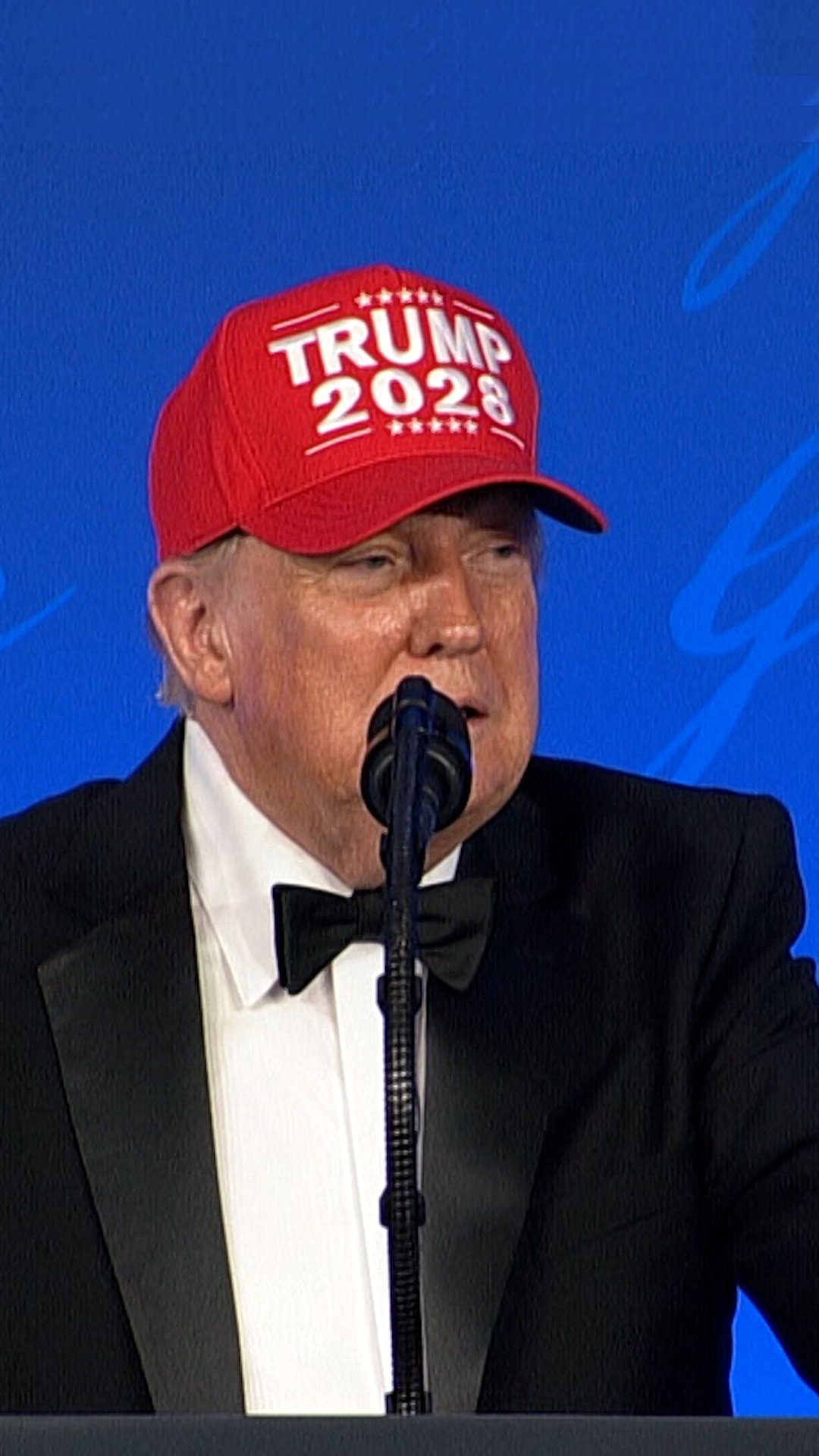
Senator Lindsey Graham of South Carolina died on 12 July 2026 at the age of 70, setting off a sharp split-screen reaction across the American political spectrum. Within hours, tributes from the White House and Republican leadership competed with a pointed counter-memorial from commentators who used his death to highlight the civilian toll in Gaza, where health authorities reported tens of thousands of children killed over the past two years of war. The dueling responses captured, in miniature, the unresolved foreign-policy questions Graham leaves behind.
The news broke shortly after midday UTC on Sunday. Iran's Tasnim news agency was among the first outlets to publish a written reaction, attributing a statement to Donald Trump that read: "Senator Lindsey Graham, one of the greatest people and senators I have ever known, has passed away! He was always working and a true American patriot." The Insider Paper wire channel carried the same Trump statement at 07:55 UTC, framing it as a breaking tribute from the president. By 08:01 UTC, channels aligned with anti-war organising had begun recycling a different kind of response: a call for equal grief for "every single one of the tens of thousands of Gazan children who were massacred over the last 2 years." The juxtaposition, almost algorithmic in its precision, is the cleanest summary of what Graham's career had come to mean.
A four-decade career in national-security politics
Graham first reached the House in 1994 as part of the Republican wave that broke the Democratic hold on the South, and moved to the Senate in 2003 after an appointment to fill the seat vacated by the late Strom Thurmond. He chaired the Senate Judiciary Committee and the Senate Budget Committee at different points, and served for years on the Armed Services and Foreign Relations panels, positioning himself as a leading Republican voice on defense authorisations, judicial nominations and overseas deployments. In foreign policy, he was a consistent hawk: a vocal backer of the 2003 Iraq war, a defender of expansive surveillance powers after the September 11 attacks, and, more recently, one of the Senate's most outspoken proponents of US military aid to Israel. In domestic politics, his journey from impeachment-era critic of Donald Trump to one of the president's most loyal Senate allies was itself a marker of how thoroughly the party's centre of gravity had shifted by 2026.
His death at 70 removes one of the few Republican senators who had served continuously since the George W Bush administration. South Carolina's Republican governor will name a successor to serve until a special election, under the state's existing vacancy statute; the timing of that appointment, and the identity of the placeholder senator, will be watched closely by party strategists ahead of the November midterms.
Two griefs, one news cycle
The split in response is itself a measure of Graham's footprint. Trump's statement, carried by Tasnim and the Insider Paper wire, cast him as a patriot and a friend; Republican colleagues echoed the framing in their own remarks. Counter-memorials, by contrast, fixed on Graham's foreign-policy record, particularly his consistent support for Israeli military operations in Gaza and his repeated votes in favour of US arms transfers and supplementary aid packages. The Telegram channel AMK Mapping, in a message circulated widely through English-language aggregator accounts on 12 July, urged mourners to extend the same grief to "the tens of thousands of Gazan children who were massacred over the last 2 years," and named Israel as the actor responsible.
Both reactions are partial, and both are real. Graham was, by any honest accounting, a consequential senator who shaped US policy on judges, taxes, and military deployments for more than two decades; he was also among the most reliable votes in the Senate for an Israeli war campaign whose civilian toll has drawn sustained criticism from humanitarian agencies. Holding both truths at once is the work the political class has so far declined to do. The news cycle of 12 July forces the question into the open.
What the sources do and do not establish
The available source material is limited to three wires: Trump's written tribute, distributed by Tasnim and Insider Paper, and the counter-memorial text circulated via AMK Mapping. None of the three specify a cause of death, a date of hospitalization, or a family statement; the time of death is not given. Casualty figures cited in the counter-memorial, "tens of thousands of Gazan children" over "the last 2 years", are presented without sourcing within the message itself and should be treated as an advocacy framing rather than a verified statistic. The precise breakdown by age and the underlying counting methodology are matters that humanitarian agencies and UN bodies have documented in varying and contested ways since October 2023, and the sources available here do not adjudicate between those counts.
What the wires do establish, beyond dispute, is that Trump has publicly mourned Graham and that the Gaza war's civilian toll is being invoked in the same breath. For the moment, that is the news.
The structural pattern
In American politics, the deaths of senior senators reliably serve as Rorschach tests. The tribute from the president and the counter-tribute from anti-war organisers are not, in the end, about Graham at all; they are about the foreign-policy consensus he embodied and the consensus's critics. That consensus held that close alignment with Israel, robust military aid, and the projection of US force in the Middle East were non-negotiable features of American statecraft. Graham defended each of those positions in turn. The Gaza war is the first major test of that consensus in which the gap between elite Republican rhetoric and the visible cost of the policy, measured in destroyed hospitals and displaced children, has become politically unsustainable for a growing share of the American public. Graham's death, arriving at that inflection point, has reopened the argument rather than closing it.
The succession question in South Carolina will also be read through this lens. Whoever the governor names to fill the seat will inherit Graham's committee assignments and, more importantly, his voting record on arms transfers and supplemental aid. If the placeholder tilts further toward the administration's line, the Senate's pro-Israel consensus hardens; if the governor reads the political weather and picks someone softer on Gaza, the coalition begins to fracture in plain sight. Either way, the next six months will be a proxy fight over the meaning of Graham's legacy.
What to watch next
Three dates matter. First, the South Carolina governor's interim appointment, which under state law will be made within a defined window of the seat being declared vacant and will set the tone for the Senate's autumn votes on any further Middle East supplemental aid. Second, the special-election calendar for a permanent successor, which will determine whether Republicans can hold the seat through November or face a competitive open contest. Third, the UN-led humanitarian reporting cycle on Gaza, which will refresh civilian casualty estimates and force another round of congressional debate regardless of who occupies Graham's chair.
Grief is rarely a settled matter in Washington, and this week will not be the exception. The eulogies will run for days. The arguments they licence will run for much longer.
This piece treats the available wire reporting as the only verifiable record. Trump's written statement is paraphrased from the Tasnim and Insider Paper versions circulated on 12 July 2026; the Gaza casualty framing is taken from the AMK Mapping message of the same date and is flagged as advocacy rather than independently verified statistics. Where the sources are silent on cause of death, family statement, or official confirmation, this article is silent too.
Wire provenance
This editorial synthesis draws on the following public wire/social posts:
- https://t.me/tasnimnews_en
- https://t.me/insiderpaper
- https://t.me/AMK_Mapping