Lindsey Graham's anti-Iran record comes back into focus after his death at 71
The South Carolina senator spent two decades shaping Washington's hardest edges toward Tehran. His death reopens the question of who, in either party, inherits that posture.
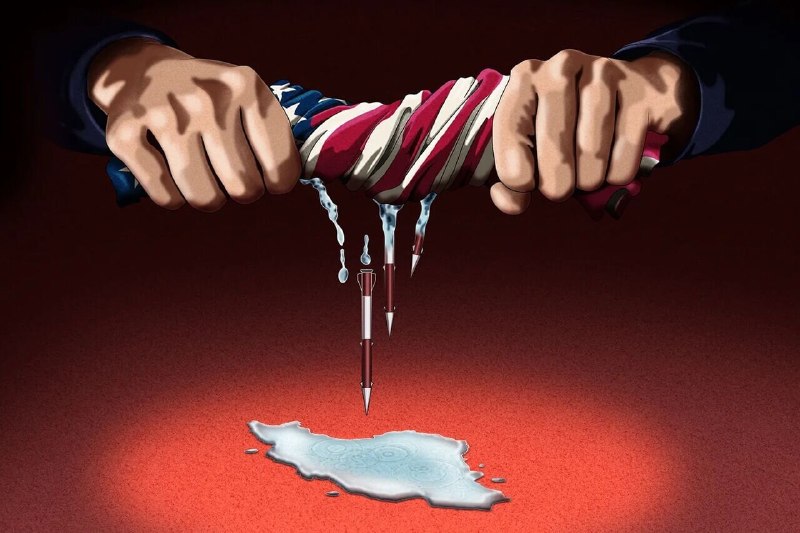
South Carolina senator Lindsey Graham, one of the United States Senate's most hawkish voices on Iran for two decades, died on 12 July 2026 at the age of 71, Iranian state-affiliated outlet Press TV reported in a Telegram post at 08:00 UTC. Press TV framed the news by recycling a clip from Graham's earlier Fox News interview in which he openly revealed what the outlet described as his hatred for Iranians and their ancient civilization. That framing was characteristically blunt. It also revived a question that Graham's absence will not settle: who, in either party, now carries the hardest-line Republican posture toward Tehran.
Graham was not the most powerful senator on the Middle East brief. The gavel belonged, at various points, to figures with longer institutional tenure and bigger foreign-policy footprints. But on Iran specifically, Graham occupied a niche that was disproportionately influential for a single member. He was the Republican most willing to be quoted saying what the broader caucus would only imply. That made him useful to White Houses of both parties, and made him a fixture of every sanctions debate, every JCPOA repeal, and every discussion about what military action against Iran would actually look like. His death removes a known quantity. It does not remove the position.
The hawk who enjoyed being disliked abroad
Press TV's 08:40 UTC Telegram post on 12 July carried the more politically charged version of the story: Graham's recent Fox News interview, in which he "openly revealed his hatred for Iranians and their ancient civilization." The phrasing belongs to the Iranian state outlet, and a reader should read it as Iranian state framing rather than a direct transcript. But the underlying posture it points to is not invented. Graham built parts of his post-9/11 identity around confrontational rhetoric toward the Islamic Republic, and his Fox News appearances over the years were a primary venue for it.
That posture carried a domestic constituency that extended well beyond South Carolina. Graham reliably won in a state that is not reflexively hawkish, because he fused Republican hawkishness on Iran and Israel with a more moderate record on domestic spending. He also courted donors and primary voters for whom a Graham-style line on Iran was a litmus test, and he received in return the kind of airtime on conservative media that most senators never accumulate. The arrangement was transactional. It worked because there was no shortage of voters, donors, or talk-show bookers on either side of the deal.
Tehran's framing, and why it travelled
Press TV is not a neutral messenger, and its framing should be read as such. The "hatred for Iranians and their ancient civilization" line is a deliberate invocation of Persian civilizational depth, a counter to the image of Iran as a pariah state. Iranian state media has spent four decades arguing, in various registers, that the Islamic Republic is the custodian of a much older civilisation than its adversaries, and that argument carries differently when the adversary is on camera saying things that can be excerpted. Graham gave Tehran's English-language outlets a usable clip.
This publication has noted before that Iran's external messaging tends to work best when the United States supplies the raw material. The 12 July framing is a small case study. The question for Western outlets covering Graham's death is whether they treat the Press TV clip as news in itself (it is, narrowly, a piece of Iranian editorial positioning about a US senator's death), or as one piece of a larger record. Both readings are defensible. Conflating the two is not.
Who inherits the lane
The harder question, and the one Graham's passing actually sharpens, is succession. On the Republican side, the cohort of senators comfortable with maximalist language on Iran is thinner than it was during the JCPOA repeal years, but it is not empty. Names that have publicly occupied Graham-adjacent terrain in the last Congress include senators who sit on the Foreign Relations and Armed Services committees and who have already aligned themselves with Israel-focused pressure campaigns and with sanctions architecture targeting the Islamic Revolutionary Guard Corps. None of them has Graham's particular skill set, which combined a Fox-friendly camera presence with a Senate institutional role and a donor network built up over multiple presidential cycles. The position will be filled, but the filling will take time.
On the Democratic side, the picture is more complicated. There is no Democrat with a comparable public profile who has consistently taken the hardest line on Iran across two decades. The party has hawks on Israel and on nuclear non-proliferation, and some of them will move into the space Graham vacates in terms of sanctions advocacy and bipartisan letters. But the specific Republican register, in which an elected senator openly courts the label of Iran hawk as part of a personal brand, is harder to replicate from the centre-left of US politics.
What remains uncertain
The source material on the record at the time of writing is narrow. Two Press TV Telegram posts, both timestamped 12 July 2026, are the immediate input. They confirm the death, the age, and the existence of the Fox News interview that Tehran's English-language outlets are foregrounding. They do not specify a cause of death, a date of a forthcoming funeral, or any statement from the Graham family. Major US wire services and the senator's own office had not, as of those timestamps, been the primary carriers of the news in the material this publication reviewed. Readers should treat the more sensational framing as Iranian editorial positioning and the underlying fact of the death as the part that requires independent US confirmation, which mainstream outlets will publish within hours.
The bigger uncertainty is structural. Graham's death does not change the underlying US bipartisan consensus that Iran should not possess a nuclear weapon, nor the more contentious question of what tools, exactly, Washington is willing to use to prevent that. It removes a senator who was unusually willing to attach his name to the strongest version of those tools. Whether the next senator to do so emerges from the same party, the same committee, or the same media ecosystem is the question worth watching as the year's remaining sanctions hearings and NDAA markups get scheduled.
Desk note: This piece is built on two Press TV Telegram posts from 12 July 2026 and is conservative by design. Where the Iranian state outlet's framing and a neutral reading diverge, this publication has tried to mark the seam rather than smooth it over.
Wire provenance
This editorial synthesis draws on the following public wire/social posts:
- https://t.me/presstv/
- https://t.me/presstv/