The death of Lindsey Graham, and the Atlantic's short fuse over Iran
Iranian state-aligned outlets celebrated the death of Senator Lindsey Graham with a venom that says less about the man than about a sanctions architecture now in retreat.
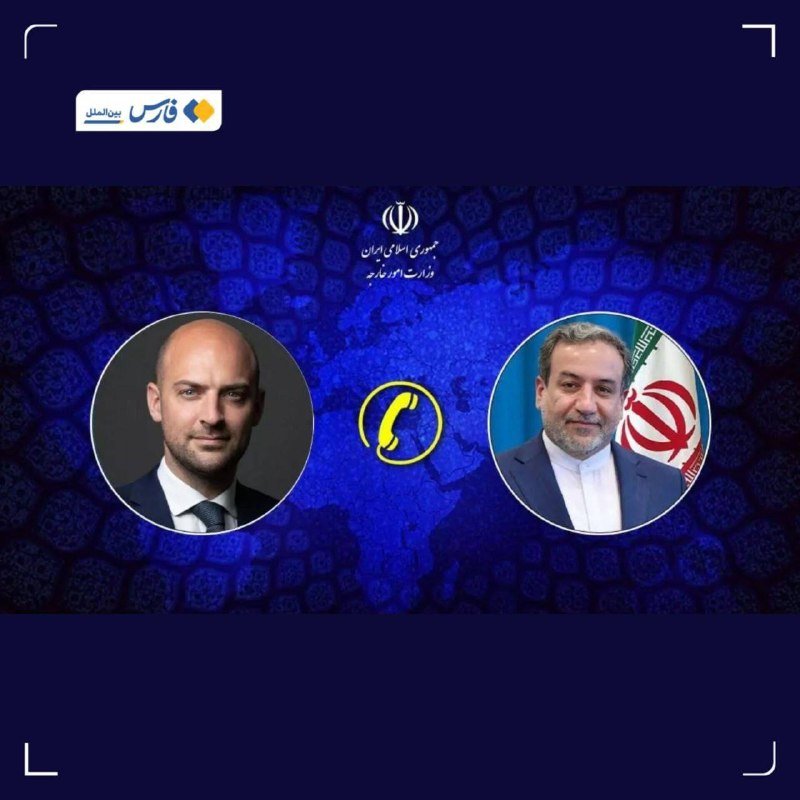
The anchor of Iran's Khabar Network read the news twice on air, then said he would happily read it again. By 07:29 UTC on 12 July 2026, Tasnim Plus had posted a clip of the segment under a caption describing the South Carolina Republican as an anti-Iranian senator and a supporter of the Zionist regime. By 07:35 UTC, Tasnim's English service was carrying President Donald Trump's first reaction: a tribute that called Graham one of the greatest people and senators he had ever known, and a true American patriot. By 07:43 UTC, @disclosetv had the headline: Graham dead at 71. By 07:45 UTC, the Abu Ali Express channel was reminding readers that the late senator had been, in their phrasing, a great supporter of the Iranian opposition. By 07:53 UTC, Tasnim was reposting the Khabar Network clip with a two-line caption that said, in Persian, that the news was so sweet the anchor had read it twice. The deluge arrived in twelve minutes flat.
It is worth being clear about what is, and what is not, in the reporting. None of the source items specify a cause of death. None name a hospital, a jurisdiction, or a family statement beyond the brief Trump quote carried by Tasnim English. The Atlantic's obituary industry will catch up over the next 24 hours; for the moment the only certainty is the timestamp: a serving US senator is dead at 71, and Iranian state-aligned media are marking the moment with the glee usually reserved for the fall of a government.
The sanctions architecture in miniature
Graham's relationship with the Iran file was not ceremonial. He was the most vocal Republican advocate for the sanctions regime that has defined US-Iran policy since 2010, the author of bipartisan measures targeting the Islamic Revolutionary Guard Corps, a co-architect of the 2015 nuclear-related framework's later unraveling, and a senior member of the Senate Armed Services Committee at a moment when two US carrier groups were being repositioned around the Strait of Hormuz. To read Khabar Network's anchor celebrating his death is to watch, in real time, the propaganda reflex of a state that has spent a generation being punished by the very instruments Graham spent his career sharpening.
That reflex is not random. It is the predictable response of a sanctioned establishment to the death of a sanctioned-architecture's most consistent Republican champion. The frame matters because it tells the reader what kind of man the mullahs feared most: not the bombast, but the bureaucracy. Graham's lasting contribution was procedural, the kind of legislative plumbing that survives any one administration.
The clap-back, and the asymmetry it exposes
The structural asymmetry is the real story. Iranian state media can mourn an American adversary on the front page of its most-read English outlets and lose nothing. There is no counterpart permission in the US system. American cable news is already producing two frames in parallel: the Trump tribute, faithful and personal, and the policy frame, where Graham is recast as a hawk whose departure may accelerate whatever nuclear arrangement is being negotiated through backchannels in Geneva and Muscat. The Iranian frame is permitted only one direction: triumphalism, performed for a domestic audience that has been told, for thirty-five years, that the United States is the principal source of its suffering.
That asymmetry is the political fact this publication wants to mark. Western media treats Iranian state coverage as a curiosity, a translation exercise. Iranian state media treats American political coverage as a weapon, useful precisely because it is permitted to gloat. The result is a press ecology in which the same event lands in two completely different rooms.
What an Atlantic obituary will not say
The coming round of obituaries will, with the best will in the world, be Atlantic obituaries. They will name Graham's upbringing in Seneca, South Carolina; his Air Force service as a reservist JAG; his improbable 2015 primary survival; his late-career turn into a Trump-world loyalist; his friendships across the aisle, with Joe Manchin and the late John McCain. They will likely omit, or footnote, the detail that the sanctions bills he shepherded are the reason an Iranian anchor can mark his death with a smile on state television.
The omissions are themselves editorial. The Washington consensus treats the Iran file as a policy debate; the Tehran consensus treats it as a siege. Graham sat, however awkwardly, at the intersection: an Atlantic legislator whose signature was the kind of paper a state under siege learns to read closely.
Stakes, in plain language
A dead senator is a vote, a committee assignment, and a coalition. South Carolina will send a replacement to Washington; the Armed Services Committee will rotate a chair; the sanctions architecture Graham helped build will outlive him, because most of it is statute, not sentiment. What will not survive intact is the Atlantic's short fuse over Iran. The next round of negotiations, whether they take place in Geneva, Muscat, or back-channeled through a Gulf intermediary, will be conducted by an administration that has just lost one of its two or three most reliable pro-sanctions voices in the upper chamber. Tehran knows this. The Khabar Network anchor read the news twice because he understood, in real time, that the US side of the table has just become a slightly easier place to sit.
The remaining uncertainty is conventional. The source items do not specify a cause of death, do not identify the official US confirmation channel beyond the Trump quote, and do not record any Republican leadership statement at the time of writing. A Reuters or AP wire will likely land within hours, and the editorial frame will harden around it. For now, the only verified fact is the timestamp: at 07:29 UTC on 12 July 2026, the news of Lindsey Graham's death reached an Iranian anchor who decided it was worth reading twice. Monexus framed this as an Atlantic-versus-Tehran media collision; the wires, once they land, will run it as a US domestic-political obituary.
Wire provenance
This editorial synthesis draws on the following public wire/social posts:
- https://t.me/tasnimnews_en
- https://t.me/tasnimplus
- https://t.me/tasnimplus
- https://t.me/disclosetv
- https://t.me/abualiexpress
- https://t.me/tasnimnews_en