Kathy Butterly's ceramic bodies that refuse to sit still
Hyperallergic's look at Kathy Butterly's quasi-vessels lands at a moment when the small ceramic is being asked to carry a very large idea: that the body, the vessel, and the landscape may be the same grammar.
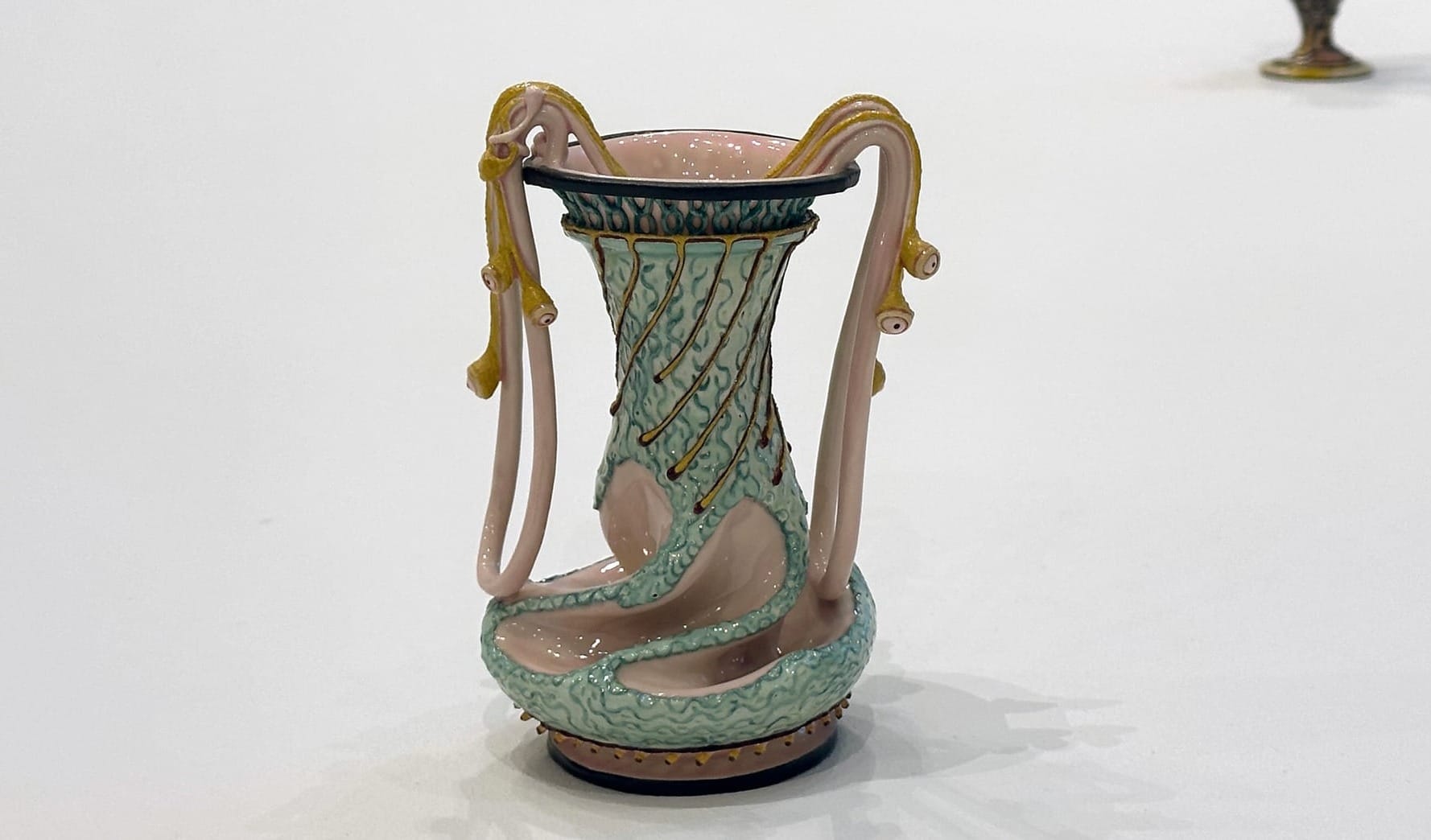
On 10 July 2026, Hyperallergic published a feature on Kathy Butterly that treats the small ceramic as a problem of scale. The vessels, some little larger than a fist, fold in on themselves, dent, split, fold again, and end up reading less like pots than like bodies caught mid-gesture. They sit in the hand, not on a plinth. Their politics, to the extent they have one, live in the refusal to behave.
That is the argument Hyperallergic's editors are advancing in their review of her quasi-vessels: that the folds, indentations, apertures, and coverts in Butterly's forms are not decoration but syntax, a way of writing the body, the biomorphic, and the geological into a single object. The piece lands in a cultural moment when the figurative has crept back into sculpture through the side door, after a generation in which abstraction was assumed to have won the argument by default.
What the vessels are doing
Butterly's ceramics are recognisable on sight and impossible to reduce to a recipe. A piece might open like a flower, close like a wound, or pinch itself into something that reads, at a glance, as a torso, a seed pod, a cabbage, a sleeping animal, all at once. The Hyperallergic feature catalogues the vocabulary she has built across her career: folds that suggest skin under tension, indentations that read as pressure from a thumb, apertures that function less as openings than as held breaths.
The argument the article makes is structural rather than biographical. By treating the vessel form as a starting point and then distorting it until it nearly ceases to be a vessel, Butterly forces a question that the ceramic tradition has usually avoided: what is the difference between a container and a body, and at what point does the difference collapse? The quasi-vessel is the form that survives that collapse. It still pours, or pretends to. It still holds the eye. But it has stopped pretending that holding is a neutral act.
A countervailing read
The obvious counter is that this is a formal game, not a politics, and that the literary scaffolding some viewers bring to a small coloured object is doing work the clay is not. A butter dish is a butter dish. The eye that wants to see a torso in a pinch pot is bringing the torso with it.
There is something to that. The ceramic world is, structurally, a market for connoisseurship, and connoisseurship rewards the reading-in of meaning. Butterly's work is collectible; her pieces are small, technically virtuosic, and they photograph well, which is not irrelevant to the prices they command. The danger is that the biographical reading, the artist's hand as stand-in for the artist's body, becomes a sales pitch dressed up as a thesis. The Hyperallergic feature, to its credit, does not lean on biography. It stays with the object and lets the object carry the argument. That is the right call, and it is also the reason the piece reads as criticism rather than publicity.
Why the small ceramic matters now
The interesting structural point is what the small ceramic is being asked to do in 2026. For most of the twentieth century, the ambitious sculpture was the big sculpture: steel, concrete, the heroic object on a heroic plinth. The small ceramic was decorative, domestic, gendered in ways the art world declined to interrogate. Two things have shifted. The first is the generational revaluation of craft after decades in which craft was treated as the lesser cousin of fine art. The second is the market's discovery that the small, well-made object holds its value through every kind of cycle, including the ones that cratered the big-sculpture market.
Butterly sits squarely in the overlap. Her work is materially small, intellectually ambitious, and made by hand in a period when hand-making is read, fairly or not, as a moral position. The Hyperallergic feature is part of a broader pattern in which critics are reaching for the ceramic to talk about things the steel and concrete tradition could not: interiority, fragility, the body as site rather than as monument. The vessel that folds, dents, and refuses to behave is the right image for that conversation, and Butterly has been making that image for long enough to have earned the authority of it.
What to watch
The piece ends without a closing thesis, which is appropriate. The quasi-vessel is, by definition, a form that resists resolution. What is worth watching is whether the current critical appetite for the small, the bodily, and the handmade survives the next downturn in the market for high-end contemporary craft. It survived the 2008 cycle. It will be tested again. The artist to watch is not Butterly, who is already established, but the cohort of younger ceramicists whose work the current revaluation is making legible for the first time. The form that refuses to sit still is easier to make when the room is willing to look at it.
Hyperallergic's 10 July 2026 feature is the only source cited for the claims above; the article's descriptions of folds, indentations, apertures, and coverts are paraphrased from the original. Readers seeking biographical detail, exhibition history, and pricing will need to consult Butterly's gallery pages directly, as the source does not catalogue them.