Karlovy Vary's New Filmmakers Get a Pep Talk, Not a Roadmap
Industry leaders at Karlovy Vary told emerging European directors to be brave, curious, pushy and fearless. The advice is familiar. The structural conditions behind it are not.
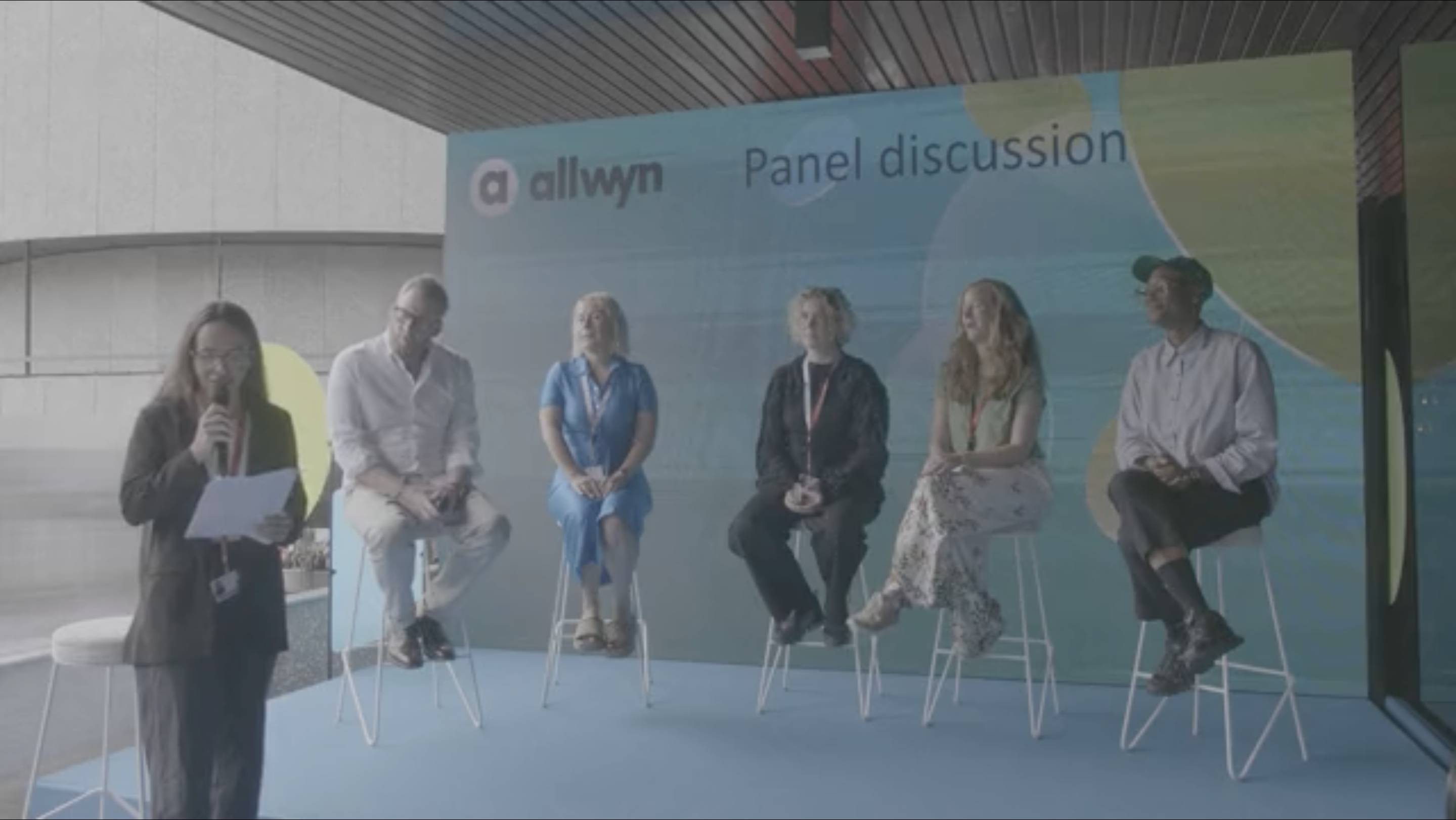
On 10 July 2026, in the spa town of Karlovy Vary, a panel convened by Variety and the lottery operator Allwyn told a room of early-career European filmmakers what their industry wants from them. Brave. Curious. Pushy. Fearless. The four adjectives have circulated through festival greenrooms for years; what made the session notable was less the vocabulary than the audience it was aimed at, and the company paying for the room.
The festival itself is in the middle of a milestone: 2026 marks its 60th anniversary edition, a fact the industry has been foregrounding across press materials and on-stage remarks. Against that backdrop, Future Frames, the programme that surfaces emerging directors, functions less as a talent showcase than as a soft instrument of pipeline-building: who gets mentored, who gets introduced to financiers, who learns the grammar of pitching to global streamers before the streamers' acquisitions teams learn their names. The Future Frames cohort is the next decade's supply chain.
The advice, and what it costs
The panellists, drawn from production, distribution and platform-side roles, treated bravery less as a creative disposition than as a posture. Be pushy in the room; be fearless on the page. The implicit message: a director's first feature is now a logistics problem as much as an artistic one, and the directors who clear the gate tend to be the ones who treat sales agents, festival programmers and commissioning editors as collaborators rather than gatekeepers. The panellists also made clear that the same traits get read differently depending on who carries them. A young director from a well-connected national cinema arrives at Karlovy Vary with a network already built; a debut filmmaker from a smaller territory arrives with the same script and a thinner address book.
What the panel did not dwell on, and what any honest account of European arthouse cinema in 2026 has to confront, is the financing arithmetic behind the pep talk. The kinds of films Future Frames tends to surface tend to be mid-budget, multilingual and stylistically ambitious, exactly the category under pressure from both ends. Public broadcasters across the continent have trimmed their acquisition budgets as streaming platforms have consolidated. The platforms, in turn, have narrowed their commissioning windows toward English-language prestige and away from the regional co-productions that historically fed the festival circuit. The director who is told to be brave is being told, in effect, to outflank a market that is no longer structured to absorb her.
A festival that has outlived its rivals
Karlovy Vary's claim on this conversation is structural. The festival's 60th anniversary arrives at a moment when several of its peer events, from regional European festivals to mid-sized industry markets, have folded, merged or quietly scaled back. The Czech festival has used that consolidation to position itself as a fixed point: an A-list gathering in a mid-sized European country, with the tax incentives and co-production infrastructure of a small but functional national cinema. The Future Frames programme is part of that positioning. It is also where Allwyn, the lottery operator co-sponsoring the panel, becomes relevant. Lottery and gaming-adjacent brands have spent the past decade buying adjacency to cultural events as their public-facing political position has grown more contested. Sponsorship money at this scale tends to come with a soft expectation: that the festival's prestige reflects well on the sponsor, and that the next generation of European filmmakers carries that goodwill forward.
What the sources leave out
The reporting around the panel emphasised tone over substance, which is conventional for festival coverage. Variety's write-up carried the four-adjective framing straight through. The structural question, of who pays for the films that emerge from these programmes and on what terms, was largely absent from the on-stage discussion. The panel participants named were industry figures rather than public-finance administrators, and the conversation accordingly tilted toward personal disposition rather than the architecture of European film funding. Sources did not specify how many of the directors in the Future Frames cohort had secured financing for their next projects by the time the panel convened, nor how many of the films premiering at this year's edition would clear distribution beyond the festival window.
There is also a question of whose stories get told. The Future Frames cohort, like most such programmes, draws disproportionately from filmmakers whose national cinemas have existing sales infrastructure into Western Europe. Filmmakers from the global majority working in Europe, particularly those without a national cinema apparatus behind them, are present at the festival but less visible inside the formal pipeline. The panel's language of bravery and curiosity is, in practice, unevenly available. A director with a passport that clears visa easily and a national film fund that supports festivals is differently positioned than one without. The pep talk does not address that asymmetry; it merely assumes the room.
What to watch
The Festival's 60th-anniversary edition will play out across the next week, with industry delegations and acquisition teams cycling through until the closing weekend. The more interesting data points will arrive after the festival, when the slate of projects introduced at Future Frames moves into financing rounds, sales-agent attachments and the first commissioning conversations with the streamers. If the cohort from this year's edition clears a higher share of those next steps than last year's, the panel's advice will look prescient. If it does not, the structural argument, that European arthouse cinema's mid-budget centre is hollowing out regardless of how brave the directors in it are, will look harder to dismiss.
For now, the takeaway from Karlovy Vary is less the adjectives than the institutional choreography around them. A 60-year-old festival, a lottery sponsor, a magazine host, and a generation of filmmakers told to be pushy in rooms where the doors are getting narrower. The gap between the pep talk and the market is the story. The market will set the terms.
Desk note: Monexus treated this as a structural story about European film financing rather than a personality-driven panel recap. The source material is one Variety write-up; the analysis builds on what the report leaves unsaid.