Iran strikes U.S. missile unit in Kuwait: what we know and what we cannot yet confirm
Iranian-aligned and OSINT channels posted video of smoke columns over Kuwait on 12 July 2026 and claimed a missile strike on a U.S. Army unit. Independent corroboration remains thin, and the evidentiary base for the most consequential claim has not yet been established.
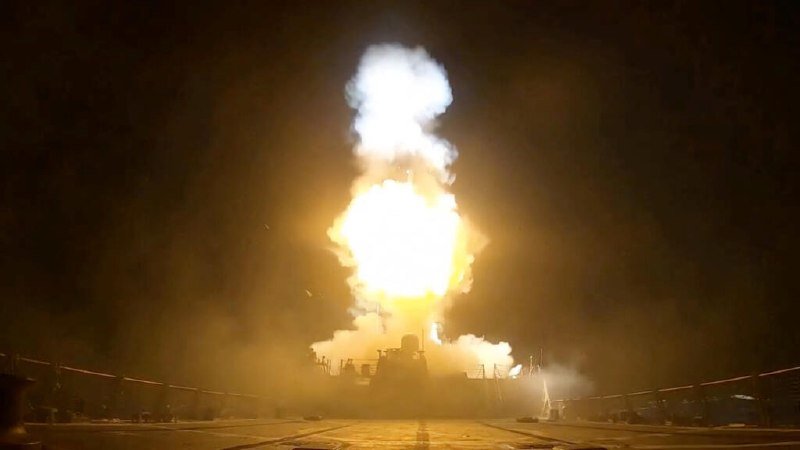
Smoke columns rose over Kuwait in the early afternoon UTC of 12 July 2026, and within thirty minutes three OSINT Telegram channels had converged on a single, extraordinary claim: that Iranian missiles had struck a United States Army missile unit on Kuwaiti soil. Telegram channel Clash Report posted the strike allegation at 15:31 UTC. GeoPWatch and rnintel followed within the hour with footage purporting to show the impact site. No Western wire service, no U.S. Central Command (CENTCOM) spokesperson, and no Kuwaiti government official had confirmed the underlying claim at the time of writing.
The reporting is consequential because of what the claim, if true, would represent: a direct Iranian strike on a deployed U.S. military formation in a Gulf state that hosts thousands of American service members, sitting between the unresolved Iran–U.S. nuclear file and a regional corridor already running hot through Iraq, Syria, and the Strait of Hormuz. The evidentiary base for the central claim remains thin.
What the channels actually said
Clash Report's 15:31 UTC post framed the event with a single declarative line: that reports indicated an Iranian missile strike on a U.S. Army missile unit in Kuwait. The post carried no sourcing chain, no named official, and no link to a corroborating outlet. GeoPWatch, at 15:24 UTC, paired the same claim with footage it described as showing "substantial smoke columns" and "the impact site of the strike on Kuwait by Iran." rnintel reposted the GeoPWatch footage at 15:19 UTC. GeoPWatch had itself logged the earliest item in the cluster at 15:02 UTC, when it described "reports of explosions in Kuwait awaiting confirmation."
The cluster's internal sequencing is consistent with a single originating claim propagating across OSINT feeds: an initial unverified report, followed within twenty minutes by video framed as confirmation, followed within an hour by a more specific target attribution. That is the shape of how a strike rumor circulates on Telegram in the first hours of a fast-moving incident, not the shape of a verified event with an established ground truth.
What we verified, and what we could not
This is the part of the ledger that matters most for any reader deciding how much weight to put on the claim.
Verified: Three Telegram channels (Clash Report, GeoPWatch, rnintel) carried the strike claim and the accompanying footage between 15:02 and 15:31 UTC on 12 July 2026. Two of the four available image items in the source cluster depict smoke columns over a built-up area consistent with footage taken from a distance; a third appears to depict an impact crater or scorched ground. The cluster shows the standard OSINT pattern of an initial unverified report followed by footage framed as visual confirmation.
Not verified: No wire service has published an independent confirmation of an Iranian missile strike on a U.S. Army unit in Kuwait. CENTCOM has not posted a public statement on the incident in the channel's source window. The Kuwaiti Ministry of Defense and the Kuwaiti Ministry of Foreign Affairs have not been cited in any of the source items as having commented. There is no second-source attribution of the originating claim to a named Iranian, American, or Kuwaiti official. The video material has not been geolocated or chronolocated against open-source terrain data in any source item available to this publication.
What this means for the reader: the cluster establishes that an event, or a perception of an event, occurred in Kuwait on the afternoon of 12 July 2026, and that pro-Iran and pan-Arab OSINT channels have attributed it to an Iranian strike on a U.S. Army missile unit. It does not yet establish that a U.S. Army missile unit was struck by Iranian missiles.
Why the framing matters, even before confirmation
Even an unverified strike claim of this scale travels fast. Gulf-based U.S. formations sit inside a long-running deterrent architecture aimed at Iran, and any claim of a successful strike against them, whether confirmed or not, recalibrates expectations on both sides of the Strait of Hormuz. Iranian state-aligned channels have an incentive to amplify even unverified success narratives; U.S. Central Command has an incentive to deny quietly when the underlying facts are unclear; Kuwaiti authorities have an incentive to keep public statements minimal in the first hours of a sensitive incident on their territory.
Each of those incentives is structural, and each shapes what ends up on the wire. The OSINT Telegram ecosystem, which has become a primary channel for first-hour reporting across the Middle East since 2023, sits in the middle of that triangle, transmitting claims before they have been either confirmed or denied by the institutions that would have the standing to do either.
The structural pattern is familiar. Open-source channels are now routinely first to scene, and Western wire services routinely wait for official attribution before publishing. That gap, which can run anywhere from ninety minutes to a full news cycle, is precisely the window in which the framing of an event gets set by whoever moves first with a confident read. On 12 July 2026, the first confident read came from channels with a known directional bias toward Tehran's narrative of the conflict.
What to watch next
Four verification events would tighten this picture materially, in roughly the order in which they tend to arrive. A named U.S. defense official either confirming casualties or describing the incident in any form; a Kuwaiti government statement of any kind; a satellite imagery provider releasing post-strike imagery of the purported impact site; and an Iranian state media (IRNA, PressTV, Tasnim) statement that goes beyond what the Telegram channels are already circulating.
Until at least one of those four arrives, the responsible read of the public record is narrow. Something visible, smoke, an impact site, an audible detonation, appears to have occurred in Kuwait on the afternoon of 12 July 2026. Several Telegram channels have attributed that visible event to an Iranian missile strike on a U.S. Army missile unit. The chain of custody from the originating event to that attribution has not yet been established by an independent outlet with on-the-ground access or with the institutional standing to make the claim stick.
The stakes are not theoretical. A confirmed strike on a deployed U.S. formation in a Gulf host state would, in the prevailing regional environment, move the Iran–U.S. confrontation several rungs up the escalation ladder. A confirmed hoax would also have consequences, because the next time a real event occurs in Kuwait, the prior unverified claim will be in the file of every official deciding how to respond. Either way, the public record at 15:31 UTC on 12 July 2026 is a claim, not yet a fact, and the difference matters.
This publication tracks OSINT-channel claims against independent wire confirmation in the first 24 hours of any reported kinetic event in the Gulf. Where the originating channels have a documented directional bias, that bias is named in the body of the article rather than implied.
Wire provenance
This editorial synthesis draws on the following public wire/social posts:
- https://t.me/ClashReport
- https://t.me/GeoPWatch
- https://t.me/rnintel
- https://t.me/GeoPWatch
- https://t.me/GeoPWatch