Tehran doubles down on Hormuz as Polymarket puts a U.S. blockade at 53%
A Polymarket contract puts the chance of a U.S. blockade of Iran by end-August at 53%, as Tehran rejects Washington's demand to reopen the strait without tolls and the UAE quietly ramps crude output to record levels.
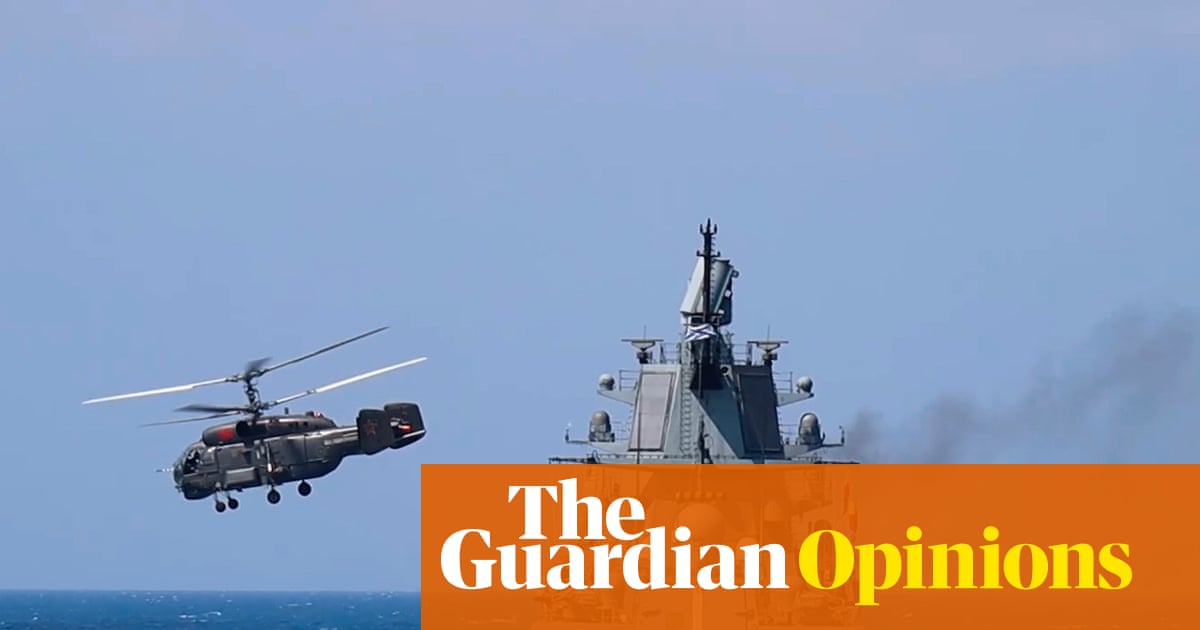
A prediction market is now pricing a U.S. naval blockade of Iran at roughly 53% by the end of August, posted on the Polymarket contract at 03:15 UTC on 12 July 2026, even as Iranian officials publicly rebuff Washington's demand to reopen every lane of the Strait of Hormuz without tolls and the United Arab Emirates quietly lifts crude output to an all-time monthly high. The convergence of those three threads, a wagering market tilting toward escalation, a diplomatic track that has just collapsed, and a Gulf neighbour visibly hedging, has hardened the sense that the next phase of the confrontation will be decided at sea, not at the bargaining table.
The underlying story is that an ultimatum delivered in Washington on 10 July has produced not a negotiation but a coordinated series of rejections from Tehran, and the military signalling has begun in earnest. A Polymarket contract titled "U.S. blockade Iran by [date]" sat at 53% probability of a blockade being imposed by the end of next month as of 03:15 UTC on 12 July, a reading that has become a barometer for traders and analysts watching the corridor. The South China Morning Post reported at 02:11 UTC on 12 July that Iran has formally declared the strait closed and that the U.S. has launched fresh strikes on Iranian coastal targets in response to an Iranian attack that severely damaged a cargo ship in the waterway.
Tehran's counter-offer, and what is not on the table
Iran's position, as relayed through X account Polymarket at 13:38 UTC on 11 July, is that Tehran will not return to talks until Washington first implements "agreed-upon understandings" on Hormuz transit and Iranian oil exports, language that presupposes a prior framework rather than a new one. Five hours later, at 18:50 UTC on 11 July, the Unusual Whales account posted that Iran had rejected the U.S. ultimatum outright and that the strait would remain closed to all traffic except the "northern Iranian route," a formulation that reads less as a concession than as a unilateral tolling regime imposed by geography.
The U.S. demand, carried at 21:19 UTC on 10 July, was straightforward: reopen every lane, no tolls, or face what the ultimatum called a "bad outcome." The Iranian reply has converted that binary into a three-tier system in which Tehran controls access, Washington controls the threat, and the world's tanker fleet waits for someone to blink. The pattern is familiar from earlier corridor disputes, but the operational scale is different. Roughly a fifth of the world's seaborne crude normally transits the strait, and even a partial closure reshapes freight rates, insurance premiums and refining margins within hours.
Abu Dhabi's hedge, in real time
The most telling data point in the public record is not a communiqué but a production number. The Middle East Eye account reported at 01:59 UTC on 12 July that the UAE boosted oil production to an all-time high last month, shaking off concerns about Iranian control of the strait and capitalising on its departure from the Saudi-led energy alliance known as OPEC+. The phrasing matters: Abu Dhabi is not waiting for the strait to be secured, it is pricing in a world in which the strait remains contested and in which it, rather than Riyadh, captures marginal barrel share.
Read together with the Polymarket print, that production decision implies that at least one Gulf capital with skin in the game has decided the dispute is more likely than not to harden before it softens, and is acting on that belief rather than on the public reassurances coming out of either Washington or Tehran. The market for Iranian crude, the market for Gulf spot barrels and the prediction market for U.S. military action are now pointing in the same direction.
What a blockade would actually mean
A U.S. naval blockade is not the same instrument as a no-fly zone or a sanctions regime. It is a kinetic act that requires stopping, boarding and potentially seizing commercial vessels of third countries, most of them flagged in Panama, Liberia or the Marshall Islands, carrying crude or LNG for buyers in China, India, Japan and South Korea. The legal case for it under U.S. domestic authority would rest on a national-emergency declaration; the international-law case would rest on a Security Council resolution that Russia and China have already indicated they would oppose.
That asymmetry is part of why the Polymarket price is informative. The contract is not forecasting whether the U.S. has the maritime capacity to enforce a blockade, the U.S. Fifth Fleet, based in Bahrain, does, but whether Washington's political leadership concludes that the cost of non-enforcement exceeds the cost of confrontation with two nuclear-armed veto powers and a tanker industry that has nowhere else to send its hulls. A 53% read on a contract settled in real money is the market's way of saying that the bet is close.
What the sources do not say
The public reporting on 11–12 July is unusually thin on Iranian sourcing beyond social channels relaying Iranian statements, and unusually heavy on social-media accounts whose incentive is to move the price on the contract they cover. The South China Morning Post headline confirms strikes and a closure declaration; the Polymarket screenshots confirm the wagering market; the Middle East Eye post confirms the UAE production print. None of the available items carries an official U.S. Central Command (CENTCOM) release, an Iranian Foreign Ministry read-out with attribution, or an OPEC+ communiqué that would let an outside reader independently verify the claims.
Two uncertainties therefore remain unresolved. First, whether the strait is closed in the operational sense (vessels physically turned back, mine risk, insurance withdrawn) or in the declaratory sense (a televised statement with no enforcement), a distinction that determines whether global freight markets reprice this week or next. Second, whether the U.S. strikes reported by SCMP at 02:11 UTC on 12 July represent a sustained campaign or a one-night response to the cargo-ship attack, a difference that determines whether the Polymarket contract repriced correctly.
Until CENTCOM, the Iranian Foreign Ministry or a major wire publishes something more durable than social-media relays, the cleanest read is that Tehran is signalling an intent to control the corridor, Washington is signalling an intent to punish that signalling, Abu Dhabi is signalling that it intends to sell crude regardless, and a prediction market is converting those signals into a price that traders can hedge against. That is not yet a blockade. It is, however, the most credible run-up to one that the public record has shown in this cycle.
Desk note: Monexus framed the strait standoff through the contradiction between diplomatic posture and operational movement, weighing the UAE production print and the Polymarket probability as signals of intent rather than as forecasts of fact, and noted explicitly where the source set thins.