Iran fires missiles at Qatar, then sends its foreign minister to offer condolences
Tehran launched approximately 25 ballistic missiles at Qatar overnight before Foreign Minister Abbas Araqchi publicly mourned the country's former emir, a sequence that lays bare the gap between Iran's military signalling and its diplomatic face.
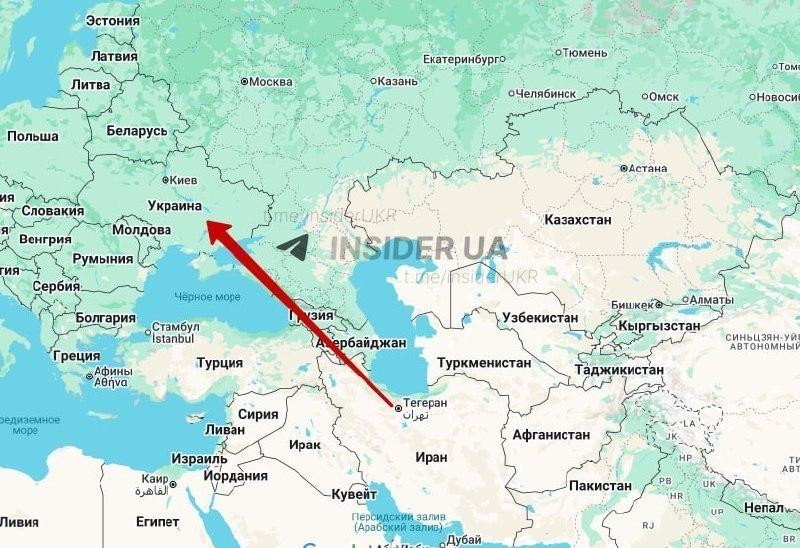
Iran fired roughly twenty-five ballistic missiles at Qatar overnight into 12 July 2026, then within hours had its Foreign Minister Abbas Araqchi publicly extend condolences over the death of Qatar's former emir. The two messages went out within a window narrow enough that they read as one coordinated act, and they sit on opposite sides of the same ledger: force first, soft language second.
The reporting is consistent on this much. Two Telegram channels tracking Gulf affairs posted within seven minutes of each other that Iran had launched approximately 25 ballistic missiles at the country overnight, and that Araqchi had followed with a public expression of sympathy to Qatar's ruling family. The strikes, the condolences, and the mourning for the former emir arrived as a single package on the regional newswire. Whether that package amounts to brinkmanship, apology, or theatre depends on which capital you ask.
A strike wrapped in a condolence call
The sequence matters because it does not match any single template. A punitive strike is normally followed by a justification, an ultimatum, or silence, not by a foreign minister on camera expressing sorrow to the bereaved. A diplomatic outreach would not normally be paired with roughly two dozen ballistic missiles fired the night before. Araqchi's condolence message, published as news on 12 July 2026 at 11:35 UTC on the DDGeopolitics channel, names the late emir directly and uses the language of "sincere condolences", the vocabulary of routine Arab-world diplomacy, not the vocabulary of an adversary.
The missile count itself is rough. Both Telegram posts describe "approximately 25 ballistic missiles," which fits the kind of salvo designed to signal capability and intent without triggering a full missile-defence alert at the scale of a saturation attack. It is the regime's preferred calibration: noisy enough to dominate the news cycle, calibrated enough to leave room for a conversation. Iranian state-aligned messaging tends to follow the same arc, kinetic action, then a verbal off-ramp.
Why Qatar, and why now
Qatar has spent two decades hosting the largest US air base in the region, brokering Iran–US back-channel talks in 2023 and 2024, and mediating between Tehran and a range of Western and Arab interlocutors. Doha's relationship with Israel has been the subject of sustained negotiation under both the 2020 Abraham Accords framework and subsequent talks. Striking Qatar, even in a calibrated way, is therefore a strike at a mediator, not at a frontline combatant.
The reading most consistent with the reporting is that Tehran is signalling displeasure at Doha's role in the diplomatic architecture around Iran's nuclear file and at the wider Gulf alignment against Iranian leverage in the Levant. A counter-reading is that some or all of the missiles were intercepted, malfunctioned, or were fired in error, with the condolence message a face-saving cover. The sources do not specify which; both interpretations sit on the same evidence the channels provided.
The diplomatic script
Iran's foreign-policy establishment has spent a decade perfecting the routine now on display in Doha. Strike, then a senior official expresses regret over a death in the ruling house. Strike, then MFA framing that the action was "defensive," "calibrated," or "a warning to those who enable hostile policy." Strike, then an invitation to dialogue that arrives via the same foreign minister who would, in another press cycle, be issuing the threats.
Whether that script amounts to leverage or brinkmanship depends on what the other side needs from Iran on the same day. In a quiet news cycle, the strikes would be the headline; in a cycle dominated by mourning for a former emir, the condolence call becomes the headline, and the strikes recede into the lede. The two Gulf-Tracking Telegram posts frame it exactly that way: the missiles come first in the news flow, but the condolences get the diplomatic bandwidth.
What the next 72 hours will show
Three indicators will tell us which reading holds. First, whether Qatar's defence ministry confirms hits, near-misses, or interceptions, and whether Doha names Iran publicly or treats the incident as "unidentified projectiles." Second, whether Araqchi's condolence message is matched by a public MFA statement in Tehran, or whether it remains a one-channel social-media post that Doha can ignore. Third, whether any other Gulf state issues a coordinated readout, which would convert the incident from a bilateral signal into a regional crisis.
The base case is that this is signalling, not escalation. Iran has fired into Iraqi Kurdistan, hit US positions through proxies, and traded strikes with Israel more than once in the last two years; a 25-missile salvo at Qatar, paired with a public condolence to the ruling family, fits the lower end of that pattern. The risk case is that Doha treats any confirmed hit as a sovereign violation and responds, at which point the script Tehran is following does not have a written second act.
The sources are thin on what the strikes actually hit. Both Telegram channels report the launch and the condolence; neither provides interception data, casualty figures, or an Iranian official statement on the record. For now, the news is the choreography, and the choreography is the point: Iran hitting a Gulf state, then sending its top diplomat to mourn its dead.
How Monexus framed this: the wire cycle has so far treated the missile launch and the condolence message as two separate beats. We treat them as one, because the regime intends them as one, and we flag the evidentiary gaps the Telegram reports don't fill.
Wire provenance
This editorial synthesis draws on the following public wire/social posts:
- https://t.me/s/DDGeopolitics
- https://t.me/s/Middle_East_Spectator