Missiles over the Gulf: Iran strikes UAE and Qatar in coordinated overnight attack
Doha and Abu Dhabi confirmed missile and drone strikes on their territory in the early hours of 12 July 2026, with Iranian state media acknowledging the launches and Doha saying one missile was intercepted.
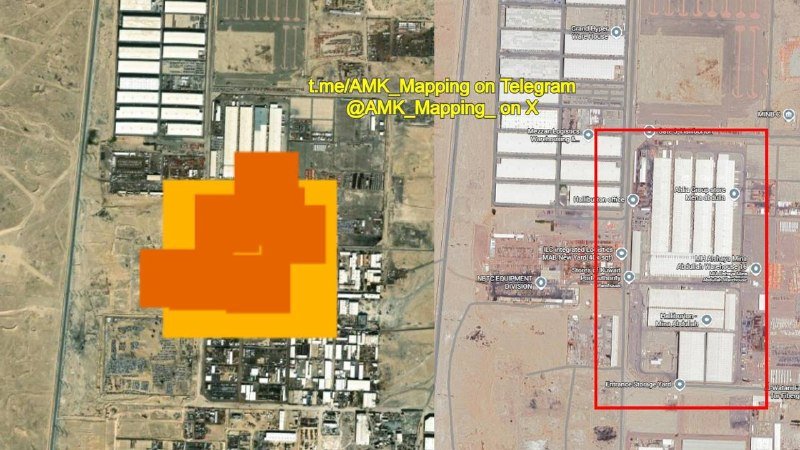
At 02:40 UTC on 12 July 2026, Qatar's Ministry of Interior told residents to stay home and shelter in safe places, citing a high security-threat level, in a statement carried by Iran's Tasnim News Agency. Seventeen minutes later, the UAE Ministry of Defence confirmed that missiles and drones had struck its territory, also via Tasnim's English feed. By 03:06 UTC, Qatar's Ministry of Defence had confirmed that military targets inside the country had been hit, and said one missile aimed at Qatar had been intercepted.
The sequencing, and the choice of channels to amplify it, points to a Gulf confrontation the regional security architecture was not built to absorb. Two Gulf Cooperation Council states, both hosting sizeable US military footprints and both central to the air and maritime corridors that move Gulf energy to global markets, were struck within the same operational window. The strikes were claimed in substance by Iranian state-linked media and confirmed in form by the defence ministries of the two targets.
What was confirmed, in order
The first public marker came from Doha's Ministry of Interior at 02:40 UTC, urging residents to stay at home and in safe places because the security-threat level was high. The alert was distributed through Tasnim News Agency's English channel, the same outlet used to relay the UAE confirmation seventeen minutes later. By 02:57 UTC, the UAE Ministry of Defence had publicly confirmed a missile and drone attack on its territory.
At 02:59 UTC, the open-source monitor AMK Mapping reported radio activity in Qatar indicating that operators still expected further missiles and that the Iranian missile threat had not ended. Two minutes after that, the @wfwitness channel reported that the alert in Qatar had been lifted and that Doha said it had intercepted a missile aimed at the country. By 03:05 UTC, Iran's Tasnim-affiliated Jahan Tasnim account reported that Qatar had confirmed the strike against targets inside its territory, and by 03:06 UTC Tasnim's main English feed had Qatar's Ministry of Defence confirming that military targets in the country had been hit.
The pattern in the available reporting is unusual on its face: Iranian state media, normally a vehicle for Tehran's own narrative, became the public broadcaster for the targets' confirmation. Doha's and Abu Dhabi's defence ministries appeared in those feeds rather than in their own press channels within the window covered by the thread. That does not mean the events are fabricated; it means the public record of the strikes, at this hour, runs through Tehran-adjacent wires.
Why the choice of targets matters
Qatar hosts Al Udeid Air Base, the largest US military facility in the Middle East and the forward headquarters for US Central Command's air operations across the wider region. The UAE hosts Al Dhafra Air Base, used by US and allied air forces, and sits astride the Strait of Hormuz approaches that handle a significant share of seaborne oil and liquefied natural gas exports. Strikes on either country drag the United States into the kinetic frame by geography, even before any invocation of mutual defence pacts.
The two states are also GCC members and therefore nominally bound by the bloc's joint defence framework, which treats aggression against any one member as aggression against all. In practice the GCC has rarely operated as a collective military actor, but the political signalling cost of leaving a strike unanswered, or of answering it unevenly between the two targets, is real. Tehran is choosing countries that cannot easily be isolated from one another or from Washington.
Iranian state media has framed the strikes as retaliation for Israeli actions in the region in past reporting cycles, a posture consistent with the broader escalation track that has run through 2025 and into 2026. The thread itself does not carry that justification text; readers should treat the motive frame as the regime's stated position, to be verified when independent wire reporting catches up.
What the record still does not show
The available sources establish three things and leave several others open. Established: that Qatar's Interior Ministry raised the threat level and urged residents to shelter; that the UAE's Defence Ministry confirmed a missile and drone attack; that Qatar's Defence Ministry confirmed strikes on military targets and said one inbound missile was intercepted. Not established, on this thread: the identity of the specific targets hit inside either country; any casualty count; the type and number of missiles and drones used; whether US forces at Al Udeid or Al Dhafra engaged incoming projectiles; and whether the operation was claimed by Iran's Islamic Revolutionary Guard Corps, the regular military, or a proxy.
The most consequential silence is the absence so far of a US statement. CENTCOM has not, in the items available here, confirmed or denied involvement in intercepting the inbound fire. If US assets at either base engaged Iranian missiles, that is an escalatory datum that the American side will eventually have to put on the record. If they did not, that is also a datum, and arguably the more politically charged one.
The other live uncertainty is the Iranian claim of motive. Tasnim's amplification of the strikes does not by itself constitute an Iranian admission of authorship, though the framing in regime-linked media is consistent with it. Independent confirmation from Reuters, the BBC, Al Jazeera English, or the wires will arrive later; for now the public chain of attribution runs through Tehran-affiliated channels reporting the targets' own statements.
The frame the Gulf cannot avoid
Two GCC states absorbing Iranian fire on the same night recasts the regional security debate. The discussion in Gulf and Western policy circles has, for years, rested on the assumption that Iran's retaliatory horizon stops at Israel and at the Iraqi and Syrian theatres where Tehran's proxies operate. Strikes on Doha and Abu Dhabi redraw that line. They also redraw the air-defence conversation: both Qatar and the UAE have spent heavily on integrated air and missile defence, with US, French, and supplier-country systems layered in. The reported intercept of one missile aimed at Qatar suggests at least partial operation of those systems; what was not intercepted, and where it landed, will define the next forty-eight hours.
Energy markets, which had priced the Strait of Hormuz risk as a tail scenario, will reprice if the trajectory continues. The two targeted states sit on either side of the southern Gulf, with the UAE's Fujairah port providing an export route that bypasses Hormuz entirely. A pattern of repeated strikes on Gulf soil, even at low casualty counts, is enough to push insurance and freight rates upward and to bring forward demand-destruction responses in major Asian buyers.
What to watch in the next forty-eight hours
Three markers will tell the reader whether this was a one-night action or the start of a wider campaign. First, a US statement, ideally from CENTCOM or the State Department, on whether American forces engaged incoming fire and on whether Washington attributes the strikes to Iran directly. Second, a GCC joint statement; the bloc's previous silences after individual strikes on Saudi Arabia and the UAE have been politically costly, and a coordinated response here would be a departure. Third, an Iranian official claim of authorship, through the IRGC, the foreign ministry, or the Supreme National Security Council, that names the operation and the stated justification. Until those three land, the situation sits in the worst reporting zone: confirmed kinetic action, attributed through hostile-channel amplification, with the political attribution chain still incomplete.
The temptation, in coverage like this, is to flatten the frame into either a Gulf-versus-Iran story or a wider Middle East escalation story. Both readings are partially right. The harder question is what the strikes do to the diplomatic track that was, until the early hours of 12 July, still being talked about in the background: the indirect US-Iran channel, the regional de-escalation working groups, and the Qatar-mediated files that have run through the past year. A night like this one does not end those channels, but it changes what it costs any party to sit at them.
Desk note: this article is built from a tight window of Telegram-channel reporting running from 02:40 to 03:06 UTC on 12 July 2026. Iranian state-linked outlets carried the targets' own statements as the public record; independent wire confirmation had not yet arrived at the time of writing. Where the record is silent on casualties, target identification, US involvement, or Iranian attribution, this piece says so rather than imputing.
Wire provenance
This editorial synthesis draws on the following public wire/social posts:
- https://t.me/tasnimnews_en
- https://t.me/Middle_East_Spectator
- https://t.me/tasnimnews_en
- https://t.me/AMK_Mapping
- https://t.me/wfwitness
- https://t.me/JahanTasnim