Inside Iran's Minab 168: Why a Negotiator's Appearance at Protest Squares Is Being Read Two Ways
A member of Iran's Minab 168 negotiating team was filmed at evening gatherings in El-Englab Square on 12 July 2026. Tehran's state media and the opposition are telling two very different stories about what that means.
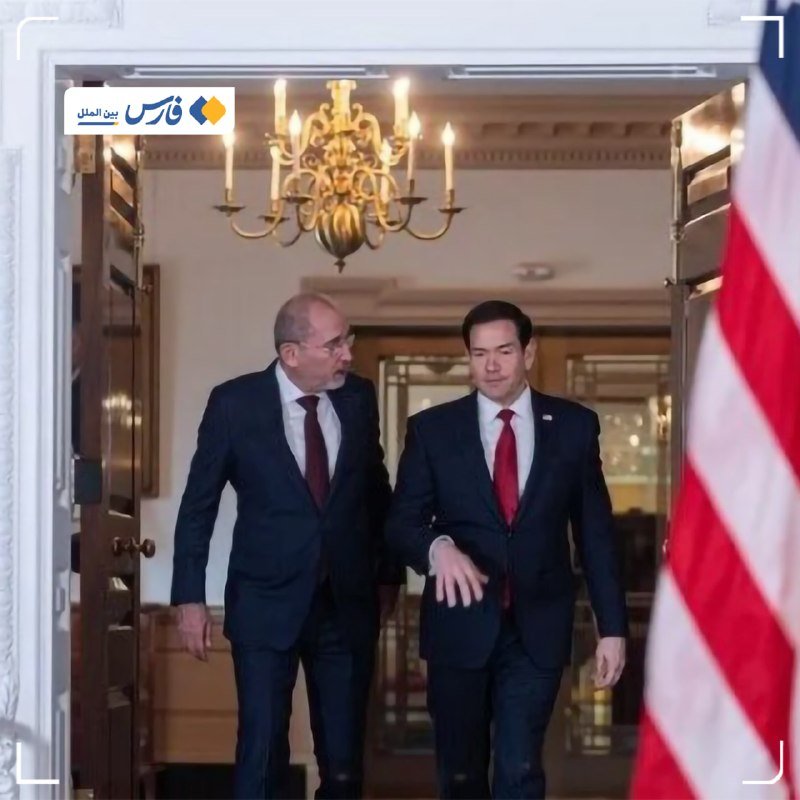
On the evening of 12 July 2026, three Iranian state-affiliated channels published near-identical footage of a man identified as Bagheri Keni, described as a member of the Minab 168 negotiating team, attending the night gatherings in El-Englab Square in central Tehran. Tasnim News posted the clip at 18:59 UTC; Tasnim Plus followed at 19:01 UTC; the Arabic-language al-Alam feed carried it at 19:24 UTC, sourcing the original to IRIB News. The synchronisation of the uploads, and the explicit naming of the square rather than a generic protest site, points to a coordinated editorial choice rather than breaking news. The choice of frame, who was filmed, where, and with which caption, is itself the story.
The Minab 168 file sits at the intersection of two of the Iranian state's most sensitive internal processes: the negotiations over a nuclear-and-sanctions package, and the management of public dissent that has surfaced intermittently in central Tehran since late 2025. That a negotiator whose file name carries the date and venue of an earlier protest-related episode is now being shown, on the same evening, at El-Englab Square, tells readers who know how to read it that the state is asserting a link between the two. The article that follows parses what that link is, and what it is not.
What the three Telegram posts actually show
The three Telegram items are short, image-led, and use the same caption template: "The presence of Bagheri Keni, a member of the Minab 168 negotiating team, in the evening gatherings of El-Englab Square." Tasnim News attached the original video; Tasnim Plus carried the same image plus a "+" tag indicating an added item to its rolling coverage; al-Alam syndicated the IRIB News cut, with the channel handle @iribnews cited as the originating account. None of the three posts name a date for the gathering itself beyond 12 July 2026, and none of them quote Bagheri Keni. There is no statement of position, no on-camera interview, no transcript. The footage is the message.
That matters because in Iranian state media practice, the decision to attach a named institutional label, here the Minab 168 negotiating team, to a person filmed at a politically symbolic location is a deliberate signal. Tasnim is not a general news wire; it is the outlet structurally close to the Islamic Revolutionary Guard Corps and to parts of the security establishment. Its English-language branch posting the clip within a minute of the Farsi branch suggests the signal is intended for two distinct audiences simultaneously: a domestic one that recognises El-Englab Square as a recurring protest site, and an external one that is meant to register that Iranian negotiators are visible in public life rather than confined to back-channel hotel rooms.
The Minab 168 frame and what it carries
The Minab 168 label refers to a track of negotiations that, in public reporting, has been associated with the September 2025 Minab incident file and the broader set of exchanges that followed. Iranian state media have used the label consistently when referring to the technical-political negotiations that produced the interim arrangement under discussion with European and regional counterparts. Identifying Bagheri Keni by that affiliation rather than by a personal title, ministry portfolio, or academic credential is the move. It positions the square footage inside the diplomatic file rather than inside a routine social appearance.
The framing has two plausible readings, and the Iranian opposition and the state-aligned outlets disagree sharply about which one is correct. The state-aligned read, embedded in the choice to publish the footage at all, treats the appearance as evidence that the negotiating team retains the confidence to operate publicly and is in dialogue with, or at least present among, ordinary Iranians gathering at El-Englab Square. The opposition-aligned read, which would circulate in Persian-language outlets outside the state ecosystem, treats the footage as a curated visual claim that may not match what Bagheri Keni actually said or did at the gathering. Both readings are present in the public conversation; neither is, on the source record available here, falsifiable from the Telegram items alone.
Why the square, why now
El-Englab, also rendered Azadi-adjacent in some Western coverage, has functioned as a default site for evening gatherings in Tehran throughout the post-2022 protest cycle. The choice of location is therefore not incidental. Filming a named negotiator at the square, on the same day that Western and regional media were reporting on the state of the nuclear-track talks, folds domestic protest optics into the diplomatic narrative. The implicit claim is that the negotiating team is embedded in, not insulated from, the social fabric the package will ultimately affect.
This is structurally similar to the kind of public-facing signalling that other negotiating governments have used, including Iranian counterparts in earlier rounds, and it should be read as part of a domestic audience-management exercise. The state is showing two things at once: that the file is moving, and that the file is moving under supervision. Whether the supervision is real or staged is the part the footage cannot settle.
What remains genuinely uncertain
The Telegram posts do not specify how long Bagheri Keni was at El-Englab Square, whether he addressed the gathering, or whether anyone at the gathering recognised him and reacted on camera. The three clips appear to be drawn from the same IRIB source; there is no independent corroboration in the available items, and no Western wire has, on the record available here, attached its own reporting to the 12 July footage. Anyone building a serious read of the moment should treat the claim that Bagheri Keni was present as state-sourced and the inferences drawn from that claim as contested. The Tehran bureau of any major wire, if it chose to pursue the lead, would be the next verification step.
The stakes, if the dominant reading holds, are modest but real: a visual reassurance that the diplomatic process has Iranian street-level legitimacy, delivered at a moment when European and Gulf counterparts are weighing whether the package is stable enough to extend. If the opposition-aligned reading holds, the footage is a confidence-trick aimed at the same audience. Either way, the choice to publish the clip in three coordinated channels at three different times in the same evening is itself a piece of information about how the Iranian state reads its own position in mid-July 2026.
This publication read the Tasnim and al-Alam Telegram posts as state-coordinated framing rather than as a discrete news event. The underlying footage was not independently verified; readers should treat the institutional labels as state-sourced until a non-aligned outlet attaches its own reporting to the same material.
Wire provenance
This editorial synthesis draws on the following public wire/social posts:
- https://t.me/alalamfa
- https://t.me/tasnimnews_en
- https://t.me/tasnimplus
- https://t.me/iribnews
- https://en.wikipedia.org/wiki/Tasnim_News_Agency