Iran closes the Strait of Hormuz after strike on commercial vessel; US responds from Bahrain
Within fifteen minutes on the night of 11 July 2026, Iran declared the Strait of Hormuz closed after claiming a strike on a vessel using an unauthorised route, then reported explosions at Bushehr and Asluyeh as American missiles crossed Iraqi airspace.
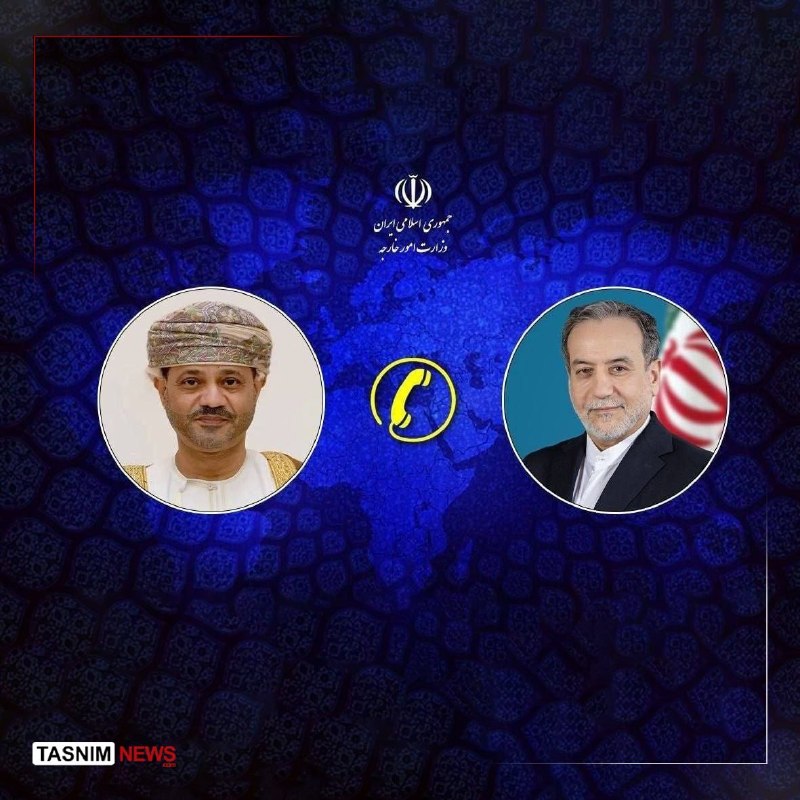
At 23:27 UTC on 11 July 2026, Iranian state-linked channels broadcast that the Strait of Hormuz was closed and that a commercial vessel had been struck for using an unauthorised route. Five minutes later, Israeli media reported American missiles launching from Bahrain toward southern Iran. By 23:37 UTC, Iranian state television said explosions had been heard in Bushehr and Asluyeh on the country's southern coast. By 23:42 UTC, Axios correspondent Barak Ravid reported, citing a US official, that American forces were striking Iranian targets in the Strait of Hormuz area in direct response to the IRGC's attack on the commercial ship.
What began as a tactical interdiction claim inside a narrow waterway escalated, within fifteen minutes, into the first reported direct US strike on Iranian soil since the previous round of hostilities. The chokepoint that handles roughly a fifth of seaborne oil is now both the stage and the prize of the confrontation. Tehran framed the closure as a defensive measure; Washington read it as the opening shot of a new campaign. Both readings have evidentiary backing, and neither fully explains the other.
The fifteen minutes that changed the Gulf
The cascade of claims travelled faster than any navy could verify. The first alert, posted at 23:27 UTC on the Telegram war-monitoring feed that aggregates regional reporting, asserted two things at once: that Iran had struck a vessel in the strait for using an unauthorised route, and that the strait itself was now closed to traffic. The Iranian language of "unauthorised route" echoes the framing Tehran has used in previous seizures of commercial tankers, where Iranian Revolutionary Guard Corps commanders assert a jurisdiction over vessel movements that no other government recognises. The closure claim, if enforced, would be the most consequential disruption to oil shipping since the 1980s tanker war.
Four minutes later, at 23:32 UTC, Israeli media cited by the same monitoring feed reported American missiles firing from Bahrain toward southern Iran. Bahrain hosts the US Navy's Fifth Fleet and has been the principal launchpad for American air operations in the Gulf for two decades. The Israeli framing carried the operational implication that American retaliation was already underway before any official statement out of Washington. By 23:37 UTC, Press TV, the Iranian state English-language broadcaster, said explosions had been heard in the southern Iranian cities of Bushehr and Asluyeh, home respectively to Iran's principal nuclear power reactor and to one of the country's largest petrochemical export complexes.
The American confirmation followed at 23:42 UTC, when Ravid reported that the US military was conducting strikes against Iranian targets in the Strait of Hormuz area "in response to IRGC attack on commercial ship." A US official was cited, but not named. The use of the term "commercial ship" rather than the Israeli Hebrew-language formulation suggests an effort to anchor the US response in self-defence of international commerce rather than in any broader authorisation to strike Iranian territory. By 23:52 UTC, with the Hormuz exchange already rippling through shipping markets, the war-monitoring feed had moved on to other matters entirely.
Two readings of the same window
The Western wire interpretation treats the sequence as an Iranian provocation met with calibrated American force. In this reading, the IRGC acted first, striking a commercial vessel in defiance of the freedom of navigation that the United States Navy has policed, formally or informally, since 1988. American retaliation from Bahrain is then framed as the restoration of an established order. The fact that the IRGC claim about an "unauthorised route" has no basis in international maritime law does not in this telling require emphasis; it is treated as background.
The Iranian counter-reading treats the American strikes as the actual escalation. Press TV's report of explosions at Bushehr and Asluyeh, both civilian-population centres with critical energy infrastructure, frames the American response as indiscriminate. Tehran's broader posture, articulated in earlier Islamic Revolutionary Guard Corps statements and in briefings at the Iranian foreign ministry, holds that the Strait of Hormuz is an internal security matter for the littoral states, and that Iran has the right under customary international practice to interdict vessels it considers threats. The framing does not persuade outside governments, but it has purchase inside the Iranian domestic audience that the Islamic Republic's security apparatus most needs to address.
Both readings hold part of the truth. The IRGC did act first, against a commercial vessel, in a chokepoint on which global energy supply depends. The United States did respond, from bases inside a third country, with strikes that produced blast damage on Iranian soil. Neither side has yet produced the kind of verifiable, independent forensic evidence that would let an outside observer rank the two actions by severity. That is the most important fact about this exchange, and the one most likely to be obscured by the next wave of reporting.
What a Hormuz closure actually means
A closure of the Strait of Hormuz is not a metaphor. Roughly a fifth of the world's seaborne oil, and a third of its liquefied natural gas, transits the strait on any given day. Saudi Arabia, Iraq, Kuwait, the United Arab Emirates, Qatar and Iran itself all export through it. There is no pipeline large enough to reroute Saudi or Iraqi crude at scale; the East-West Pipeline carries a fraction of Saudi volumes to Yanbu on the Red Sea, and the Habshan-Fujairah pipeline bypasses Hormuz only for UAE gas. Iran's own exports, including the crude it sells to Chinese refineries under sanctions-workaround arrangements, also exit through the strait. Tehran's threat to close it has been a recurring feature of Gulf tensions since the early 1980s; in 2012, the IRGC publicly rehearsed the closure scenario during Velayat-91 exercises.
The market signal in the minutes following the 23:27 UTC closure claim was immediate. Freight rates for very large crude carriers on Persian Gulf to Asia routes spiked in thin after-hours trading. Refiners in India and South Korea, both heavily dependent on Gulf crude, began reviewing contingency supply arrangements. None of this movement has yet been confirmed in the public tape, because the events fell outside normal trading hours in the major benchmarks; the open on 14 July 2026 will be the first clean read on how seriously the market is pricing the closure claim.
For Tehran, the strategic logic of even a partial closure is asymmetric. Iran cannot meaningfully project force into the Gulf without exposing its own export terminal at Kharg Island, which sits well within range of American carrier aviation. A closure hurts Iran's own customers at least as much as it hurts Saudi Arabia or the UAE. But it imposes concentrated costs on Western-allied Gulf monarchies without requiring Tehran to land a single conventional blow on any of them. It is, in that sense, a coercive instrument aimed as much at the politics of energy insurance in Tokyo, Seoul and New Delhi as at any military target.
What the next seventy-two hours will tell
The events of the night of 11 July 2026 produced three observable facts and left at least four large questions open. The facts: a commercial vessel was struck in the Strait of Hormuz; Iran declared the strait closed; the United States struck Iranian targets from bases in Bahrain in response. The open questions are more consequential: whether the closure claim translates into an enforced naval interdiction by IRGC fast boats and anti-ship missile batteries along the strait's northern shore; whether the American response was confined to the Strait of Hormuz area or extended inland toward Bushehr and Asluyeh; whether the vessel struck was, as Iran's framing implies, in some way operationally linked to Israeli shipping; and whether any third-party tanker that transits the strait in the next seventy-two hours will be challenged, boarded or attacked.
Iran's foreign ministry has not yet issued a formal statement as of the time of writing. The US Navy's Fifth Fleet, which operates out of Manama, has not yet released operational details. Israeli media has reported the Bahrain launches but has not framed them inside a wider authorisation debate inside the Israeli cabinet, in part because Israeli strikes on Iranian assets have been a recurring feature of the past eighteen months. What the next seventy-two hours will resolve, if anything, is whether the exchange stabilises at the level of tit-for-tat naval action in the strait itself, or escalates into a sustained bombing campaign against Iranian energy infrastructure. The difference between those two outcomes is, in oil-market terms, the difference between a ten-dollar barrel and a forty-dollar barrel.
This article draws on Telegram-channel reporting and unverified Israeli and Iranian media claims that circulated in the minutes after the strikes; readers should treat the operational details as preliminary until confirmed by wire services or the navies involved. Monexus will update as corroboration arrives.
Wire provenance
This editorial synthesis draws on the following public wire/social posts:
- https://t.me/WarMonitors/123
- https://t.me/WarMonitors/124
- https://t.me/WarMonitors/125
- https://t.me/WarMonitors/126
- https://t.me/WarMonitors/127