Explosions reported across Bandar Abbas and Qeshm as Iran-scope strikes widen
At least four Telegram channels carried unverified reports of blasts across Iran's southern coast on 12 July 2026, reviving questions about the security of the country's main Gulf shipping artery and the Strait of Hormuz.
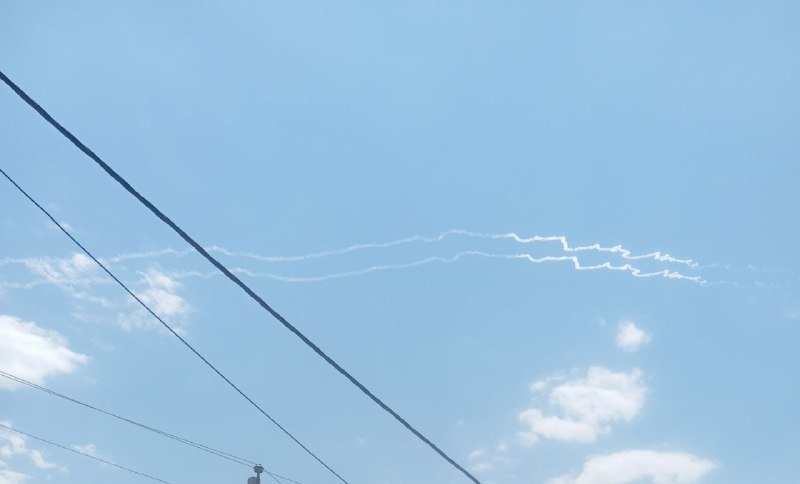
At 15:57 UTC on 12 July 2026, the Beirut-based outlet Al-Alam Arabic flashed a one-line "urgent" bulletin: explosions had been heard in Bandar Abbas and on Qeshm Island, both on Iran's southern coast, opposite the Strait of Hormuz. By 16:00 UTC, the same claim had been re-amplified by GeoPolitical Watch, the Middle East Spectator channel, and the open-source aggregator Open Source IntelNOW, all of which pointed to a single underlying message from a user named Farstweet. Within fifteen minutes, the event had travelled from a single Telegram account to a four-source echo chamber without a wire confirmation, an Iranian official statement, or a single named witness on the record.
The geography of the reported blasts is what makes the alert consequential, even at this early stage. Bandar Abbas is the capital of Hormozgan Province and home to the Islamic Republic's largest commercial port on the Persian Gulf, alongside the IRGC Navy's main southern headquarters. Qeshm, the largest island in the Strait of Hormuz, hosts both civilian infrastructure and sensitive military sites. If the reports hold, they would mark the first time since the brief Strait of Hormuz crisis of 2019 that both the mainland hub and the island have been inside a single reported blast radius on the same day.
The chain of relays
Read in the order they were posted, the four Telegram items do not so much corroborate one another as restate one another. Al-Alam Arabic's 15:57 UTC bulletin attributes the claim to "sources" without identifying them, a phrasing the channel has historically used for reports sourced from Iranian-allied networks in Lebanon and Iraq. GeoPolitical Watch's 16:00 UTC post repeats the claim with the same wording, and adds an Iranian flag emoji to mark it as a developing story. The Middle East Spectator's 16:00 UTC post layers in a US/iran flag pairing and a "NEW" tag, and is the first of the four to suggest the blasts were heard "elsewhere in southern Iran" beyond the two named locations. Open Source IntelNOW's 16:15 UTC post names "Farstweet" as the source of the underlying claim, a Twitter/X account that operates as a wire aggregator rather than a primary reporter.
What the four items share is the absence of any attribution to an Iranian official, a Western military spokesperson, a regional state, or a credible local outlet. There is no footage in the publicly available material, no seismological confirmation from the US Geological Survey or the International Data Center, and no statement from the IRGC or the Iranian foreign ministry. In a conflict zone where Telegram is the dominant first-mover platform, that matters: the same channel that carried early claims about the 13 June 2025 Israeli strikes on Iran also carried claims that did not survive a daylight cycle.
Why Bandar Abbas and Qeshm, specifically
The Strait of Hormuz is the maritime chokepoint through which roughly a fifth of seaborne oil moves each day. Bandar Abbas is the land-side anchor of that system: the terminus of pipelines, container terminals, and naval installations. Qeshm sits roughly twenty kilometres offshore and contains the operational geography Iran has used as a forward defensive line, including the IRGC Navy's fast-boat dispersal zones, anti-ship missile batteries, and the tunnel and underground-facility infrastructure that has featured in Israeli targeting studies since at least the 2000s.
A strike pattern that hits both within the same operational window would, in Western military analysis, suggest one of two things: a coordinated attack on the mainland-island pair as a single kill-chain, or a deliberate signal that Iran's southern defensive envelope as a whole is in scope. Neither reading can be drawn from the four Telegram items alone, but the geographic pairing itself is what makes the reports worth taking seriously before they are verified.
What the sources do not say
The four items are also notable for what they omit. None of them cites an Iranian casualty figure, an Iranian official statement, a claim of responsibility, a US or Israeli official denial, or a commercial-shipping disruption report from the Strait of Hormuz. The absence of any of those is itself a data point. In the standard pattern of confirmed strikes on Iranian soil since 2024, one of three things usually appears within the first hour: an Israeli Defense Forces briefing in Hebrew and English, a Pentagon or CENTCOM read-out, or an Iranian state-media acknowledgement. None of those has appeared at the time of writing, and the window in which a denial, a confirmation, or a casual reference on Iranian state television would normally arrive is narrowing fast.
The live counter-narrative, expressed in plain terms by Iranian-aligned channels in the same Telegram ecosystem, treats such reports as parts of an information operation aimed at the Israeli and American public. That framing is the one carried by Iranian state outlets, including Press TV and Tasnim, when the original claim is later contested, and the framing itself is part of the pattern that will determine whether today's reports harden into a confirmed strike by the end of the day or fade into the record as a contested Telegram rumour.
What the wire has not yet said
The Reuters, AP, BBC, and Al Jazeera English wires that have covered every previous strike on Iranian soil since 2024 have not, at the time of writing, published an item on the 12 July 2026 reports. That silence is not unusual in the first ninety minutes of a Telegram-originated alert, but it is the gap that determines the next 24 hours. If one or more of those wires confirms the strikes on the record, citing an Israeli, US, or Iranian source, the four Telegram items will be retrospectively re-categorised as a real-time channel rather than a hot rumour. If the wires do not confirm, the items will be archived as part of the long record of unverified Iranian-theatre alerts that travel through the Al-Alam / Spectator / Open Source IntelNOW network.
The stakes of the second outcome are not zero. A pattern of high-velocity, unverified alerts that the wire eventually confirms is one the market has learned to price into Strait of Hormuz freight rates and Brent crude. A pattern of high-velocity, unverified alerts that the wire does not confirm is the one that erodes trust in the Telegram first-mover layer over time. The four items of 12 July 2026 will be a useful test of which regime we are in by the close of the trading week, and the next piece of verified information that arrives will be the one that decides the answer.
This article will be updated as wire confirmation or denial becomes available. Monexus tracks Iranian-theatre Telegram items against the Reuters, AP, BBC, and Al Jazeera English wire within 90 minutes of first publication.
Wire provenance
This editorial synthesis draws on the following public wire/social posts:
- https://t.me/alalamarabic
- https://t.me/GeoPWatch
- https://t.me/Middle_East_Spectator
- https://t.me/osintlive