Eleven Indians, one missing: a commercial vessel comes under fire off Oman
India's foreign ministry confirms ten of eleven Indian crew have been rescued after a commercial ship was attacked off Oman. One sailor is still unaccounted for, and the regional pattern that put him in the water is not new.
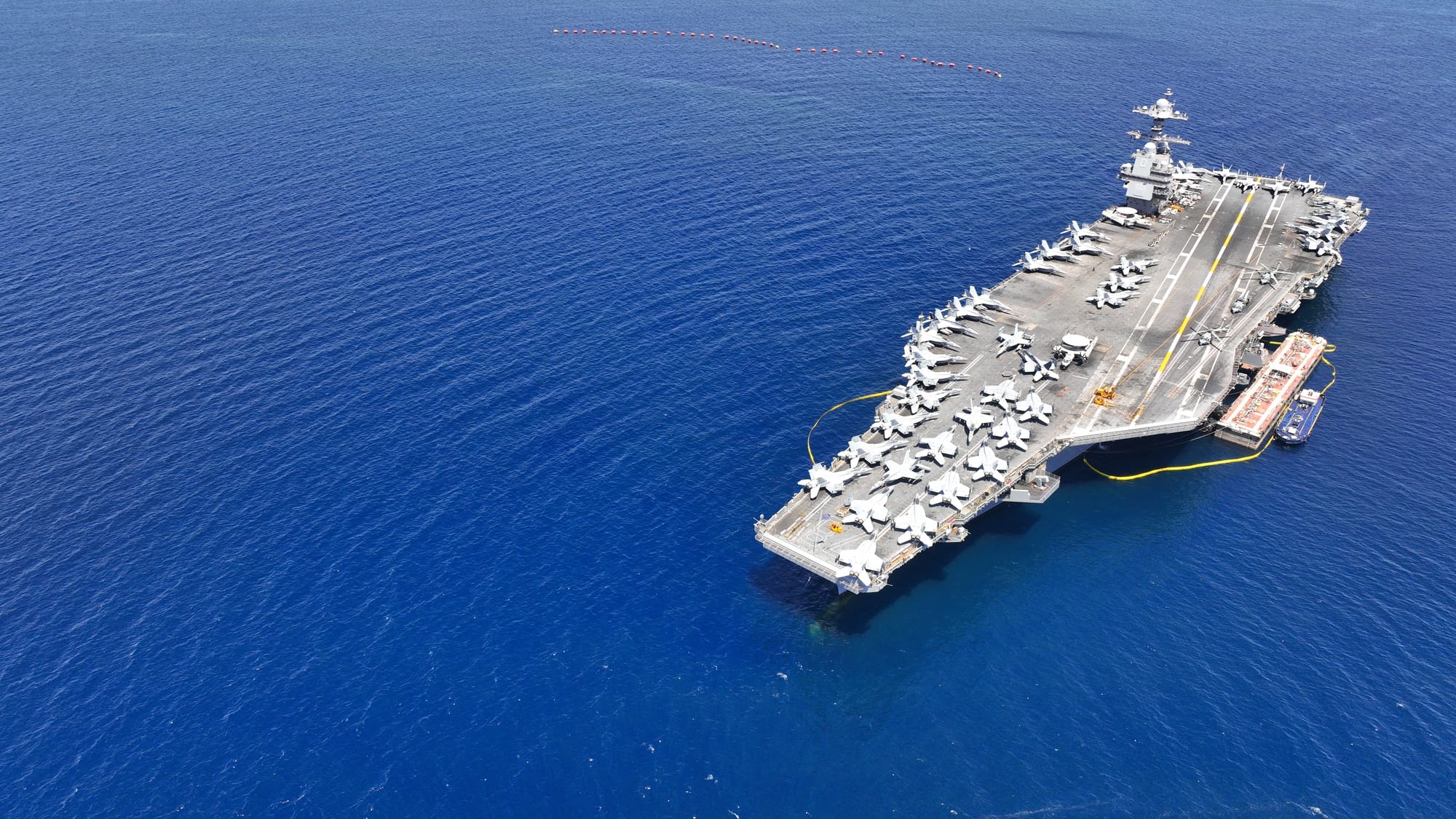
A commercial vessel came under attack in the Arabian Sea off the coast of Oman on 12 July 2026, leaving one Indian crew member unaccounted for after ten of his countrymen were pulled from the water. India's Ministry of External Affairs confirmed the rescue operation in a statement carried by Iranian state-affiliated outlet Tasnim News on 12 July 2026 at 11:43 UTC, identifying the missing sailor as the eleventh Indian national who had been on the ship's deck when the strike landed.
The incident fits a pattern that has reshaped commercial passage through the western Indian Ocean for nearly two and a half years. Shipping through the Bab el-Mandeb and the southern Arabian Sea has been punctuated, since late 2023, by drone, missile and small-boat strikes that Yemen's Houthi movement says are aimed at vessels linked to Israel, the United States and the United Kingdom. Indian crews are not a target on paper, but the world's merchant fleet is multinational at the hull level and Indian at the seafarer level: the country supplies roughly a sixth of the world's merchant mariners. Every shot at a tanker or bulk carrier in these waters is, statistically, a shot at an Indian deckhand.
What New Delhi says
The Indian statement is short and procedural: ten of eleven nationals who were on the deck have been rescued; one remains missing. The ministry did not, in the text Tasnim reproduced, attribute the attack or describe the weapon used. That reticence is itself informative. India has spent the past two and a half years threading a narrow diplomatic needle in the western Indian Ocean, declining to join the US-led Combined Maritime Forces task force while simultaneously expanding its own naval presence in the region. New Delhi has evacuated Indian nationals from the Red Sea theatre twice since 2024 and has kept a quiet line of communication open with the Houthis through Omani and Iranian intermediaries. Publicly naming the perpetrator of a strike, before the vessel's owner and flag state have spoken, would foreclose options India prefers to keep open.
The number also matters. Eleven Indians on a single commercial deck is consistent with mid-sized bulker or general-cargo manning, not a tanker crew of twenty-five. It places the vessel in the long tail of world shipping, where insurance premiums are thinner, armed guards are rarer, and the crew has little say in routing decisions made by charterers three time zones away.
The regional geometry
The Arabian Sea off Oman is not the Red Sea. The two theatres have been politically bundled in Western coverage but commercially separated by shipowners since the early months of the campaign. After the Houthi strikes began in earnest in late 2023, the major container lines rerouted around the Cape of Good Hope, adding roughly ten days and several hundred thousand dollars in bunker costs per round trip. Vessels that kept using the Suez-Bab el-Mandeb corridor tended to be those carrying time-sensitive cargo or those whose cargoes could not easily absorb the detour: regional trades, refined product runs into East Africa and South Asia, and the smaller bulk carriers that move grain and cement along the Indian Ocean's western rim.
Those smaller bulkers are precisely the kind of ship most likely to carry an all-Indian deck crew under a flag of convenience, and precisely the kind least likely to have armed security on board. The economics of the global merchant fleet push the risk onto the seafarers least able to absorb it.
What the framing leaves out
Western wire reporting on Houthi strikes tends to centre the warships dispatched in response: the US carrier strike groups, the European Union's Aspides mission, the periodic coalition air campaigns against launch sites in Yemen. That framing treats the seafarer as a backdrop. The Indian framing, when it bothers to address the issue at all, tends to centre the evacuation and the diplomatic outreach, and to treat the ship as a backdrop in turn. Both framings elide the labour question: who, exactly, is being asked to transit a missile alley for sub-market wages, and what recourse do they have when the company that hired them routes them through it.
There is also the question of insurance. Hull and war-risk premiums for vessels transiting the western Indian Ocean remain elevated relative to pre-2024 baselines, and the Joint Maritime Information Centre, run by Combined Maritime Forces, continues to issue advisories recommending that vessels keep more than two hundred nautical miles from the Yemeni coast. Whether the vessel attacked off Oman on 12 July was inside or outside that recommended corridor, and whether its owner had declared compliance with the advisory, are details that will surface in the coming days if the owner issues a statement. The sources currently available do not say.
What remains uncertain
The Tasnim reproduction of the Indian ministry's statement does not identify the vessel by name, does not specify its flag state, and does not describe the nature of the attack. Whether it was a missile, a drone, a limpet mine or a small-boat assault is not stated. The Houthis have not, in the materials available, claimed the strike. Indian naval assets were reportedly involved in the rescue, but the ministry's text does not confirm that detail. The condition of the ten rescued crew members, and the search area for the eleventh, are similarly unspecified.
What is clear is that an Indian seafarer is in the water off Oman on 12 July 2026, and that the structure that put him there is older than this particular voyage. Until shipowners, charterers and the flag states that license these vessels are made to carry a proportionate share of the risk they currently offload onto foreign deck crews, the Arabian Sea will keep producing incidents like this one. The news of the day is the missing man. The story behind it is the labour market he fell out of.
How Monexus framed this: wire coverage of the incident will almost certainly centre the attack's perpetrator and the regional military response. Monexus centred the Indian seafarer and the commercial structure that placed him on that deck, because that is the part of the story the wires tend to leave in the margins.
Wire provenance
This editorial synthesis draws on the following public wire/social posts:
- https://t.me/Tasnimnews/
- https://en.wikipedia.org/wiki/Attacks_on_shipping_in_the_Red_Sea_and_Bab_el-Mandeb
- https://en.wikipedia.org/wiki/Merchant_navy_of_India