Tehran tests the chokepoint: Hormuz Strait declaration meets UKMTO counter-claim
Iranian officials declared control of the Strait of Hormuz on 12 July 2026. Within minutes, the UK's naval coordination office told mariners the southern route remained open. Both claims cannot be operationally true at once, and the gap between them is the story.
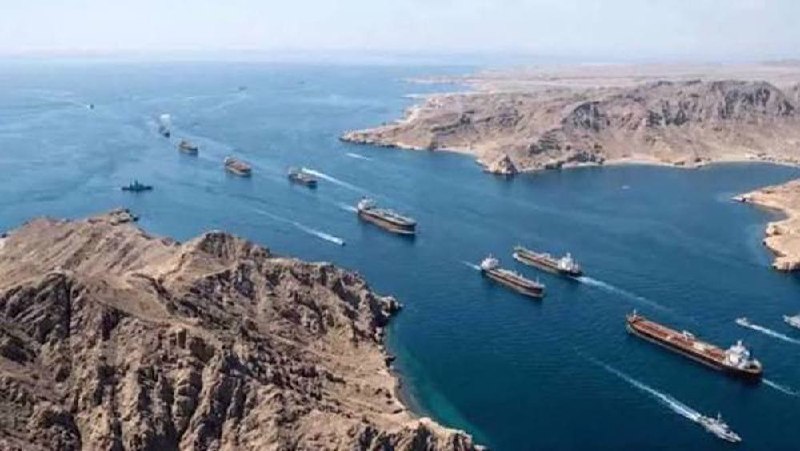
At 10:30 UTC on 12 July 2026, an Iranian outlet carried a claim that the country's senior political class has spent the past week telegraphing: a senior MP declared that Iran has taken control of the Strait of Hormuz and will maintain a strong presence there. By 10:26 UTC, four minutes earlier in fact and so almost certainly a parallel reaction rather than a reply, the United Kingdom Maritime Trade Operations office, the Royal Navy-run coordination cell that watches the world's shipping lanes, had already told mariners that the southern route through the strait remains available despite Iran's proclamation that the waterway is closed, and that the route had been expanded to accommodate two-way traffic.
Two incompatible operational pictures, both delivered within the same ten-minute window. One says the chokepoint is closed and Iranian-controlled. The other says merchant traffic can keep moving. The gap between them is the story, because the world's oil and LNG flows are not abstract: roughly a fifth of seaborne crude transits Hormuz in a normal week, and any extended disruption to that flow lands directly on European and Asian import bills before it touches anything else.
What Tehran actually said
The declaration was framed in two layers. IRNA, the state news agency, reported at 10:30 UTC that a senior MP had said Iran has taken control of the strait and vowed a continued strong presence. Press TV, the state broadcaster's English arm, carried a separate statement at 09:44 UTC from Mohsen Rezaei, identified as Senior Advisor to the Leader of the Islamic Revolution, declaring that Iran will safeguard the strait as a strategic waterway and a key deterrent. The two messages are tonally distinct: one is parliamentary posture, the other is direct signaling from the supreme leader's inner circle.
That second voice is the one that matters. Rezaei is not a backbencher reading a prepared line on the floor of the Majles. As a senior advisor to Ayatollah Khamenei and a former commander of the Islamic Revolution Guard Corps, his words carry institutional weight that MPs do not. His intervention reads as a deliberate escalation of the rhetorical ceiling, not a description of an operational fact. Press TV framed the broader package a few minutes later, at 10:12 UTC, when it aired Munir Ahmed's assessment that the US attacks on southern Iran and the Strait of Hormuz situation constitute a dangerous escalation. Tehran is therefore constructing a narrative that the strait is being actively managed, that this management is deterrent in nature, and that the United States has already crossed a kinetic threshold inside Iranian territory.
What UKMTO said, and why it matters
UKMTO's 10:26 UTC advisory did something specific and unusual: it pre-empted the closure claim rather than responding to it. The advisory noted that the southern route through the Strait of Hormuz remains available despite Iran's proclamation that the strait is closed, and stated that the route has been expanded to accommodate two-way traffic.
UKMTO is not a NATO combatant. It is the United Kingdom's information hub for merchant vessels in the region, run out of the Royal Navy's command structure in Dubai. Its advisories are advisory in name and load-bearing in practice: a UKMTO notice reaches the bridge of every tanker and containership in the area within minutes through the relevant flag-state channels. By telling mariners to keep moving through a southern lane that Iran has not, on the evidence so far, physically blocked, UKMTO is doing two things at once. It is preserving the legal status of commercial transit, which is critical for insurance, charter-party, and force-majeure clauses up and down the supply chain. And it is drawing a quiet line under what counts as a closure. Sovereignty claims by a coastal state do not, in UKMTO's operational accounting, constitute a closure unless traffic is physically impeded.
Counter-narrative: what an Iranian hardliner might say
The Western read of this sequence treats the Iranian declaration as coercive noise and UKMTO's advisory as the operational ground truth. The Iranian framing runs the other way, and it should be stated plainly rather than dismissed.
From Tehran's vantage, the strait is Iranian territorial water in the functional sense of the 1972 Montreux-style delimitation regime, and the declaration of control is a reminder of the deterrent that exists if Iran is struck on its own soil. Press TV's reference to attacks on southern Iran frames the Hormuz move as a response to an upstream aggression, not as the initiation of one. The hardliner read holds that UKMTO's advisory is itself an instrument of pressure, because by classifying the strait as still open and instructing tankers to keep moving, the UK and the broader Western naval apparatus are signalling that Iran will not be paid the political price it would extract by physically closing the lane. The Iranian move, in this reading, is to monetise proximity rather than to provoke a kinetic incident it cannot win.
The honest version is that both reads coexist. UKMTO's advisory does not address the substance of Iran's territorial claim, it only addresses the operational question of whether tankers can transit. The two communications are talking past each other on purpose.
Structural frame: corridor politics under stress
What is being played out in Hormuz is not new in form, only in this particular pairing of actors. Chokepoint diplomacy runs through a familiar script: a coastal state declares enhanced control over a strategic waterway, a Western naval coordination body preserves the legal status of free transit, both sides claim victory, and the actual flow of commerce continues with a thin premium attached. The Strait of Bab el-Mandeb, the Taiwan Strait, the Bosphorus, and the Suez Canal all carry versions of this script in their recent history.
The difference here is the explicit linkage to kinetic action on Iranian soil. By invoking attacks on southern Iran as the trigger for the Hormuz declaration, Tehran has tied a maritime signalling operation to an ongoing military exchange with the United States. That changes the escalation arithmetic. Hormuz threats have historically been a bargaining chip that pays Iran to refrain from physical disruption. When the threat is paired with an active bombing campaign against Iranian territory, the same threat reads differently: as a warning of retaliation, not as a price for restraint.
For shipping, the practical effect so far is muted. UKMTO has not rerouted traffic, war-risk insurers have not published the kind of premium spikes that would indicate a market consensus that physical closure is imminent, and the southern lane is being treated as a going concern. That can change inside a day. A single incident, even an accidental one, in or near the strait would force every tanker operator in the region to re-evaluate. Until then, the market is paying for ambiguity rather than for closure.
Stakes and what to watch
If the present trajectory holds, the cost is measured in basis points on war-risk premia and in slightly longer routing decisions, not in barrels actually held back. If the trajectory breaks, the impact lands in three places almost simultaneously: the Asian import bills that price Brent and Dubai crude at the margin, European gas storage calculations that treat LNG flows as the swing variable, and the political bandwidth of any government still holding out for de-escalation diplomacy.
The dates to watch are simple. Any UKMTO revision that downgrades the southern lane from available to restricted would be the first concrete signal that the Iranian declaration is becoming operational. A second Iranian statement that names a specific closure mechanism rather than a general deterrence claim would be the second. Until one of those arrives, the gap between what Tehran is saying and what UKMTO is telling mariners to do is the live position, and that gap is closing slowly rather than quickly.
Desk note: Monexus treats UKMTO advisories as the operational baseline for maritime status and Iranian state outlets as evidence of Tehran's stated posture, not as competing factual claims to be weighted equally. The advisory does not validate or refute Iran's territorial claim; it only addresses whether commercial vessels should transit, which is the question that matters for shipping markets this week.
Wire provenance
This editorial synthesis draws on the following public wire/social posts:
- https://t.me/Irna_en/0
- https://t.me/wfwitness/0
- https://t.me/presstv/0
- https://t.me/presstv/0