Lindsey Graham, Iran, and the Senate arithmetic that won't add up
Senator Lindsey Graham was travelling to pressure the White House on a fresh Iran sanctions package. Then the war started, the politics moved, and the arithmetic he needs to retake the Senate quietly slipped out of reach.
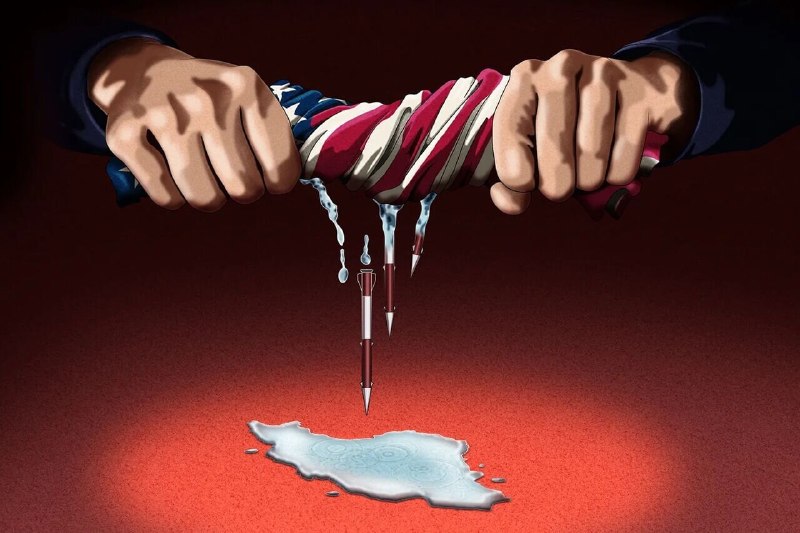
On 12 July 2026, a Telegram channel with close ties to the Iran-file policy crowd reported that Senator Lindsey Graham of South Carolina had been preparing to press the Trump White House into tightening the screws on Tehran through additional sanctions. The trip was overtaken by events. A US-Iran war, the channel said, has made the sanctions escalator Graham wanted unsustainable for an administration now managing a hot conflict rather than a maximum-pressure campaign.
The reversal is the story. Graham's playbook, sanctions-first, escalation-by-leverage, has been the bipartisan Republican default on Iran since at least the Obama years. A war changes what is administratively possible: secondary sanctions on Chinese refiners, snapbacks at the UN, designations of the IRGC's financial network, all of it becomes harder when the US is asking Gulf partners and regional intermediaries for de-escalation lanes. Graham's leverage in the Senate does not disappear, but it migrates, from the sanctions committee room to the appropriations table where wartime funding will be written.
What Graham actually wanted
The channel's account, posted at 08:46 UTC, framed Graham's pre-war plan as an attempt to push the administration toward a tighter sanctions architecture, on the assumption that pressure, not kinetic action, was still the instrument of choice. The war inverted that assumption. With US forces actively engaged against Iranian targets, the political cost of measures that could be read as economic warfare against third-country buyers of Iranian oil has gone up. Treasury and State, the channel implied, are no longer in a position to widen the net.
There is a precedent here worth naming. During the 2019-2020 tensions after the killing of Qasem Soleimani, the Trump administration oscillated between sanctions maximums and off-ramps, and Senator Graham, then chair of the Judiciary Committee, was one of the loudest voices arguing for the escalator. The present moment is more compressed. A war already underway forecloses some of the policy moves that a pre-war sanctions package could have staged.
The Senate arithmetic behind the trip
The channel's framing of Graham's travel as part of a project to "take control of the Senate (again)" is the more durable part of the story. Republicans enter the second half of 2026 defending a thin chamber majority that has already cost the conference two defections on Trump-administration nominees and one embarrassingly close procedural vote on a defence supplemental. The conventional read, that the GOP can hold the Senate through 2026 simply by defending a friendly map, runs into two problems.
First, several of the seats the conference had treated as safe, North Carolina, Ohio, and Alaska among them, are now genuinely competitive in the generic-ballot environment the war has produced. Second, the war itself drains Republican senators in marginal states of the ability to claim credit for an economy that, six months ago, the polling had them winning on. The channel's read is blunt: the conditions that made the GOP majority look lockable in late 2025 no longer obtain, and Graham's sanctions push was supposed to be part of the answer.
The counter-read the Iran hawks will offer
The hawks, and Graham's own foreign-policy staff, will push back on this reading. Their argument: a wartime posture expands, rather than contracts, the menu of sanctions tools available. Host-nation sanctions, insurance designations on Iranian oil tankers, and cyber-enabled financial pressure on IRGC front companies all become more politically defensible when US forces are already striking Iranian assets. The administration's hesitation, in this view, is a Treasury institutional caution, not a strategic choice, and a Graham-led Senate push could move the bureaucratic needle.
That view has merit. It also overstates what a single senator can move once a war is in its kinetic phase. The pattern from the 2003 Iraq period, the 2011 Libya operation, and the early 2018s strike cycle in Syria is consistent: war compresses the timeline on which sanctions policy can be designed and implemented. Sanctions packages written in committee during an active conflict tend to be either too narrow to matter or too broad to pass.
What the sources do not settle
The Telegram channel is the only source for the claim that Graham's trip was specifically framed around additional sanctions rather than, say, a wartime authorisation vote or a defence-supplemental negotiation. That detail matters. A sanctions package is a different legislative vehicle, with different whip counts, than a war-powers resolution or a supplemental appropriation. The 08:46 UTC post does not specify which.
Equally, the channel's claim that the war has made "more sanctions" unsustainable is an assertion, not a documented Treasury position. Treasury guidance, where it has surfaced publicly in the Iran-war reporting since June, has been characterised by reporters at The Cradle and at Middle East Eye as leaning toward enforcement of existing measures rather than expansion. The distance between "enforce harder" and "designate more" is the policy fight the hawks want to open. The channel's read is that the administration has already closed that door on Graham.
The structural frame
Strip the personalities away and the larger pattern is familiar. The Republican foreign-policy consensus since the George W. Bush years has paired a sanctions-first Iran posture with an interventionist fallback that, when it activates, overrides the sanctions logic. Each time the cycle has run, the institutional residue inside Treasury and State has tilted further toward caution, while the senatorial appetite for designation has tilted further toward impatience. Graham is the institutional embodiment of the impatient wing. A war that closes the Treasury door on him is not a new phenomenon; it is the same phenomenon in a sharper iteration.
For the Gulf monarchies, for China as the largest remaining buyer of Iranian crude under sanctions evasion schemes, and for the EU member states still trying to keep INSTEX-style carve-outs alive, the operative question is whether US sanctions policy during this war will be additive or merely tightened-in-place. The administration's signals so far point to the latter. Graham's planned trip, on the channel's account, was meant to force the former.
Stakes, and what to watch
If the channel's read holds, the Senate map in November 2026 is the looser of the two variables. Republicans lose the leverage of a sanctions victory they can campaign on, and the war itself becomes the campaign issue, on terrain Democrats have spent eighteen months preparing to fight on. If Graham's read holds, a wartime sanctions package clears committee in September, the conference can claim a substantive win before the election, and the Treasury door stays ajar.
The next datapoint is the Senate Banking Committee schedule for the week of 20 July 2026. A new sanctions markup is the single cleanest signal that the hawks have won the internal argument. The absence of one, against the backdrop of a war the administration did not telegraph six weeks ago, is the cleanest signal that they have not.
Desk note: the wire coverage of the Graham-Iran trip is, as of 12 July 2026 UTC, carried primarily by policy-adjacent Telegram accounts rather than by mainstream wires. Monexus has reported the claim as sourced, flagged what remains unverified, and held back from the timeline details the channel did not provide.
Wire provenance
This editorial synthesis draws on the following public wire/social posts:
- https://t.me/myLordBebo
- https://en.wikipedia.org/wiki/Lindsey_Graham
- https://en.wikipedia.org/wiki/United_States_sanctions_against_Iran
- https://en.wikipedia.org/wiki/2026_United_States_Senate_elections