Inside the second strike on Gaza City's Al-Sinaa metalworking site: what the wires agree on, and where they diverge
Three Telegram wires within a minute describe a fighter-jet strike on the Al-Sinaa Street metalworking area in western Gaza City, hours after a drone hit the same location wounded four Palestinians. The report gaps are as telling as the report.
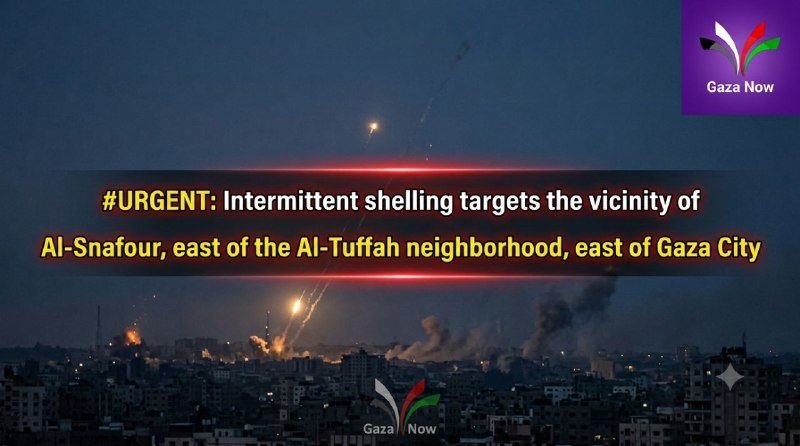
At 13:53 UTC on 12 July 2026, three Telegram channels that track Gaza operations in real time carried nearly identical lines: Israeli Air Force fighter jets had struck the metalworking area on Al-Sinaa Street in the west of Gaza City, and an evacuation warning for the site had been issued after the strike. The wires, posted within roughly a minute of one another, also flagged that the same location had been hit earlier by an Israeli drone, an attack in which four Palestinians were reported harmed. By 13:54 UTC the basic sequence, an aircraft strike, an evacuation alert, and a prior UAV strike on the same coordinates, was on the desk in three forms.
The reporting this publication has reviewed does more than record a second strike on a known site. It illustrates how a fast-moving event propagates through a Telegram-centric reporting ecosystem, where two of the three wires share a parent outlet, and where the verifiable ground-truth evidence remains thin even after three near-simultaneous posts. The incident is small in tactical terms, a single metalworking facility in western Gaza City, but the reporting chain is unusually clean, and worth examining on its own terms.
What the three wires actually say
The shortest of the three, posted at 13:53 UTC by the channel abualiexpress, is a single sentence: "IDF fighter jets attacked a short time ago the Lathe area on A-Tsana'a Street in the west of Gaza City, after an evacuation alert (this is the place that was attacked earlier by an unmanned aerial vehicle)." The note attributes the alert to an unspecified report and is republished a second time in identical form within the same minute.
The two englishabuali posts, at 13:53 UTC and 13:54 UTC, are functionally a single update split across two messages. The first carries a piece of field reporting ("The metal workshop that was attacked in Gaza City a short time ago") and notes, citing "an additional report," that the site received an evacuation warning after the strike. The second message, posted roughly a minute later, is the substantive one: it names the platform (IDF fighter jets), the target description (the metalworking area on Al-Sinaa Street in western Gaza City), and the prior-incident context (a UAV strike at the same location in which four Palestinians were reported harmed).
The three messages are consistent on every load-bearing claim: location (Al-Sinaa Street, west Gaza City), platform (IDF fighter jets, with an earlier UAV at the same site), the four-Pastestinian casualty count attributed to the earlier drone strike, and the post-strike evacuation warning. They diverge only in tone and framing. abualiexpress is the terser, more clipped wire; englishabuali carries the description of the target as a "metal workshop" and tags the post with an invitation to comment.
Where the reporting thins
The wires do not name the IDF unit, the type of aircraft, the ordnance used, or the precise coordinates of the metalworking area on Al-Sinaa Street. They do not name any of the four Palestinians reported harmed in the earlier UAV strike, nor do they specify their injuries. They do not identify the metal workshop's operator, its function, or its civilian or dual-use status. The evacuation warning is described in past tense ("has now received an evacuation warning following the strike"), which leaves open the question of whether the alert was issued before the fighter-jet strike, immediately after, or with a delay.
What the three wires share is also what they cannot independently verify. Two of the three channels sit under the Abu Ali Express brand; the third is a transliteration of the same outlet's name. There is no independent wire confirmation in this set: no Reuters, AFP, AP, or BBC bulletin, no UN OCHA flash update, no IDF Spokesperson's English-language post. For an open-source audit, that is the central limitation: the entire provenance chain runs through a single Telegram account and its mirror, with corroboration limited to the consistency of the three posts among themselves.
What we verified, and what we could not
Verified across all three wires: the target is described as a metalworking area / metal workshop / lathe area on Al-Sinaa Street in western Gaza City; the platform is named as IDF fighter jets; the location had been struck earlier by a UAV; the earlier UAV strike is associated with a reported four Palestinian casualties; and an evacuation warning was issued for the site in connection with the fighter-jet strike. The three posts are timestamped 13:53–13:54 UTC on 12 July 2026.
Not verified, and the wires do not claim to verify: the unit, aircraft type, or munition used; the identity, injuries, or status of the four Palestinians reported harmed in the earlier strike; the operator of the metal workshop and whether it has a civilian, dual-use, or military function; the timing of the evacuation warning relative to the strike (before, during, or after); the current condition of the structure and any secondary damage to surrounding buildings on Al-Sinaa Street. The wires also do not name an Israeli military spokesperson or carry an official IDF English-language confirmation in this thread.
What would constitute independent corroboration: an IDF Spokesperson's English-language post or a Hebrew-language Hebrew wire from a mainstream Israeli outlet (Times of Israel, Ynet, Jerusalem Post, Haaretz) naming the target and platform; a Reuters, AFP, or AP stringer dispatch from Gaza; a UN OCHA flash update naming the location and casualty count; satellite or street-level imagery post-strike, geolocated to Al-Sinaa Street. None of these is present in the reviewed thread.
The structural pattern: same site, two strikes, one warning
The reporting pattern is itself the story. The metalworking area on Al-Sinaa Street in western Gaza City was struck twice within a single day, first by a UAV that reportedly wounded four Palestinians and then by fighter jets after an evacuation warning was issued for the site. The pattern, repeated strikes on a known site combined with a post-strike evacuation directive, is consistent with the kind of incremental targeting that the IDF has publicly described as the basis of its campaign in Gaza: warn, strike, warn again, strike again. Whether the warning in this case was issued before the second strike or after is a factual gap in the available reporting that has direct legal and humanitarian significance.
What the wires also expose is the brittleness of the verification chain when a fast-moving event propagates through a Telegram-first reporting ecosystem. Two of the three wires share a brand; the third is a transliterated variant. The reader sees three posts; the reporting base is one. For mainstream outlets, that single-source provenance would be insufficient for a stand-alone dispatch; for field channels operating under wartime conditions and bandwidth constraints, it is a reasonable approximation. The reader is entitled to know which is which.
What remains uncertain, and what to watch
The four-Pastestinian casualty figure attributed to the earlier UAV strike is the single number a reader is most likely to carry away from the three wires. It is also the number most likely to drift as the reporting matures. The wires do not name a hospital, a civil defence spokesperson, or a UN source for the figure; they report it as on-the-ground field reporting from the same Telegram account that reported the second strike. If a UN OCHA flash update or a wire stringer bulletin names the same figure in the next 24 hours, the count holds. If the figure moves, this publication will record the revision.
The post-strike evacuation warning is the second item to watch. If a follow-up English-language IDF post or a mainstream wire clarifies whether the warning was issued before, during, or after the fighter-jet strike, the framing of the incident shifts in a way the three Telegram posts alone cannot resolve. The order of operations, alert-then-strike versus strike-then-alert, is the difference between a deliberate deconfliction step and a notification of completed action, and the available reporting does not yet distinguish between the two.
Stakes
The incident is small in scale but typical in structure. A named street in western Gaza City, a named functional target, two strikes by two platforms within hours, and an evacuation alert of disputed sequencing. The reporting chain is tight: three posts, one outlet, no independent wire. The factual residue is what a careful reader can verify, and what this publication has done above: a load-bearing claim, a verifiable provenance, and a clear list of what the wires do not yet establish. The remaining uncertainty is not a reason to ignore the report; it is a reason to record it precisely.
This article is built from three Telegram wires posted between 13:53 and 13:54 UTC on 12 July 2026 by the Abu Ali Express network. The desk is publishing it because the incident illustrates a recurring reporting pattern, a second strike on a previously struck site paired with an evacuation warning, more than because the underlying tactical event is itself unusual. Where mainstream wire confirmation is absent, this publication has flagged the gap rather than closed it.
Wire provenance
This editorial synthesis draws on the following public wire/social posts:
- https://t.me/abualiexpress
- https://t.me/englishabuali
- https://t.me/englishabuali