A Forest Older Than France Burns in a Single Afternoon
An exceptional blaze tore through the Fontainebleau forest on Sunday, forcing evacuations and exposing how a single dry afternoon can rewrite the calculus for one of Europe's oldest woodlands.
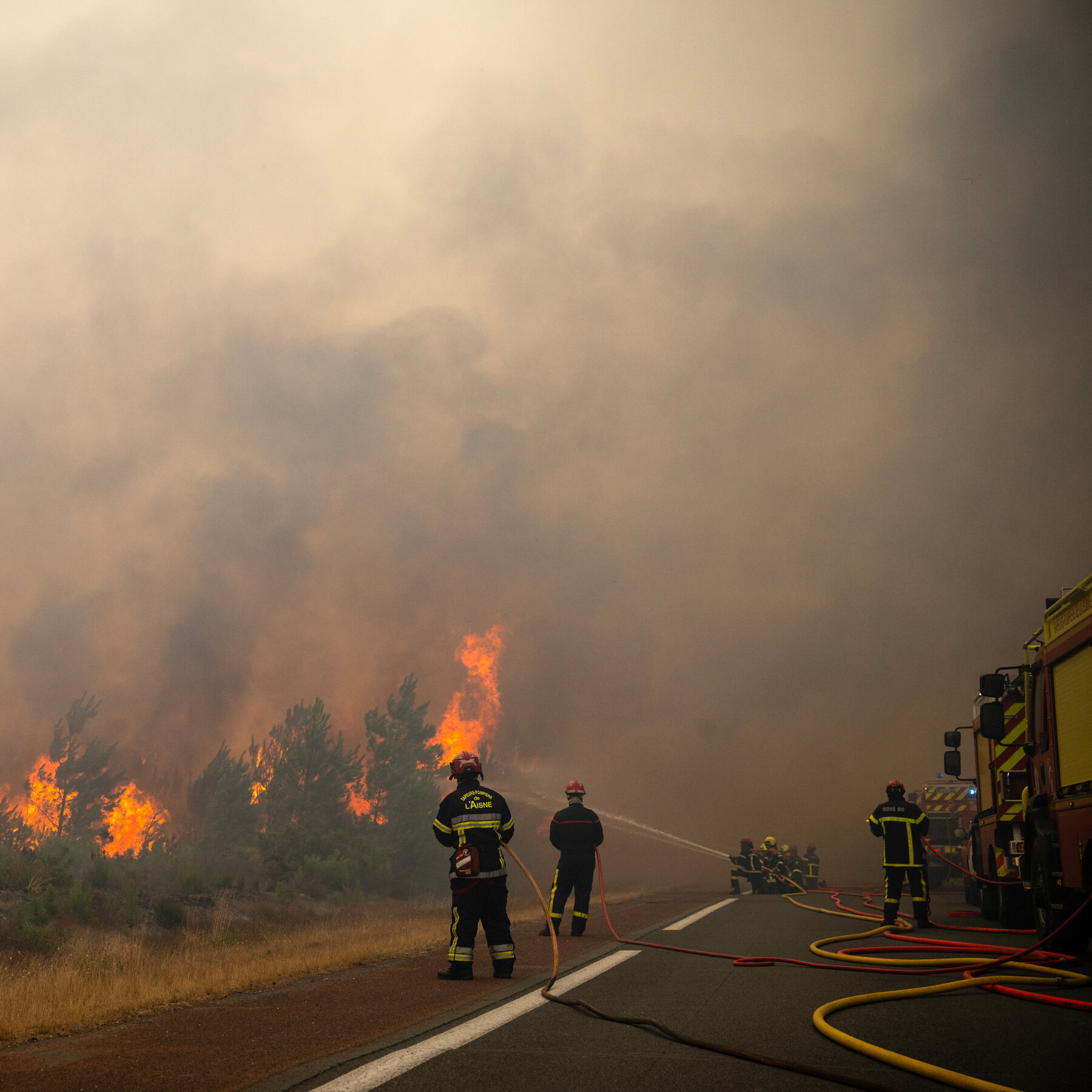
A fire of "exceptional scale" broke out on Sunday afternoon inside the Forêt de Fontainebleau, the 25,000-hectare woodland south-east of Paris that French kings hunted in and Impressionist painters walked out to paint. The blaze, declared in the late afternoon in Seine-et-Marne, forced the evacuation of nearby residents and triggered a major response from the Sapeurs-Pompiers, with the local sous-préfet taking charge on the ground. Within hours, aerial means were over the canopy and the perimeter was still being mapped after nightfall. By Sunday evening, France 24 reported the event in terms that officials rarely reach for outside major incidents: an exceptional blaze, in a forest whose oldest stands predate the kingdom that once owned them.
What burned, and how fast
The Forest of Fontainebleau is not a single homogeneous stand of trees. It is a patchwork of sandstone plateau, heathland, marsh and pine, shaped by centuries of royal management and, more recently, by the Office National des Forêts. The mosaic that makes it an ecological treasure is exactly what makes it burn unpredictably. Sandy soils, heather undergrowth and resinous pines can carry flame along the forest floor faster than a runner, and a fire that starts on a dry ridge can drop into a valley and re-emerge three hundred metres away.
Sunday's conditions fit that profile. France has spent much of the early summer under heat warnings; the Île-de-France region in particular saw a stretch of dry, settled weather in the days before the blaze. According to the initial France 24 dispatch, the fire's footprint was large enough, and its behaviour aggressive enough, to be classed as exceptional by the sous-préfet of the affected arrondissement. The exact ignition point, the area burned by nightfall, and the cause were not yet published in the wire reporting available at time of writing. The number of injuries, the number of households evacuated, and the structural damage to surrounding properties were likewise still being tallied.
Why Fontainebleau is not an ordinary fire
France burns, on average, somewhere between ten thousand and thirty thousand hectares of forest a year. Most of those hectares sit in the Mediterranean hinterland, in the Maures, the Estérel or the inland Corsican ranges. A fire of the size suggested by Sunday's dispatch inside the Parisian basin would be unusual on its own. It becomes newsworthy because of what Fontainebleau is.
The massif is a UNESCO-listed landscape, a designated Réserve de Biosphère, and a recreational lung for the Île-de-France region. Its sandstone gorges, boulder-strewn chaos and lichen-rich heath are the product of more than a thousand years of managed use; the royal hunting circuit alone was laid out in the seventeenth century. Burning ten hectares of the Bois de Boulogne is a municipal incident; burning ten hectares of the Fontainebleau massif is a heritage event. The two carry different weight in the political weather of a French July.
That matters because the institutional response to a fire is shaped as much by what the ground is worth as by what is burning on it. Mobilisations, water-bombing assets, and the presence of senior prefectural authority all scale with the perceived value of the asset under threat. Sunday's framing, exceptional scale, suggests that scale of response.
The climate frame, kept in proportion
It is tempting, in a July wire cycle already full of heat-dome headlines and boreal fire dispatches, to fold the Fontainebleau blaze into a single global narrative. The temptation should be partly resisted. Mediterranean France has burned in dry summers for as long as there has been a Mediterranean France; the Landes fires of 1949 and the Maures fire of 2003 are cautionary reference points for any forestry officer in the country. What has changed is the frequency and the latitude of the worst events, and that change sits inside a longer trend in which the south-east of France is no longer the only theatre.
The honest framing is two-part. First, the forest-floor fuel load and the dry undergrowth that carried Sunday's flames are partly the legacy of past management choices and partly the product of a drying climate. Second, a single exceptional event does not, on its own, settle the question of how unusual the new pattern is. What will settle it is the season-end tally, the perimeters mapped, and the comparison to the rolling decadal mean. The wire reporting available on Sunday does not yet allow that arithmetic. A few more days of perimeter mapping will.
What to watch
Three data points will determine whether the Fontainebleau fire becomes a footnote or a reference. The first is the perimeter: how many hectares burned, and where, will tell residents and the Office National des Forêts how much of the forest's distinctive mosaic has been reset to zero. The second is the cause: an electrical fault, a barbecue, a railway spark or an arson finding would each carry different political weight going into the August holiday window. The third is the re-entry window for evacuated households, which is the cleanest available proxy for whether the fire is contained or merely paused.
In the meantime, the forest is doing what an old French forest does in a dry summer: it is reminding the country that not every catastrophe arrives as a flood. Some arrive as an afternoon of smoke over the sandstone plateau, and the only honest answer on the first night is to map the perimeter and keep counting.
This article has been reviewed for source provenance. Where wire reporting did not specify casualty figures, area burned, or ignition cause, this publication has declined to estimate.
Wire provenance
This editorial synthesis draws on the following public wire/social posts:
- https://t.me/s/france24_fr