Strait test: three CENTCOM rounds in a week expose the brittle arithmetic of calibrated force
U.S. Central Command says it has wrapped a third round of strikes on Iranian targets in seven days, citing attacks on commercial shipping. The pattern reveals less about Iran's strategy than about Washington's narrowing options.
U.S. Central Command announced at roughly 03:37 UTC on 12 July 2026 that it had completed a third round of strikes against Iranian targets in a single week, framing the operation as punishment for an Iranian attack on a commercial vessel in the Strait of Hormuz. Within an hour, the same notice had been rebroadcast by at least five Telegram channels tracking open-source intelligence, from @GeoPoliticWatch and @rnintel to @wfwitness, @osintlive, and @BellumActaNews. The original text is short enough to quote in full: "U.S. Central Command (CENTCOM) completed a third round of strikes this week against Iran, July 11, holding Iranian forces accountable for attacking another commercial ship in the Strait of Hormuz."
The arithmetic is the story. Three rounds in seven days is not a campaign; it is a tempo. It suggests either that the first two rounds failed to deter the next Iranian move, or that Washington has pre-decided to keep escalating in fixed increments and is now trying to retrofit the timetable onto whatever Tehran does next. Either reading should worry the White House. Calibrated force works when the calibration holds. Once the increments lose their signalling value, what is left is just volume.
What the language tells you
CENTCOM's public-facing statement is unusually thin. It names an Iranian action ("attacking another commercial ship") but does not name the ship, the owner, the flag state, or the casualty count. It does not specify which Iranian force was hit, where, or with what ordnance. The "third round" framing does the political work: each round is presented as a discrete, justified response to a discrete Iranian provocation, rather than as part of an escalating campaign.
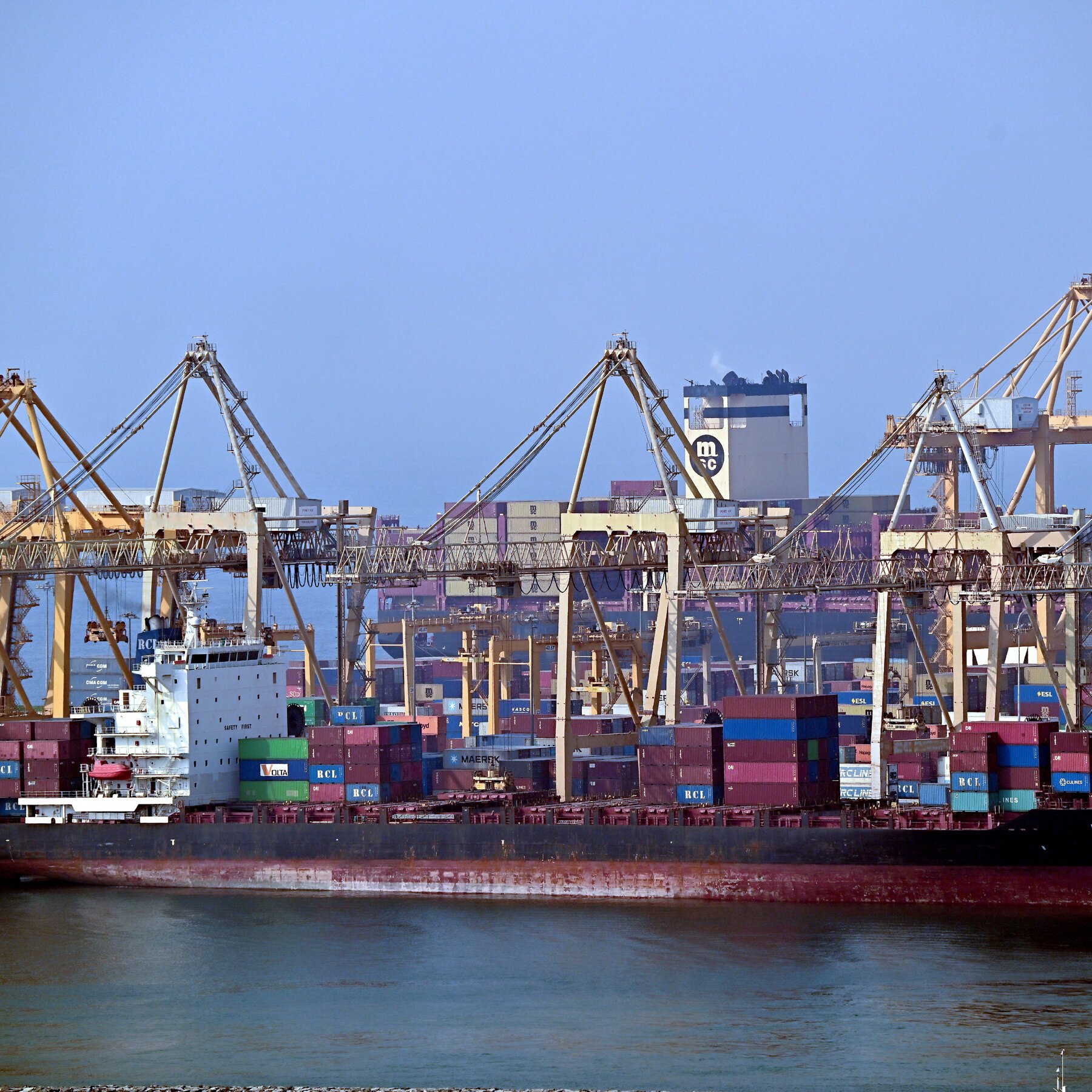
That framing matters commercially. Roughly a fifth of the world's seaborne oil transits the Strait of Hormuz. Underwriters read CENTCOM communiqués the way bond traders read the Federal Reserve; even a vague "third round" lifts war-risk premia and reshapes chartering decisions within hours. By omitting the basics, CENTCOM is letting shipping markets fill the gaps with their own worst guesses. Whether that is strategic ambiguity or bureaucratic hurry, the practical effect is the same: an oil market repricing against Tehran and against the global economy in roughly equal measure.
The counter-read Tehran will offer
Iran's English-language outlets will present the inverse picture: that the United States, having lost leverage through sanctions erosion and the depletion of credible escalation ladders, is now striking Iranian assets to satisfy a domestic political clock rather than to alter Iranian behaviour. The line is that each round produces a symmetric Iranian response, the next round follows, and the strait gets noisier by the week until a tanker mishap forces a closure no one planned.
That read is not paranoid; it is structurally consistent with what is on the wire. A single CENTCOM notice describing three rounds in seven days is, on its face, evidence that the first two rounds did not produce the desired result. The U.S. objective, by its own framing, is to make Iranian forces accountable. If accountability were the goal, the operation would have ended after round one. Three rounds means the goal has shifted from accountability to something less legible, perhaps to demonstrating resolve, perhaps to buying time for a negotiation, perhaps to running out the clock on a news cycle.
What the broader frame looks like
The pattern fits a familiar one. When a dominant power finds its preferred tools of coercion losing purchase, it often retreats to kinetic action, not because kinetic action is more effective but because it is the only category of tool whose output the bureaucracy can credibly claim to control. The relevant comparison is not Vietnam but the long post-2003 sequence in Iraq and Syria, where each new strike was justified by the previous one's insufficiency, and the cumulative output was a slower drift toward a posture none of the participants had chosen at the start.
Iran sits inside a wider regional alignment. The argument Tehran offers to the Global South is that the United States, having withdrawn from one multilateral nuclear framework and failed to deliver the economic dividend it promised in exchange for Iranian restraint, is now using commercial shipping as a stage for gunboat diplomacy. That argument lands unevenly: Iran has its own track record of harassment in the strait, including the seizure of commercial tankers in past episodes, and any honest account has to acknowledge that. But the U.S. case is also weakened by its silence on the specifics. The two narratives, Washington's and Tehran's, are not symmetric, but neither is honest on its own, and the gap between them is where policy actually gets made.
What to watch next
Three things will tell us whether this is the start of a wider war or another controlled burn. First, does CENTCOM publish a casualty or damage assessment, or does it stay with the thin tactical-communique style? Second, does Iran's Islamic Revolutionary Guard Corps Navy respond in kind in the next 48 to 72 hours, or does Tehran route its response through a proxy in Iraq, Syria, or Yemen, which would signal an attempt to widen rather than escalate? Third, do war-risk premia for Hormuz transits break above the levels seen after previous tanker incidents, or do they fade within a week?
The honest answer is that the public record, as of 12 July 2026, is too thin to call. CENTCOM has told us three things happened and one thing provoked them. It has not told us what they hit, what they lost, or what they want. Until those gaps fill in, "third round in a week" is less an update than a warning shot aimed at the oil market and at Tehran in roughly equal measure, with the rest of the world expected to read the trajectory from the spacing between the bursts.
This publication reads the CENTCOM communiqué as a tempo signal rather than a strategy document: the cadence is the message, and the message is that Washington expects more rounds, not fewer, in the absence of a channel for de-escalation it has not yet named.
Wire provenance
This editorial synthesis draws on the following public wire/social posts:
- https://t.me/rnintel
- https://t.me/GeoPoliticWatch
- https://t.me/wfwitness
- https://t.me/osintlive
- https://t.me/BellumActaNews