Unconfirmed blasts reported near Bahrain International Airport and across Kuwait
Iran-linked outlets carried early-morning reports of explosions near Bahrain International Airport and inside Kuwait. No official confirmation had been published by 07:22 UTC.
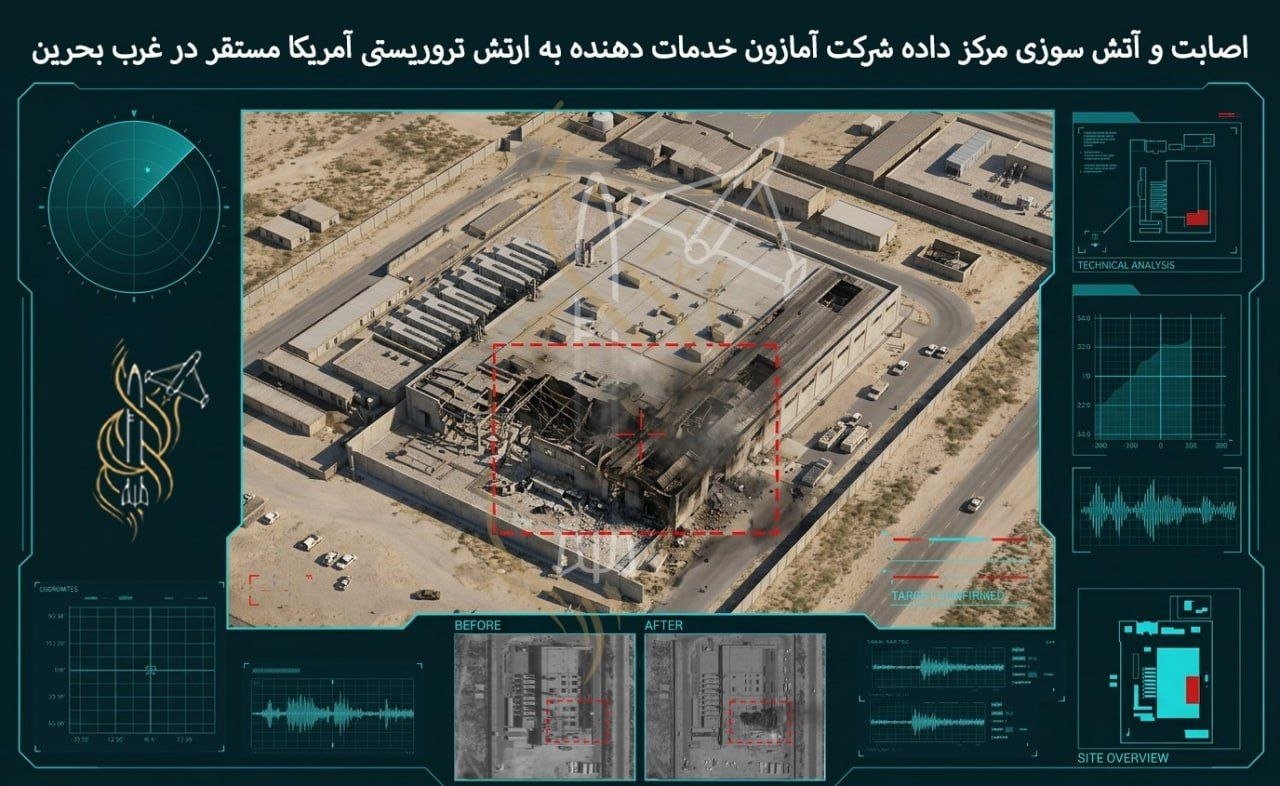
At 06:50 UTC on 12 July 2026, Iran's Mehr News and the English service of Tasnim both reported that explosions had been heard in Kuwait and Bahrain, with the airport singled out by name in at least one Arabic-language pickup. By 07:21 UTC the framing had narrowed: Tasnim's Persian service and its English wire said an explosion had been heard near Bahrain International Airport specifically. Two and a half hours before Gulf finance desks opened in London, and well before Washington's mid-morning, the Gulf's most exposed civilian node was the subject of a still-unverified, Iran-adjacent report that no regional authority had corroborated.
What this episode illustrates, more than whatever the sonic boom or blast turns out to be, is how Gulf security incidents now enter the global news cycle first through Iranian state-adjacent wires and Telegram channels, with mainstream confirmation often lagging by hours. The information gradient runs east-to-west, not the other way around. Monexus treats the underlying event as unresolved; the news is as much about the routing as about the sound.
What was actually reported
The earliest item in the thread, timestamped 06:50 UTC, is a Tasnim English Telegram post that reads only "Some media reports that explosions were heard in Kuwait and Bahrain." Mehr News carried the same line at the same minute, in English, attributing the claim to unnamed "media reports" rather than its own correspondents. The wire did not name a source, a location inside either country, or a possible cause.
By 07:21 UTC the framing had sharpened. A second Tasnim post, in Persian, added that an explosion had been heard "in Kuwait and Bahrain" and specifically that Arab media were reporting a blast near Bahrain International Airport. One minute later, the English Tasnim channel repackaged the same line in English. The progression matters: an initial vague "somewhere in two countries" claim narrowed, in half an hour, to a single named infrastructure asset on the southern Gulf coast, Bahrain International Airport, which sits on al-Muharraq island adjacent to the causeway that links Bahrain to Saudi Arabia.
No Bahraini, Kuwaiti, Saudi, US Fifth Fleet, or US Central Command statement had been published in the thread by 07:22 UTC. Reuters, AP, AFP, BBC, Al Jazeera and the Gulf wires had not yet posted. The information environment, at the moment of writing, is Iranian and Iranian-adjacent.
The Iran-wire pattern
Tasnim and Mehr are not fringe channels. Tasnim is the Farsi-language news agency closest to the Islamic Revolutionary Guard Corps; Mehr News operates under the Iranian government's cultural and Islamic guidance apparatus. Both have editorial access that gives them first-mover status on incidents that Tehran wants the regional conversation to start from. That structural position is itself the story.
When Iranian state-adjacent wires carry "some media reports" language, the sourcing chain is opaque by design. The claim may be sourced to a Lebanese, Iraqi, or Houthi outlet, to a Telegram channel run by an Iranian-aligned militia, or to a wire in one of the Gulf monarchies that the Iranian outlets are simply reposting. The institutional voice stays distant from the underlying assertion. The headline lands; the verification work is left to Western wires, which then re-report it under the same vague attribution.
The pattern is well-established. In past Gulf incidents, Iranian outlets have carried initial reports of explosions, drone sightings, or naval confrontations hours before any official confirmation, and in some cases the events themselves were never independently verified. The reputational logic is asymmetric: a false alarm costs the Iranian wire little, because the wire never vouched for the claim in the first place. A confirmed attack, by contrast, lets Tehran set the narrative frame for every subsequent wire pickup.
What Bahrain and Kuwait actually face
Bahrain International Airport handles the bulk of the country's commercial and cargo traffic and sits roughly 30 kilometres southwest of Manama. The country hosts Naval Support Activity Bahrain, the permanent home of the US Fifth Fleet and UK maritime forces, and is the only Gulf monarchy with a Shia-majority population under Sunni royal family rule. It has been the target of Iranian-aligned disruption before: in 2017, a foiled plot to bomb the oil pipeline was attributed by Bahraini authorities to Iran-backed Hezbollah al-Hejaz; in 2020, Iranian accusations of Israeli spying levelled against Manama briefly spiked tensions. The airport is a high-value dual-use target.
Kuwait sits across the Gulf from Iran, has historically acted as a mediator between Tehran and the Gulf Cooperation Council states, and hosts substantial US and Saudi-aligned military presence. Reports of "explosions" inside Kuwait have in past cycles turned out to be loud military exercises at Camp Arifjan or at the Udairi range, both of which routinely produce audible effects across populated areas. That precedent cuts both ways: the Kuwait reference in the early reports may reflect exercise noise, or it may reflect a genuinely separate incident.
Without an authoritative locator, scale, casualty count, or official attribution, the safest read of the thread is that two distinct audible events were reported in two distinct countries within a 90-minute window, and that one of them has been specifically associated with the airport perimeter.
What remains unverified
The thread carries no imagery, no audio, no locator coordinates, no official Bahraini or Kuwaiti interior ministry statement, no US Central Command or Fifth Fleet acknowledgement, and no independent wire confirmation from Reuters, AFP, AP, BBC or Al Jazeera English. The reporters-of-record layer is, at 07:22 UTC, entirely Iranian.
Monexus treats the underlying event as unresolved pending confirmation from at least one Bahraini or Kuwaiti government source and at least one Western wire. The reporting itself, as a phenomenon of how Gulf security incidents propagate through the information ecosystem, is not in dispute.
, Monexus Desk note: Wire services treat Iranian state-adjacent claims as low-confidence until confirmed; Monexus is publishing the routing, not the blast, because the routing is what is verifiable.
Wire provenance
This editorial synthesis draws on the following public wire/social posts:
- https://t.me/tasnimnews_en
- https://t.me/mehrnews
- https://t.me/JahanTasnim
- https://t.me/tasnimnews_en