Argentina outclass Switzerland 3-1 to set up World Cup semifinal date
Alexis Mac Allister's early opener set the tone as Argentina booked a semifinal spot with a 3-1 win over Switzerland, in a quarterfinal marred by a VAR-driven red card for Breel Embolo.
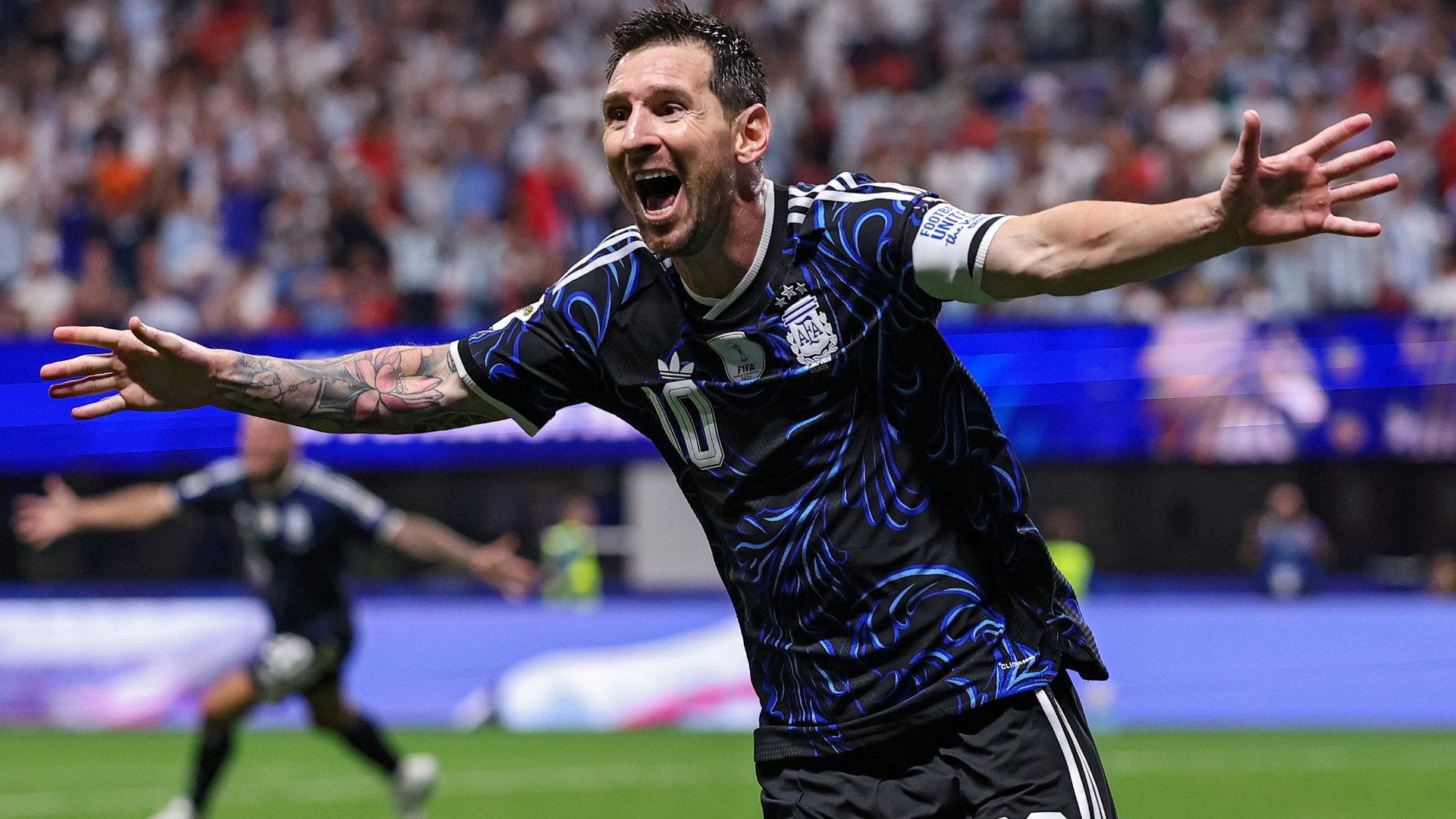
Alexis Mac Allister needed ten minutes. The Argentine midfielder opened the scoring in the 10th minute at the 2026 FIFA World Cup quarterfinal on 12 July 2026, and Switzerland never quite recovered, going down 3-1 as Lionel Scaloni's side advanced to the last four. Dan Ndoye's equaliser briefly threatened a contest, but two second-half goals turned a tight knockout tie into a familiar Argentine march.
The result is the one the form book suggested and the one Argentine fans demanded. With the semifinals now in view, the holders' habit of peaking late in tournaments is back in working order, and Switzerland's run, genuinely impressive through the group stage and the round of 16, has ended at the door of the elite.
Mac Allister sets the tempo, then Switzerland blink
Argentina's opening goal arrived early and on a plate. Mac Allister's finish in the 10th minute rewarded a start that suggested Scaloni had instructed his side to settle the tie before Switzerland's defensive shape could bed in. According to initial accounts, the early strike forced Murat Yakin's side out of their preferred low block and into the kind of end-to-end game that suits the holders.
Ndoye's equaliser, slotted past the Argentine goalkeeper after a Swiss counter, hinted at a different kind of evening. The Basel-born forward, who plays his club football in Italy, has been one of the quietly effective attacking presences in this tournament, and his goal carried the air of a side that had decided not to be a footnote. Swiss possession in the twenty minutes that followed looked confident, and for a while Argentina's midfield was pressed into the kind of hurried distribution that has undone better teams.
It did not last. The second half tilted back towards Argentina, and two goals either side of the hour mark put the result beyond serious debate. By full time the 3-1 scoreline looked comfortable, but the match was tighter than the final margin suggests, and Switzerland will spend the off-season wondering what might have happened had they held their nerve in that twenty-minute window after Ndoye's finish.
The Embolo red card and the question of identity
The game's most controversial moment came not from open play but from the VAR booth. Breel Embolo, the Switzerland forward who plies his trade for Monaco, became the first player to be sent off at this tournament following a Video Assistant Referee review of a quarterfinal incident. The dismissal, reported at 04:44 UTC on 12 July 2026, cut across an awkward period for the Swiss, who were already chasing the game.
Embolo's case will be debated for some time. Red cards after VAR review are now a familiar feature of the modern game, and the standard by which a referee on the field overturns a yellow or escalates a foul is the kind of judgement call that splits dressing rooms and TV studios in equal measure. What is not in dispute is the consequence: ten men, a goal down, and the clock working against them.
The identity question raised in some quarters of the Swiss press is more delicate. Embolo, born in Yaoundé and raised in France before representing Switzerland at youth and senior level, has spoken previously about the complexity of his own national identity in a squad that is increasingly drawn from the country's migrant communities. On the field, his tournament had been productive; off it, his sending-off adds a layer of post-mortem that has little to do with tactics.
Scaloni's knockout game
The deeper story is Scaloni. The Argentine coach, who has now taken this squad through a Copa América, a World Cup, and a Confederations-style resumption of the latter, continues to demonstrate a feel for knockout football that is rare in the modern era. Argentina's group-stage performances in this tournament were occasionally laboured, a criticism levelled at sides that look to be conserving energy rather than chasing goals. Against Switzerland, the urgency was back from minute one.
The tactical fingerprint is recognisable. Mac Allister, operating just behind Julián Álvarez, gives Argentina a second-phase scorer that they have sometimes lacked. The full-backs pushed high, stretching Switzerland's front line, and the midfield rotation that featured Rodrigo De Paul and Enzo Fernández gave the holders numerical superiority in central areas once Switzerland's shape had been forced apart. It is the kind of performance that travels well in a tournament, and Argentina will arrive at the semifinal with momentum rather than the cautious tread of a defending champion carrying the weight of the previous edition.
What Argentina won, and what the question still is
The substantive win is, of course, a place in the semifinals. Beyond that, the holders have answered a question that had begun to nag at the edges of their campaign: whether this generation can summon the intensity required to win a knockout match against a side that is well-organised and willing to sit in. They have done so once. They will need to do so again.
The remaining uncertainty is lineup-driven rather than systemic. Scaloni's use of substitutes in the second half was conservative, and the introduction of fresh legs in wide areas came later than the run of play arguably demanded. Against a higher-calibre opponent in the semifinal, those decisions will be tested. Switzerland, for their part, leave the tournament with credit but also with the knowledge that the red card, and not the football, may end up as the first image of their quarterfinal.
Desk note: Monexus framed this as a tactical and disciplinary story rather than a national-identity one. The Embolo red card is on the record as the first of its kind at this tournament; the identity discourse that orbits it is real but is not the wire line.
Wire provenance
This editorial synthesis draws on the following public wire/social posts:
- https://t.me/BellumActaNews