Argentina players revive Falklands chants before semifinal with England, Polymarket gives La Albiceleste the edge
Argentina's squad has revived 1982 Falklands War chants ahead of its World Cup semifinal against England, as prediction markets give the South Americans a 45% chance of advancing.
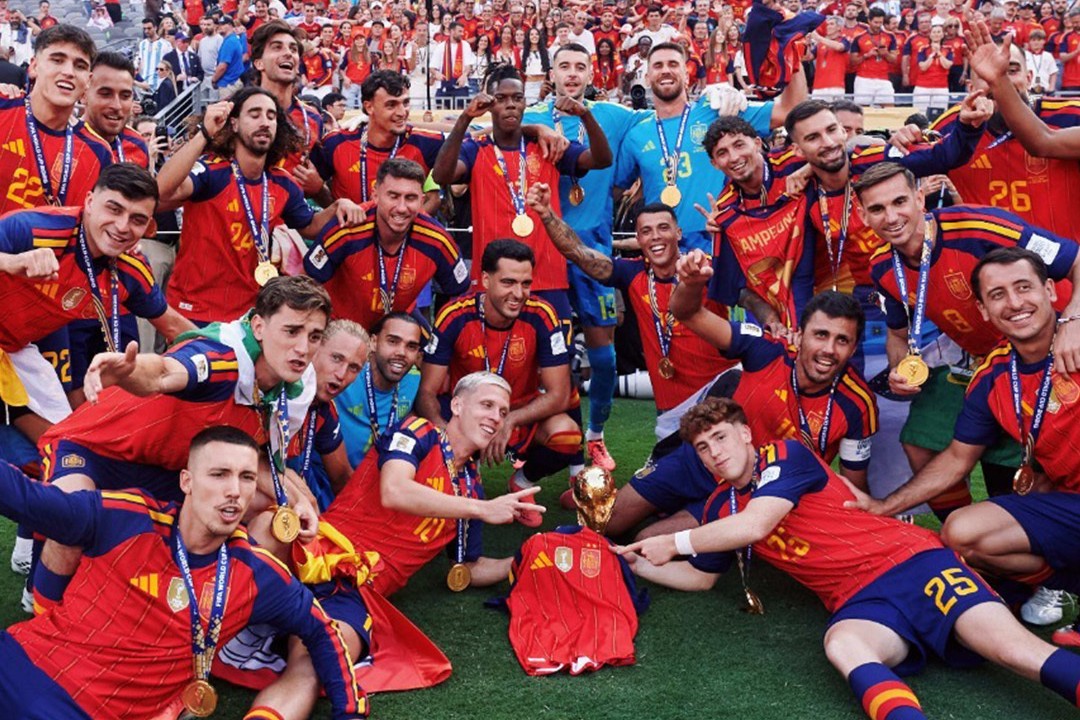
Argentina's national team arrived at its World Cup semifinal against England carrying more than a formation sheet. On 12 July 2026, posts circulating on X reported that Argentine players had revived Falklands War-era chants in the dressing-room and on social media, declaring they intended to win "for the Malvinas." The chants, a fixture of Argentine football culture since the 1982 South Atlantic conflict, returned to the squad ahead of the highest-stakes fixture in the fixture list.
Reuters confirmed the tie on the same day. In a 22:10 UTC bulletin, the wire service reported that the World Cup semi-finals were set, with England drawn against "long-time rivals Argentina," and directed readers to its World News podcast for additional context. The pairing is the first Argentina–England knockout match since the 1998 World Cup group stage and the first World Cup semifinal between the two since 1990, when Maradona's team won on penalties in Rome.
The Malvinas echo
The revival of the chants is more than locker-room theatre. In Argentine public life, the South Atlantic sovereignty dispute is treated as a settled question: the islands belong to Buenos Aires, the war dead belong to the nation, and the chants carry that conviction. Argentine football crowds have sung versions of the song continuously since 1982, and squad members have invoked it before international fixtures against English opponents for decades. The decision to surface it publicly before a knockout round signals a deliberate framing of the match by the squad's senior players, who have used the dispute as motivational shorthand in previous tournaments.
For England, the dispute is historical rather than ongoing. London treats the islands as a British Overseas Territory with a population that has voted by referendum to remain British, a position Argentine governments of every stripe have rejected since 1833. The chants will be read at Wembley and in the English press as provocation; in Buenos Aires and in Argentine sports media they will be read as continuity.
The market's read
The Polymarket contract on the semifinal, captured at 23:12 UTC on 12 July 2026, priced Argentina at a 45% implied chance of defeating England in regulation, with the remainder distributed across an England win and the draw path. A 45% line for a team listed as the underdog against the host nation in its own stadium is, by the standards of prediction markets, a meaningful endorsement. Argentine knockout football under tournament pressure has historically been priced low by bookmakers and then outperformed; the market's tolerance for that pattern is, on the face of it, intact.
What the framing risks
There is a version of this story in which the chants are noise: a squad reaching for tribal energy, the diplomatic files undisturbed, the Foreign Office issuing the standard response it has issued since 1982. There is another version in which the timing, on the eve of a knockout match in the imperial capital of a country that is a permanent UN Security Council member, registers as a small but deliberate poke at a sovereignty dispute the United Kingdom has refused to reopen for forty-four years. Argentina's president and foreign ministry have not, as of the bulletins in hand, attached themselves to the squad's messaging. That silence is itself information: the chants belong to the players, the federation and the terraces, not to the state, and Buenos Aires is content to let that ambiguity stand.
The structural question is whether football still functions as the only public venue where Argentine sovereignty claims over the South Atlantic are routinely voiced without diplomatic cost. The match will be decided on the pitch at the King Fahd International Stadium at 19:00 UTC on 13 July 2026; the chants will outlast it either way.
Desk note: this article pairs the wire confirmation of the tie with the Polymarket implied probability, rather than presenting the squad's chants in isolation. Monexus frames the dispute through the squad-and-stands lens Argentine football has used for four decades, not through a UK Foreign Office talking-points frame.
Wire provenance
This editorial synthesis draws on the following public wire/social posts:
- https://x.com/reuters/status/
- https://x.com/polymarket/status/