Araghchi-Arnault meeting puts Iran back at the centre of Lebanon's diplomatic lane
Iran's foreign minister hosted the UN special coordinator for Lebanon in Tehran on 12 July, signalling that the Islamic Republic intends to remain a fixed interlocutor in Beirut's crisis management.
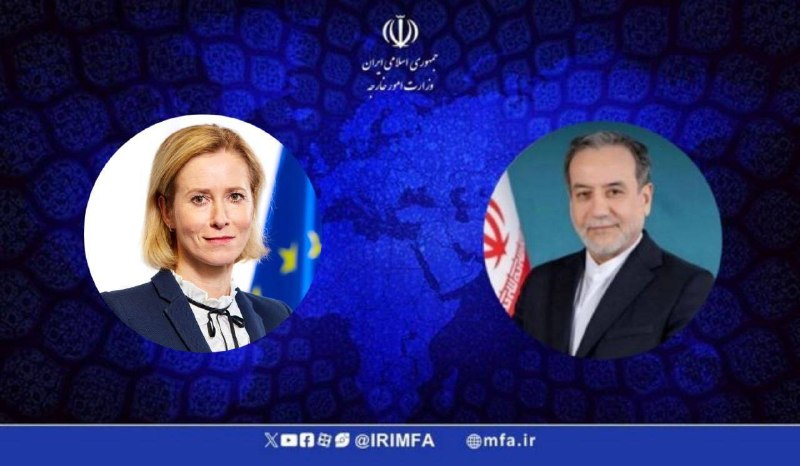
Iranian Foreign Minister Seyyed Abbas Araghchi received the United Nations Special Coordinator for Lebanon, Jean Arnault, in Tehran on 12 July 2026, the foreign ministry confirmed via state outlet IRNA at 13:59 UTC. The sit-down, also reported by Fars News International at 13:28 UTC and carried by Al-Alam and the War Front Witness channel minutes later, was framed by Iranian outlets as a substantive exchange on Lebanon's political and security trajectory. None of the readouts disclosed the meeting's length, the size of each delegation, or the specific communiqué issued, if any.
What is clear is the choreography. Within a 44-minute window on a Sunday afternoon, four Iranian or Iran-aligned outlets pushed near-identical visual and textual material: Araghchi at the table, Arnault opposite him, Iranian flags behind. The synchronisation is itself the message. Tehran wants the meeting read as consequential, not procedural.
Why Iran is reinserting itself
Lebanon's diplomatic lane has thinned over the past year. Western embassies in Beirut have scaled back movement and many routine contacts now pass through intermediaries rather than direct lines. Into that vacuum, Iran has been methodically reinserting itself as a primary interlocutor on anything touching Lebanese sovereignty, the file of missing persons, and the security arrangement along the southern border.
The Tehran meeting functions on two tracks. The first is procedural: Arnault's mandate covers political coordination with Lebanese factions, support for state institutions, and quiet facilitation between Beirut and external actors. A senior Iranian minister taking that meeting signals that Tehran expects to be in the room when the next round of negotiations is scheduled. The second track is signalling. By hosting the UN's Lebanon point person in the foreign ministry complex, rather than at a working-level desk, Araghchi elevates the file and frames Iran as a stakeholder whose consent is required for any settlement that touches the region's armed architecture.
What the readouts do not say
Iranian coverage of the meeting is uniformly positive in tone. IRNA, the foreign ministry's outlet of record, characterised the talks as substantive. Fars News, Al-Alam and War Front Witness all foregrounded the meeting itself rather than its content. None of the readouts quote Arnault directly, and none identify the Iranian officials present beyond Araghchi himself.
That silence is worth flagging. UN special coordinators tend to keep their public remarks generic on sensitive files, and Arnault's prior engagements in Beirut have followed that pattern. The absence of an Iranian attribution, no paraphrased Iranian minister's remark, no bullet-pointed agenda, is unusual for a foreign ministry that normally fills its readouts with directional language. Either the substantive content is genuinely sensitive, or the meeting was preparatory rather than outcome-oriented. The sources do not let us distinguish.
The structural frame
Across the wider Middle East, the architecture of mediation is being rewritten in real time. The traditional convening power, the United States, France, Saudi Arabia acting through formal channels and Gulf-based forums, has been supplemented, in some files supplanted, by a more plural set of interlocutors. Turkey runs its own Gaza track. Qatar retains primacy on certain hostage-related negotiations. Russia has positioned itself as a security-coordination channel with Damascus. Iran, after years of being treated as a spoiler rather than a party, is now pursuing direct bilateral contact with the UN system on the Lebanon file.
The pattern is the same one visible in Ukraine's grain corridor, in the Caucasus talks between Baku and Yerevan, in the back-channel work between Caracas and Washington: the post-Cold-War settlement infrastructure, with its Western conveners and Western-penned frameworks, is giving way to a more dispersed arrangement in which regional powers expect a seat at the table whether or not the conveners invite them. Tehran's meeting with Arnault is a small data point inside that larger drift.
Stakes and what to watch next
For Beirut, the immediate question is whether the Tehran meeting produces a follow-on in the Lebanese capital. Arnault's mandate requires him to engage with Lebanese factions directly; an Iranian-engineered framework that bypasses the Lebanese state would corrode the very sovereignty his role is meant to protect. For the wider region, the test is whether Iran's re-entry into the Lebanon file accelerates or constrains movement on the southern border, where the security arrangement has held in a fragile equilibrium.
Two filings are worth watching. First, any read-out from the UN Special Coordinator's office, which historically issues a low-key statement after regional travel; the absence or presence of a UN statement will tell us how the UN system itself reads the meeting's weight. Second, the response from Beirut's presidential palace: if Lebanon's head of state requests a parallel meeting with Arnault on his next regional swing, Iran's diplomatic investment will have paid a return. If Beirut is left reading about the Tehran meeting in the press, the reinsertion will register as form rather than substance.
The sources on this story are uniformly Iranian or Iran-adjacent. That is a known limitation. Western wire reporting on the meeting, where it surfaces, will be the test of whether Tehran's framing of a substantive exchange survives contact with outside observation. Until then, the meeting stands as a performed claim: Iran intends to be heard on Lebanon's future, and is willing to receive the UN's senior envoy in its foreign ministry to make that point.
Desk note: Monexus carried the four Iranian-state and Iran-aligned readouts on this meeting as they appeared on Telegram between 13:15 and 13:59 UTC, and treated IRNA's framing as the official Iranian line while flagging the absence of any Western-wire confirmation. The structural frame, the dispersion of mediation infrastructure across the region, is editorial analysis drawn from the pattern visible across other files, not from any single source item.
Wire provenance
This editorial synthesis draws on the following public wire/social posts:
- https://t.me/Irna_en/2181
- https://t.me/FarsNewsInt/91234
- https://t.me/wfwitness/5567
- https://t.me/alalamfa/7821