US strikes Iranian targets near the Strait of Hormuz after IRGC attack on commercial vessel
Three Telegram channels relayed an Axios scoop within minutes of each other late on 11 July 2026, placing the world's most sensitive oil chokepoint at the centre of a direct US-Iranian exchange.
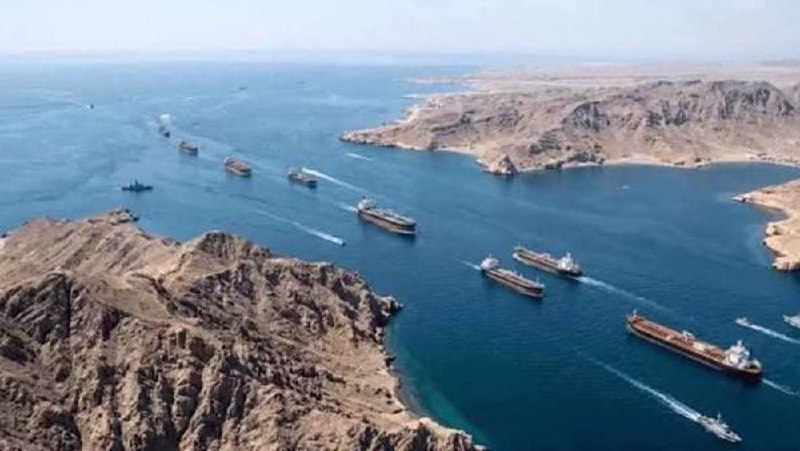
Three separate Telegram channels, WarMonitors, rnintel and War Frontline Witness, carried the same Axios report from journalist Barak Ravid within a five-minute window between 23:37 and 23:42 UTC on Friday 11 July 2026. Each relayed the central line almost verbatim: the United States military is conducting strikes against Iranian targets in the Strait of Hormuz area, in response to what a US official, quoted by Ravid, described as an IRGC attack on a commercial ship. By 23:39 UTC, a parallel Axios read cited by rnintel had reframed the trigger: Iran's announced closure of the strait itself, not merely a single vessel strike. By 23:37 UTC, Iranian state outlet Press TV had separately reported explosions heard in the southern Iranian cities of Bushehr and Asluyeh, both home to major energy infrastructure on the Persian Gulf coast. Iran had earlier, at 23:27 UTC, declared the Strait of Hormuz closed and claimed it had struck a vessel using an "unauthorised route."
The combined picture, assembled from those four cluster items, is a fast-moving military escalation centred on the narrowest point of the world's most consequential oil shipping lane. The factual spine is narrow and traceable; the geopolitical spine is wider, and on the latter the reporting is only beginning.
What the reporting actually says
The originating claim is Axios's. Ravid, one of a small number of Western reporters with regular direct sourcing into the US national-security apparatus, reported that US forces were striking Iranian targets in the Strait of Hormuz area, citing unnamed US defence officials. The first Telegram cluster item to surface it, on WarMonitors at 23:42 UTC, attributes the report to Ravid and specifies the trigger as an IRGC attack on a commercial ship. Two minutes earlier, on rnintel, the same Axios item was framed differently: the trigger was Iran's closure of the strait, not the strike on a ship. The two framings are not necessarily contradictory; in operational practice, a closure announcement and a vessel strike are sequential moves in the same playbook, and a US official describing one without the other may simply be emphasising a different causal link. The honest reading is that the sources agree on the US action and disagree on which Iranian move prompted it.
Iran's own account runs through two channels. Press TV, the Iranian state English-language network, reported explosions in Bushehr and Asluyeh, the Gulf-side provinces that host the Bushehr nuclear power plant and the South Pars gas field complex respectively. The earlier Iranian claim, surfaced at 23:27 UTC and carried by WarMonitors, asserts that the IRGC struck a vessel using what Tehran characterises as an unauthorised route through the strait. Iranian state media has not, in the cluster items, specified the vessel's flag, ownership or cargo.
The remaining detail is geography. The Strait of Hormuz is the twenty-one-mile-wide channel between Iran and Oman through which roughly a fifth of globally traded oil passes. Bushehr and Asluyeh sit on the Iranian coast immediately north of the strait, placing any strike in the area within range of both the shipping lane itself and the onshore energy and nuclear infrastructure that flanks it.
The contested trigger
The most useful counter-frame is the Iranian one. By Tehran's account, the IRGC acted first, against a ship it says was transgressing its announced closure of the strait. That closure itself is the precipitating move in this telling: a unilateral attempt by Iran to assert control over a waterway it has long claimed as its sovereign prerogative to police, particularly during periods of regional tension. From that vantage, a US strike is not a defensive response to aggression but a defence of the principle that no state, not even one under heavy sanctions and diplomatic isolation, can suspend freedom of navigation through a shared international corridor.
The Western framing, by contrast, treats the IRGC's strike on a commercial vessel as the aggression that triggers Washington's response. The closure is background; the kinetic act against shipping is the casus belli. Each framing carries a different policy implication. Under the first, the question becomes what Iran is entitled to do inside its claimed territorial waters. Under the second, it becomes what the United States is obliged to do to defend commercial traffic in a contested international waterway. Both questions are live in international maritime law, and neither resolves the other.
A third, structural read sits beneath both: the Strait of Hormuz has been the perennial flashpoint of Gulf security precisely because no one has an interest in it being open that is independent of everyone else's interest in it being open. Any single party that can deny passage gains leverage over the others; any single party that can guarantee passage bears the cost. Friday night's exchange is a reminder that the equilibrium is not automatic. It has to be enforced.
Why this matters beyond the Gulf
A closure of the Strait of Hormuz, even a partial one, would not stay a Gulf story. The corridor connects Gulf oil producers to the Strait of Malacca, the Suez Canal and the Cape route. Roughly twenty per cent of global oil passes through it; a much larger share of liquefied natural gas. Insurers reassess within hours. War-risk premiums spike; charter rates follow. The price of Brent and the front-month gas contract at TTF move first, equities and freight indices move next. The supply chain does not wait for diplomacy.
For the United States, a kinetic exchange in the strait also raises the question of what the next step looks like. Strikes against Iranian targets in the area, if confirmed in scope and duration by primary US military sources, represent a meaningful escalation above the cyber, sanctions and proxy-shadowing posture that has dominated the posture since 2019. The cluster items do not yet show a Pentagon confirmation, a CENTCOM release, or an Iranian foreign ministry read-out beyond the Press TV line on explosions. The narrative is being assembled in real time, and the first draft is being written in Telegram channels rather than wire desks.
For Iran, the calculation is tighter. A closure announcement is a coercive signal with limited operational shelf-life: it can be defended in domestic propaganda terms as a sovereign assertion, but it invites exactly the kind of external military response now being reported. Bushehr and Asluyeh are not abstract symbols; both are civilian-industrial hubs, and damage to either would carry consequences Tehran's leaders will have to weigh against whatever leverage the closure was meant to generate.
What is solid, what is thin
The strongest factual claims in the cluster are the Axios report itself, its rapid diffusion across at least three independent Telegram channels, and the Press TV line on explosions in two named southern Iranian cities. The reporting agrees that US forces are striking targets in the Hormuz area; it agrees that an IRGC strike on a commercial vessel preceded or coincided with that action; and it agrees that Iran had declared the strait closed. The threads diverge, and the evidentiary base thins, on three questions: the precise location of the US strikes (the area, not the coordinates); the identity, flag and condition of the struck vessel; and the scale of damage inside Iran, where the only signal so far is the unverified Press TV account of explosions.
What the sources do not establish, and where readers should resist premature closure, is whether the exchange is sustained or episodic, whether it is being conducted under a wider US–Iran channel of de-escalation, and how the tanker market and the front-month oil complex are repricing the news. Those answers will arrive in the next news cycle, and any version of this story that pretends to contain them now is borrowing against reporting that has not yet been filed.
This article relies on three Telegram wire channels and one Axios report surfaced through those channels; no Pentagon, CENTCOM or Iranian foreign ministry primary release is yet in the public record, and the framing will tighten as those statements land.
Wire provenance
This editorial synthesis draws on the following public wire/social posts:
- https://t.me/s/WarMonitors
- https://t.me/s/rnintel
- https://t.me/s/wfwitness
- https://t.me/s/WarMonitors
- https://t.me/s/WarMonitors