The Saturday deadline: how a public statement became Washington's price for Hormuz
Axios reports the Trump administration is demanding Iran publicly declare the Strait of Hormuz open by Saturday and commit to halting fire on commercial ships — or face what one U.S. official called a "bad outcome."
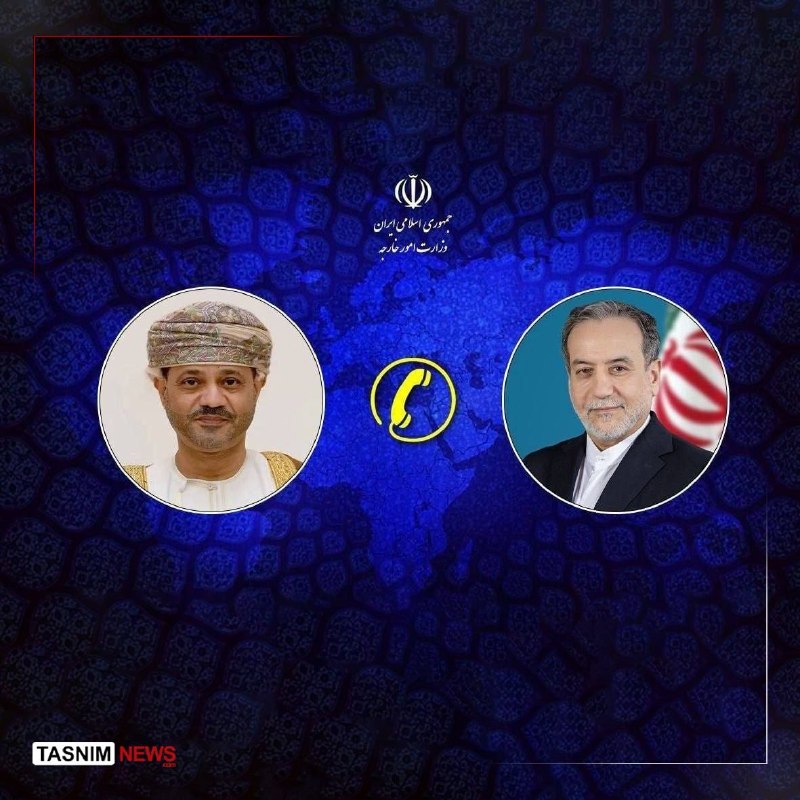
At 21:19 UTC on 10 July 2026, a U.S. demand landed on Iran in the form of an ultimatum with a Saturday expiry: reopen every lane of the Strait of Hormuz without tolls, make that reopening public, and commit to stop firing on commercial shipping — or face a "bad outcome." The package, first reported by Axios and propagated by Telegram wires including Middle East Spectator, Tasnim, and BRICS News, recasts a long-running tanker war as a single deadline. The political ask is the same as the operational one. What Washington wants is not just safer passage; it is a televised renunciation, on the record, in Iran's own voice.
This is escalation by media choreography. Iran holds the world's most consequential energy choke point; the United States holds the diplomatic leverage of a presidential second term and a navy already forward-deployed in the Gulf. The question of the next 36 hours is whether Tehran accepts the framing — public statement, no tolls, no harassment — or absorbs whatever "bad outcome" means in practice. Both sides have reasons to defer, and both have reasons not to.
The demand, in three sentences
The U.S. terms, as relayed by Axios correspondent Barak Ravid and amplified across Telegram channels between 21:11 and 22:24 UTC on 10 July, are specific and verifiable. Iran must, on Saturday, "make a public statement" confirming that the Strait of Hormuz is open, that it will not attack commercial ships, and that no toll regime will be imposed. The deadline is a deadline: a second U.S. official told reporters on Friday that refusal to commit to ceasing fire on commercial vessels would trigger "harsh consequences." A Polymarket post circulating at 21:19 UTC distilled the same demand into two clauses: reopen every lane without tolls, or face a bad outcome.
The unusual feature is the insistence on a public statement rather than a private assurance. Washington is not asking for de-escalation in private. It is asking Tehran to perform de-escalation in front of the cameras, the market, and its own audience. In a region where ambiguity is itself a weapon, the demand is for the removal of ambiguity itself.
What Iran gets if it says yes — and what it gives up
Compliance buys Iran two things. It removes the most acute kinetic risk to Gulf shipping, which has been a destabilising force for global energy markets, and it forestalls a U.S. response that one official already characterised in terms strong enough to leak. It also gives Tehran something rarer: a clean win it can claim. A Saturday statement from Washington that the crisis is over, in an environment where Iran is under sanctions and politically isolated, is leverage worth more than the tolls a closure might have extracted.
The costs of saying yes are heavier than they look. Renouncing tolls publicly means abandoning a sovereignty claim that Tehran has long held as a negotiating chip. Renouncing attacks on commercial shipping means giving up a low-cost pressure tool on the U.S. Navy and on Gulf-state oil flows. And, perhaps most pointedly, agreeing to perform the de-escalation on Washington's schedule concedes a point of initiative that an Iranian government under sanctions does not have many of. The U.S. is asking for a unilateral concession in the rhetorical form of a mutual act.
There is, in addition, a question of audience. An Iranian statement of compliance read by Gulf monarchies as a climb-down, and read by Iranian hardliners as surrender, is a politically expensive object. Tehran's incentive to satisfy Washington must be weighed against its incentive to keep the maximalists at home onside.
Why Washington is asking for the cameras
A private assurance would not move the oil curve. A public Iranian statement does. The Strait of Hormuz is not only a shipping lane; it is a price-setting fact. Roughly a fifth of global oil passes through it, and the marginal barrel trades on the probability of disruption. Each day that ships were being fired upon through the week, freight insurers raised war-risk premia, refiners hedged against the closure scenario, and benchmark grades widened. A public statement of opening is what allows those premia and hedges to unwind at speed, and what allows cargoes already diverted to reroute to the Gulf and the wider Indian Ocean basin.
This is why the demand specifies the form. The U.S. does not just want Iran to stop; it wants Iran to be seen to have stopped. The audience for the statement is not Tehran but Lloyd's, Singapore, and the trading desks in Geneva and Houston that price the next cargo. "Open" is not a maritime fact; it is a market fact, and markets need language to act on.
That is also why the deadline is so short. A two-day window collapses the room for Iranian counter-offer, compels an immediate yes-or-no from a leadership that often prefers to negotiate over weeks, and forces a public answer before any third-party mediator — China, the GCC, the Swiss channel — can be activated. The shape of the demand is the demand.
The counter-narrative: restraint that looks like capitulation
There is a more measured read. Some analysts treat the ultimatum as a confidence-building move: a public statement, even if grudging, can end the immediate tanker harassment and bring the U.S. to the table without Tehran's appearing to fold. The framing inside Iran, if the statement is delivered in a particular register, can be cast as defending sovereignty by what the official line calls "principled," non-escalatory language — buying time, returning to negotiation, and avoiding the kinetic endgame that a "bad outcome" portends.
This reading is plausible but partial. It assumes the Iranian leadership treats the next 48 hours as a communications problem, which is what the U.S. is counting on. It also assumes the U.S. would, in fact, follow through with consequences severe enough to be called "bad" — and that the credibility of that threat, not its restraint, is the binding constraint. The evidence from this week cuts the other way. U.S. officials have used the language of consequences repeatedly and publicly; that is a posture built to be executed, not absorbed.
What the sources do not say
The Telegram and X wires converging on the Axios original do not, in the items available to this publication, give us Tehran's response, the specific toll figure Iran has been demanding, the names of the U.S. officials on the Friday press call beyond their characterisation as a "second U.S. official," or the number of commercial vessels that have been hit in the past week. Axios's reporting is the spine of the story; without it, the ultimatum's terms would not be on the public record. What we have is a U.S. demand, a deadline, and the prospect — not the confirmation — of consequences.
The details that would tell us how this ends — whether Iran's Foreign Ministry issues a statement, whether it is read by Mohammad Bagher Ghalibaf or by a more junior spokesperson, whether the language is conditional or absolute — are not yet in the sources. They are what the next 36 hours will produce.
The stakes, in concrete terms
If the statement is made, oil markets rally on the unwinding of war premia; if it is not, the U.S. response will set a ceiling on the Iranian pressure playbook for the rest of the year. Either outcome narrows the corridor. A Saturday statement is the cheaper exit, and the U.S. has priced the alternative visibly. Tehran's choice is between a public climb-down that buys time, and a refusal that turns an ultimatum into an event.
This article built its account from a single Axios briefing reported across Telegram channels including Middle East Spectator, Tasnim, and BRICS News on 10 July 2026; Monexus framed the demand as a media event rather than a maritime one, on the read that the audience for the statement is the trading floor, not the dock.
Wire provenance
This editorial synthesis draws on the following public wire/social posts:
- https://t.me/Middle_East_Spectator
- https://t.me/wfwitness
- https://t.me/bricsnews
- https://t.me/bricsnews
- https://t.me/tasnimplus
- https://t.me/aljazeeraglobal