Washington's Hormuz ultimatum lands in the middle of a negotiation Tehran never wanted to walk away from
Washington has set what it calls an ultimatum on Iranian-linked attacks in the Strait of Hormuz, even as prediction markets price the next round of talks at less than fifty-fifty for July.
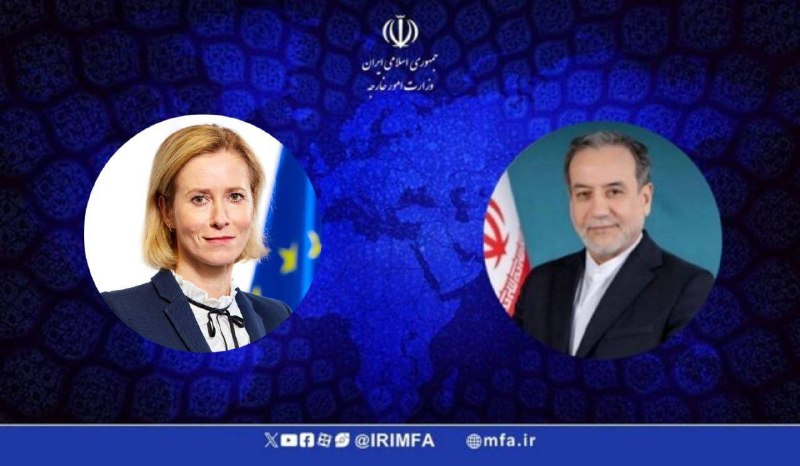
At 13:41 UTC on 11 July 2026, Beirut-based outlet The Cradle reported that Washington had issued what it described as an "ultimatum" demanding Iran commit to ending tanker attacks in the Strait of Hormuz, while simultaneously intensifying military action against the Islamic Republic. The framing matters: a demand for de-escalation delivered alongside fresh strikes is not a de-escalation. It is a bet that the other side will read the next move.
The story, as The Cradle tells it, sits on three legs. Seventeen people were killed this week in US operations against Iranian targets during negotiations being conducted under what The Cradle terms "the framework of the Islamabad" process, a diplomatic track the outlet credits with keeping the two governments talking through a stretch of tit-for-tat strikes. The Cradle's language is pointed: "deadly attacks" carried out "during negotiations." The implication is that the United States is weaponising the negotiating calendar, hitting Iranian assets on the same days envoys are exchanging text. Within roughly forty minutes of that report, a Polymarket market tracking the next round of US-Iran talks priced the chance of another session taking place in July at forty-five percent, a coin-flip with a slight lean toward the talks slipping into August or beyond.
What the ultimatum is, and what it isn't
"Ultimatum" is a word that does work in two directions. Used by an administration, it signals red lines and a willingness to follow through. Used by an outlet that frames the same actor as an aggressor, it carries a different freight: it becomes evidence of bad faith. The Cradle's reporting leans on the second reading, arguing that the demand to end tanker attacks is paired with continued US strikes that, by The Cradle's count, killed seventeen people this week, the kind of body count that does not square with a serious offer to negotiate.
The structure is familiar. Hormuz is the world's most consequential oil chokepoint: roughly a fifth of global seaborne crude transits the strait, and any sustained disruption pushes freight rates, insurance premiums and downstream fuel prices in directions the global economy cannot easily absorb. Iran does not need to close the strait to influence it; it needs only to make tanker traffic expensive enough that shipowners reroute, delay, or re-insure. The ultimatum, in this sense, is an attempt to reprice the option of attacking that calculus: keep the lanes open, or face consequences.
The counterpoint is straightforward. Iranian-aligned forces, including units the United States and several Gulf monarchies attribute to the Islamic Revolutionary Guard Corps, have attacked or seized commercial tankers in and around Hormuz with enough regularity since 2019 that insurers now price Hormuz transit as a categorically riskier proposition than, say, the Bab el-Mandeb. From Washington's seat at the table, the ultimatum is less aggression than housekeeping: a demand that the price of doing business in the strait be returned to something the global oil market can underwrite. The same seventeen deaths that read as escalation from Beirut read, from the Pentagon's briefing room, as a down-payment on that housekeeping.
The honest reading is that both frames are partially right. Washington is negotiating and striking in the same week. Tehran is talking and sponsoring attacks through allied forces in the same month. Neither side has the incentive to be the first to stop, because the other side is signalling, by its own actions, that stopping will be read as weakness.
Why a forty-five percent market matters
The Polymarket reading is the most useful single data point on the page. A prediction market is not an oracle; it is a weighted average of what people with money on the line believe. At 13:41 UTC on 11 July, that average priced the chance of another US-Iran round this month at roughly forty-five percent, with the residual probability distributed across August, September, and a tail of "no further talks in 2026." Translation: the diplomatic calendar is no longer reliable, and both sides appear to know it.
Markets price this kind of slippage for a reason. When the next round of talks is less than fifty-fifty to happen inside the month the talks were supposed to define, the assumption shifts from "negotiations with kinetic punctuation" to "kinetic action with diplomatic scenery." The difference matters for oil traders, for insurers writing hull and war-risk cover for tankers transiting Hormuz, and for any government in the Gulf trying to price the cost of rerouting crude exports away from the strait. It matters, too, for Iran: the currency of negotiation is the willingness of the other side to keep coming back to the table, and a market that puts that willingness below fifty percent is a market that has begun to discount the talks.
The pattern the ultimatum sits inside
Strip the language away and the pattern is recognisable from a dozen prior episodes in the long US-Iran cold war. One side raises the cost of doing business for the other: sanctions, designations, seizures of tankers, kinetic action against proxy forces. The other side responds in kind: harassment of shipping, drone and missile strikes on US positions in Iraq and Syria, episodic escalation through Houthi attacks on Red Sea traffic. The negotiation is not separate from the violence; it is conducted through it. Each side is signalling what the post-deal equilibrium will look like by demonstrating, in real time, what the no-deal equilibrium already looks like.
The Hormuz ultimatum is a particularly clear iteration of that pattern. The demand is specific: end tanker attacks. The instrument is general: continued strikes, framed by The Cradle as killings in the middle of a negotiating window. The implied exchange is kinetic for kinetic: stop hitting ships, and the tempo of US operations will, in some not-yet-public way, ease. The problem with ultimata delivered under those conditions is that the recipient reads the instrument before reading the demand, and the instrument this week has been lethal.
What to watch in the next ten days
Three things will determine whether the forty-five percent drifts up or collapses toward zero. First, whether the Islamabad framework produces a publicly dated next session. A specific day on a calendar, agreed by both sides, is the single most reliable signal that the talks are still alive. Second, whether tanker traffic through Hormuz reports any new incidents in the seventy-two hours after the ultimatum. A quiet strait would be the cheapest concession Tehran could make; a fresh attack would be the cheapest signal it could send. Third, whether the seventeen deaths reported by The Cradle are confirmed, corrected, or expanded by other reporting; body counts under fog-of-war conditions drift in both directions, and the diplomacy will turn on which direction they drift in this week.
The honest position is that none of the source material permits a confident call on which way the calendar breaks. The Cradle's framing favours the read that Washington is escalating in the middle of a negotiation. Polymarket's price favours the read that the negotiation itself is becoming less likely to deliver a next round. The two reads are not contradictory; they are two ways of saying the same thing. A negotiation conducted by ultimatum, while the ultimatum is enforced by strikes, is a negotiation that is starting to price in its own failure.
This publication framed the ultimatum through The Cradle's reporting and the Polymarket tape, rather than defaulting to wire copy, on the judgment that the diplomatic calendar is now the story, and the calendar is best read in the market that prices it.
Wire provenance
This editorial synthesis draws on the following public wire/social posts:
- https://t.me/thecradlemedia