Unverified strikes from Bahrain and Kuwait: a single Telegram thread, three channels, one emerging story
Three Telegram channels broadcast claims of US-linked HIMARS and ATACMS launches from Bahrain and Kuwait toward Iran on 11 July 2026. None of the claims have been corroborated by a wire service, an official US or Iranian statement, or an OSINT investigator, and that absence is itself the story.
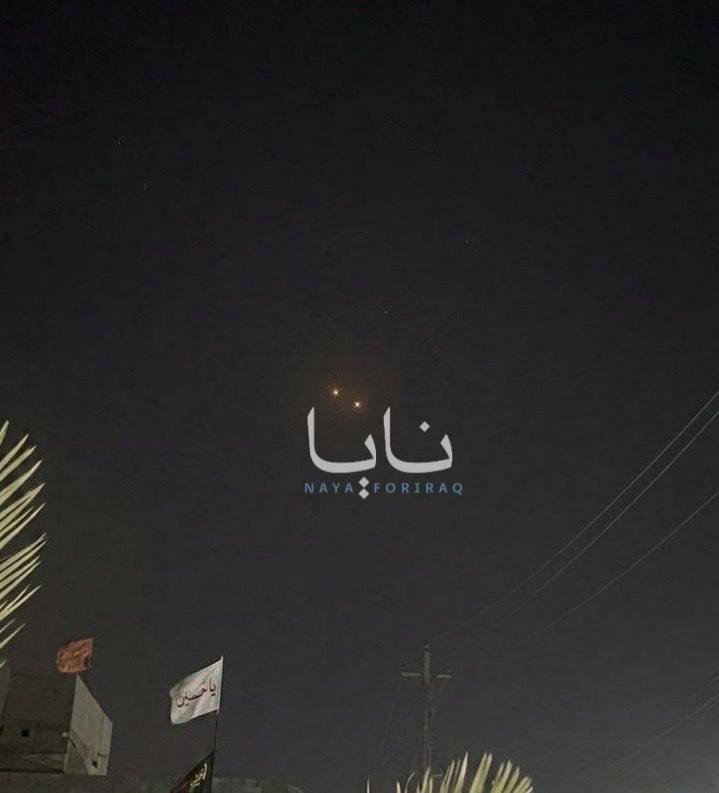
At 23:26 UTC on 11 July 2026, the Telegram channel @Middle_East_Spectator posted a single, unverified claim: that HIMARS launches had been fired from Bahrain toward Iran. Within twelve minutes, a second post from the same channel added footage described as "more of the American aggression launched from Bahrain," and a third outlet, @intelslava, repeated the assertion while widening the weapon list to include ATACMS. By 23:38 UTC, a fourth message from @rnintel had migrated the launch site from Bahrain to Kuwait. The whole edifice rests on Telegram screenshots and the word of channels with no editorial accountability to any wire desk, any government, or any verifiable on-the-ground source.
That is the story. Not whether the strikes happened, because the public record cannot tell us whether they happened, but the way an unverified claim moves across messaging apps, accumulates apparent weight through repetition, and arrives at a reader's screen already wearing the costume of a confirmed event. Three channels, one framing, no primary corroboration: a case study in how wartime narratives are built and broadcast before anyone with a notepad has called a defense ministry.
The first hour
The @Middle_East_Spectator post that opened the thread at 23:26 UTC carried no sourcing other than the channel's own handle. A follow-up at 23:28 UTC added a "WATCH" tag and a second piece of footage described as more evidence of US aggression out of Bahrain, again without location, date-of-capture, or provenance markers. Five minutes later, @intelslava chimed in with the same claim, this time naming ATACMS as an alternative weapon system and tagging Iran, Bahrain, and the United States. At 23:38 UTC, @rnintel placed the launch in Kuwait rather than Bahrain and added a second allegation: that Iranian state media were now claiming both Gulf states were "actively involved" in an ongoing strike. The geography shifted between Bahrain and Kuwait in the space of twelve minutes. The weapons shifted between HIMARS and ATACMS. The framing shifted from a one-off report to a recurring operation.
Where the wire desks are silent
The most telling fact in this thread is what it does not contain. There is no Reuters alert, no Associated Press flash, no BBC breaking-news banner, no Al Jazeera push, no statement from US Central Command, no readout from the Bahraini or Kuwaiti ministries of defense, no briefing from Iran's IRGC, no verification from any of the open-source intelligence accounts that routinely geolocate such footage within hours of a strike. Coverage routinely defers to the language of official spokespeople and accredited wire desks, and here the official spokespeople and the wires have not spoken. Telegram channels can publish a claim in seconds; corroborating it requires satellite imagery, timestamped footage, on-the-ground reporting, or an admission from one of the governments involved. None of that is in the public record as of the timestamps above.
The structural problem with Telegram-native war news
What the four messages demonstrate, taken together, is a recurring pattern in how conflict coverage now travels. A claim originates on a low-accountability channel with a small but committed following; a second channel repeats it, sometimes adding footage that may or may not depict the same event; a third channel elevates the assertion to geopolitical significance by adding weapon names and state actors; and by the fourth message the story has acquired enough apparent density that downstream readers treat it as confirmed. The mechanics reward speed over verification, and the platforms that host the channels have no editorial function. In a contest where the first mover wins the narrative and corrections rarely travel as fast as the original claim, the structural advantage belongs to whoever posts first, regardless of accuracy. This is not unique to one side of any conflict; it is the operating environment of modern wartime information.
What an honest report can and cannot say
What this publication can confirm, on the basis of the four Telegram messages, is narrow: that on 11 July 2026, three channels with overlapping audiences posted claims of US-linked HIMARS or ATACMS launches from Bahrain or Kuwait directed at Iran, that the geography of the claim shifted between posts, that the channel @rnintel referenced Iranian state media alleging Kuwaiti and Bahraini involvement, and that no wire service or government has publicly confirmed, denied, or contextualized the reports as of the timestamps above. What this publication cannot confirm is whether any strike actually occurred, what was struck, who fired, whether the footage is of the event it purports to depict, or whether the Iranian state-media line that @rnintel cited is itself accurate. The readers, and the policy desks reading them, are being asked to make consequential judgments on a thread of unverified screenshots.
Stakes, and the test for the next 24 hours
If the reports turn out to be accurate, the consequences are severe: a widening of the Iran-US confrontation onto the territory of two Gulf monarchies that host major US naval and air assets, a diplomatic rupture with Bahrain and Kuwait, and a likely escalation cycle that pulls in additional regional actors. If the reports turn out to be fabricated, the consequences are also severe: a precedent for unverified Telegram claims to drive market moves, military postures, and editorial framing before the underlying facts can be established. Either way, the next 24 hours will be the test. Wire desks will either catch up to the claim, governments will either confirm or deny, and satellite imagery services will either publish or decline to publish. Until then, the responsible position is to treat the four Telegram messages as a transmission pattern, not as a news event, and to ask why a story this consequential was first entrusted to channels with no editorial accountability.
Desk note: Monexus is publishing this as a documented case study in Telegram-native conflict reporting, not as a report of a confirmed strike. Where wire coverage eventually confirms or denies, a follow-up will follow.
Wire provenance
This editorial synthesis draws on the following public wire/social posts:
- https://t.me/Middle_East_Spectator
- https://t.me/Middle_East_Spectator
- https://t.me/intelslava
- https://t.me/rnintel