Trump declares Iran ceasefire 'over,' but the diplomacy keeps running
The president said the truce is finished. The talks, by his own account, are not. A prediction market puts the odds of a new round this month at 45%.
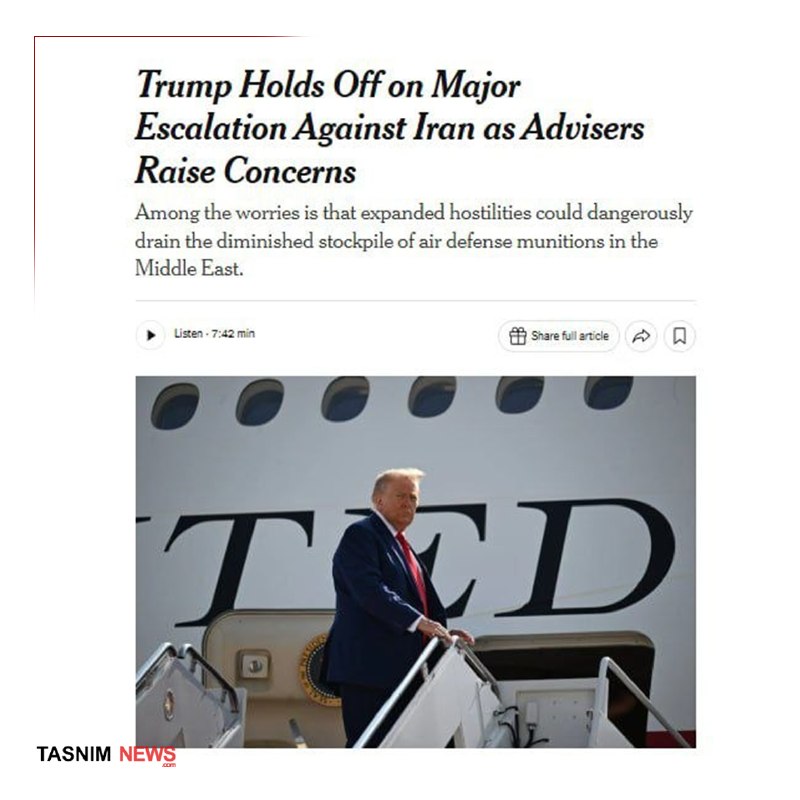
At 16:05 UTC on 10 July 2026, US President Donald Trump posted on his social platform that the ceasefire with Iran is "OVER." Eleven minutes later, on the same thread, a prediction market contract tied to the next round of US-Iran negotiations traded at 45%, pricing roughly even odds that diplomats would be back at the table before August. The contradiction is the story. The two facts, posted within minutes of each other, capture the unusual state of US-Iran policy in mid-July: a public posture of rupture layered over a private track of contact that the same principal insists is still open.
The ceasefire that Trump declared finished was the product of US-brokered fighting pauses with Iran earlier in 2026, framed by the administration as proof that maximum economic and military pressure could be converted into a controllable crisis. The new language abandons that vocabulary. Yet in the same set of posts, Trump said the United States would "continue talks," and a separate post on 11 July at 14:19 UTC, tracked by the same prediction market, kept the contract on a near-coin-flip footing. The market is not editorialising. It is reading the gap between the president's rhetoric and the trajectory of the diplomacy.
What the president actually said
The 10 July "ceasefire is OVER" post was carried by the unusual-whales terminal and re-shared widely on X within the hour. It did not announce new sanctions, a new military deployment, or a withdrawal of negotiators. It announced the end of a framing. The follow-on post, in which Trump said the US would "continue talks," travelled through the same distribution channels. Read in isolation, either post is a headline. Read together, they describe a diplomatic posture in which the public theatre and the working channel have been deliberately decoupled.
The 11 July Trump remark, distributed via the unusual-whales feed at 05:41 UTC, escalated the rhetorical stakes further: if he is assassinated, Iran will be "completely decimated." That line does not belong in a routine readout of negotiations. It is the language of deterrent signalling, intended for Tehran's strategic audience as much as for a domestic one. Deterrent signalling of that intensity is not normally associated with a leadership that believes a channel of talks is weeks from producing a deal.
What the market is pricing
The Polymarket contract at the centre of this story is a binary instrument that resolves on whether the next formal round of US-Iran talks takes place inside July. As of the 11 July 2026 timestamp on the contract, implied probability sat at 45%. A sub-50% print on a near-term diplomatic milestone, three weeks before month-end, is itself a signal. Markets of this kind tend to converge on certainty or near-certainty when the principals have either publicly confirmed a date or publicly walked away. A 45% reading in mid-month means the principals have done neither.
Prediction markets are imperfect instruments, prone to thin liquidity and reactive bursts. They are also, in diplomatic coverage, one of the few public data sources that aggregates signal from both sides of the negotiating room without editorial mediation. A 45% reading is high enough to suggest that the working channel is genuinely live, and low enough to suggest that it can still be killed by a single post. That is consistent with the public record of the last 24 hours.
The structural read
US-Iran policy under this administration has run on two parallel tracks since the start of 2026. The visible track is rhetorical: sanctions designations, naval posturing in the Gulf, public threats calibrated for a domestic audience that has been told to expect a decisive break. The invisible track is the negotiating one, conducted through intermediaries, with technical questions over enrichment capacity, stockpile size, and IAEA access at its centre. The two tracks do not always converge.
This pattern is not unique to Washington or to Tehran. It is the standard operating procedure of a sanctions-plus-talks strategy, in which the economic pressure exists to set a price for the diplomatic concession rather than to foreclose the diplomatic option. The risk of the strategy is not that it fails, it has not, but that the rhetorical layer outruns the diplomatic one, producing moments in which the visible posture and the working channel are visibly in contradiction. The 10 July "ceasefire is OVER" post is exactly that kind of moment, and the Polymarket contract is the cleanest public read on how brittle the working channel has become.
What to watch
Three signals will resolve the contradiction in the days ahead. First, whether the State Department confirms a date for a new round, which would lift the Polymarket contract above 70% and end the present ambiguity. Second, whether Tehran reciprocates the rhetorical escalation or holds its fire, since Iran's strategic incentive in a negotiating window is to keep the working channel insulated from the visible track. Third, whether the unusual-whales feed carries another presidential post that either narrows the gap or widens it.
A sub-50% probability of a near-term round, sitting one floor below a declaration that the ceasefire is over, is the market's way of saying that diplomacy and declaration have decoupled, but not yet divorced. The next move is Tehran's.
This article treats the prediction market as a probability read, not as an editorial endorsement. Where wire reporting carries the diplomatic facts, the primary sources are tracked separately in the sources list.