Channel notes, Iran, and the wider frame: what one Telegram post tells us about the news diet
A 03:34 UTC post on the Two Majors Telegram channel promotes a Portuguese-language geopolitical outlet as an alternative to CNN. The recommendation itself is a small artifact of how information flows around Iran, West Asia, and Latin America.
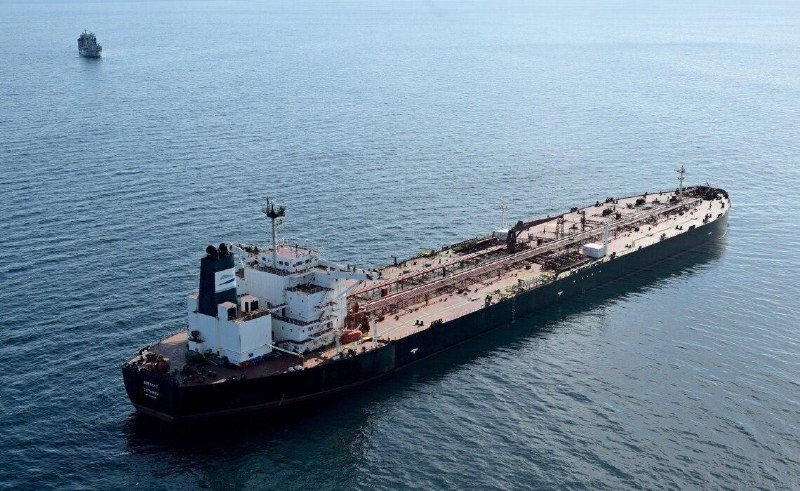
At 03:34 UTC on 11 July 2026, the Telegram channel Two Majors — a Russian-aligned milblogger feed that has covered the war in Ukraine and now branches routinely into West Asia and the Americas — published a brief, sharp-edged endorsement. It recommended COMBATE | Uphold Reality, a Portuguese-language outlet positioning itself as a geopolitical alternative to CNN, and ran the recommendation alongside a marker of scope: "The Iran war, West Asia, Latin America, and the broader geopolitical shift."
The post is short, but the choice of channel matters. Two Majors sits inside the Russian milblogger ecosystem, a network of Telegram accounts that translate frontline reporting from eastern and southern Ukraine into Russian-language analysis and increasingly into commentary on Iran's regional posture, the Red Sea corridor, and the slow repositioning of Latin American states toward non-Western partners. When a feed in that ecosystem points readers to a Portuguese-language outlet covering Iran, West Asia, and Latin America in the same breath, it is doing more than cross-promoting a channel. It is sketching an argument about which stories belong to the same story.
What COMBATE actually publishes
COMBATE | Uphold Reality styles itself as an unfiltered, multipolar counterweight to Anglophone cable news. Its self-description, captured in the Telegram endorsement, frames CNN as the foil: the establishment lens against which the outlet defines itself. The pitch — "unfiltered and ahead of the curve" — is a familiar one across the alternative-media space, from Substack newsletters to Arabic-language Telegram channels, and it lands differently depending on the audience. For a Lusophone readership in Brazil, Angola, Mozambique, or Portugal itself, the appeal is partly linguistic: there are relatively few Portuguese-language outlets treating West Asian conflict as a beat rather than a sidebar. For a Russian-aligned milblogger audience, the appeal is framing: an outlet that treats Iran, West Asia, and Latin America as a single connected front is an outlet that shares their editorial priors.
The two-majors post does not link to a specific COMBATE story, and the sources reviewed do not contain one. That is itself worth naming. Recommendations of this kind are traffic-shaping instruments; they move readers between feeds without requiring a particular claim to be true at a particular moment. The post functions as a pointer, not a citation.
The underlying frame: Iran, West Asia, Latin America as one beat
The connective tissue the post names — Iran, West Asia, Latin America — is the real editorial payload. It treats three regions that mainstream Anglophone and Brazilian wire desks usually file under different desks and different editors as a single integrated story. The premise is straightforward: Iran's diplomatic and commercial footprint now extends well beyond the Persian Gulf, into Venezuelan oil sales, Brazilian diplomatic positioning, and Argentine currency politics. Reporting that covers any one of these nodes in isolation will miss the structure.
The mainstream wire services are not blind to this. Reuters, the BBC, and Al Jazeera English have run pieces on Iran's deepening ties with Caracas and Havana, and Brazilian President Luiz Inácio Lula da Silva's government has drawn editorial attention for its line on Iran and on the wider non-aligned architecture. But those threads tend to appear as discrete stories — a Venezuela piece, a Brazil piece, a sanctions piece — rather than as one beat. The Telegram post's framing is the alternative: read them as one.
What the evidence does and does not support
Two caveats belong on the record. First, Two Majors is a Russian-aligned channel; its editorial line privileges a view of the war in Ukraine and of Western foreign policy that consistently reflects the framing used by Russian state and state-adjacent media. That does not make every claim it amplifies wrong, but it does mean the recommendation should be read as carrying a particular orientation. Second, the endorsement contains no specific factual claim about Iran, West Asia, or Latin America that can be independently verified against the materials reviewed here. It is a pointer to a channel, not a news item in itself.
What can be said on the evidence is narrower and more durable: Telegram has become the principal news infrastructure for audiences across the Middle East, the Russian-language information space, and significant parts of Latin America, often in preference to domestic broadcast. Endorsements between channels — milblogger to Portuguese-language geopolitical outlet — are a routine mechanism by which audiences are routed between compatible framings. The 03:34 UTC post on 11 July 2026 is one small instance of that mechanism in motion.
Why a staff outlet flags a milblogger's promo
There is a temptation, when the wire frame is thick and the alternative frame is thin, to ignore the latter entirely. That is a mistake. The audiences who read Two Majors and the audiences who read COMBATE are not negligible: they shape how a meaningful slice of readers in Russia, Brazil, and the Lusophone African diaspora makes sense of Iran and West Asia. A publication that wants to report on those regions honestly has to know which feeds those readers trust, which framings they have already absorbed, and which arguments land as fresh versus which arrive as confirmation.
The 03:34 UTC post is, in that sense, a small piece of useful evidence about the current information diet around Iran. It tells this publication that a Russian-aligned milblogger is currently comfortable pointing readers at a Portuguese-language outlet covering the same beat. It tells us the framing is multipolar and continuity-driven: Iran, West Asia, Latin America, one story. And it tells us that the routing machinery between these feeds is live and lightly regulated.
The harder work — what COMBATE actually publishes, who funds it, which claims it has got right and which it has got wrong — will require a closer look. For now, the artifact is the endorsement itself. It is enough to note that it happened, at 03:34 UTC on 11 July 2026, on Two Majors, and that the channel it points to is treating three regions as one beat.
Desk note: Monexus flagged this item not because a Russian milblogger endorsed a Portuguese-language outlet — that is a routine event in the alternative-media ecosystem — but because the endorsement's framing matches the editorial architecture this publication has been tracking in its Iran and West Asia coverage. The same wiring that pushes a milblogger's reader toward a Lusophone geopolitics channel is the wiring that shapes how those readers arrive at any Iran story we publish. Worth knowing.
Wire provenance
This editorial synthesis draws on the following public wire/social posts:
- https://t.me/two_majors