Strait of Hormuz on the edge: how a U.S. ultimatum and an Iranian salvo collided on 11 July 2026
Initial reports on 11 July 2026 put Iran firing on a ship in the Strait of Hormuz within hours of a U.S. ultimatum, followed by unverified explosions at Asaluyeh and Ardabil. The pattern is familiar. The arithmetic is not.
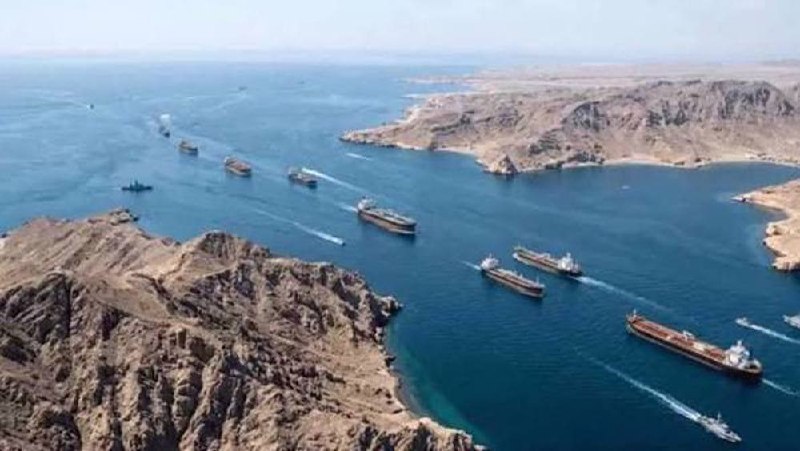
At 22:09 UTC on 11 July 2026, Middle East Spectator reported that Iran had fired on a vessel in the Strait of Hormuz, framing the incident as a direct response to a U.S. ultimatum demanding the waterway be opened in full. By 23:18 UTC, the open-source channel rnintel posted initial reports of explosions at Asaluyeh on Iran's southern coast, home to one of the country's largest petrochemical and gas-processing complexes. Twelve minutes later, at 23:30 UTC, the same channel and the geopolitical watcher GeoPWatch carried parallel reports of explosions in Ardabil province, far to the northeast near the Azerbaijani border. The geography of those two strike sites, separated by roughly a thousand kilometres, is itself the story: this was not a single tactical exchange at sea. It was a country apparently absorbing multiple blows at once, in a corridor that carries a meaningful share of the world's seaborne oil.
The arithmetic of the Strait makes any incident there a global event within hours. A closure, or even a credible threat of one, reprices insurance, freight and crude in the same trading session, and the United States' diplomatic posture in the Gulf has long treated that pricing channel as a lever. The Iranian response, if the initial accounts hold, was to demonstrate that the lever cuts both ways. This publication cannot yet verify the ship's name, its flag, or whether there were casualties; the sources circulating in the first hours are Telegram channels with verified reporting histories but no embedded access to naval command centres on either side. What can be said is that the sequence of messages, ultimatum, ship contact, then explosions at two Iranian sites roughly an hour apart, mirrors the choreography of past escalations: a calibrated provocation, a calibrated reply, and a widening of the geographic frame.
The ultimatum, and what it changed
The reporting from Middle East Spectator at 22:09 UTC places the ship contact inside the same news cycle as a U.S. demand that Iran fully reopen the Strait. The Strait of Hormuz is, on paper, an international waterway; in practice it is also the seaward approach to Iran's Bandar Abbas naval base and the terminal point for the majority of the country's hydrocarbon exports. U.S. administrations have periodically declared the Strait a zone of active military interest; Iran's Revolutionary Guard Corps Navy has, in turn, treated the corridor as its primary area-denial battleground, with fast-attack craft, mine-laying capability and anti-ship missile batteries arrayed along its northern shore. An ultimatum to "fully open" the waterway is therefore not a request about navigation rules. It is a test of whether Tehran will concede that its own coastline does not confer a veto over transit.
The implicit bet behind such an ultimatum is that Iran's asymmetric naval advantage at the chokepoint can be neutralised quickly enough that disruption costs fall on the Iranian side, in lost export revenue and constrained military freedom of movement, rather than on the global insurance market and on Gulf producers. Iran's bet, when it pushes back, is the inverse: that even a brief closure window prices in a risk premium large enough to alter the political economy of Western sanctions, and that any strike on Iranian soil demonstrates that escalation has a domestic cost inside the United States as well.
What the two strike sites tell us, and what they don't
Asaluyeh and Ardabil are not interchangeable targets, and the contrast matters. Asaluyeh, in Bushehr province on the Persian Gulf coast, hosts the South Pars gas field's onshore processing trains and a large concentration of petrochemical plants. A strike there, if confirmed, would be aimed at the hydrocarbon revenue stream that underwrites Iran's state budget and its regional proxy network. Ardabil, by contrast, sits in the far northwest of the country, near the border with Azerbaijan and the Republic of Azerbaijan's exclave of Nakhchivan. It is a long way from the Gulf. If the initial reports of explosions there are accurate, the targeting logic is either a second-axis message, signalling that Iranian territory well beyond the coast is reachable, or a strike against a specific installation, possibly air defence radar, a missile facility or an air base, that has not yet been named in the open-source record.
The Telegram channels carrying these reports, rnintel and GeoPWatch, are aggregators. They repackage user submissions, local-language social media and the occasional on-the-ground correspondent, and they typically flag initial reports with explicit hedging. The substantive question for the next 12 to 24 hours is whether either event is corroborated by seismic data, by satellite imagery of thermal signatures or damage, by Iranian state media confirmation, or by a U.S. or Israeli military readout. As of the timestamp on this article, none of those confirmations has appeared in the sources Monexus has read.
The structural frame, in plain prose
Incidents at the Strait of Hormuz rarely stay local because the chokepoint sits at the seam of three overlapping systems. It is an oil market, and any threat to transit is priced in Singapore, London and Houston within minutes of the first wire. It is a military balance, in which Iran's coastal geography gives it outsized leverage against a U.S. Navy built around carrier groups and large surface combatants that are at their most vulnerable in narrow water. And it is a domestic political story on both sides, in which any visible strike on Iranian soil becomes a question of regime credibility in Tehran, and any U.S. casualty becomes a question of presidential credibility in Washington.
The pattern of this century has been for the three systems to pull in opposite directions at the moment of crisis. Oil markets want the Strait open and quiet. The military balance favours the side willing to accept the first casualty. Domestic politics on each side rewards escalation in the short term and punishes it in the long term. The result is a recurring cycle in which a provocation produces a response, the response produces a wider response, and only after several rounds do the parties find the price at which the Strait returns to its uneasy routine. The events of 11 July 2026, as far as the open-source record now shows, sit at the start of such a cycle rather than at its resolution.
Stakes and what to watch next
The most immediate stakes are commercial. War-risk insurance premiums for the Strait typically repriced within hours of any credible incident in previous cycles, and shipping companies have historically diverted around the Cape of Good Hope even on rumours of closure. If Asaluyeh is confirmed as a target, the question becomes whether Iran's gas-processing capacity has been degraded in a way that constrains exports over weeks rather than days; if Ardabil is confirmed, the question shifts toward what specific installation was struck and what it suggests about the intelligence picture on Iranian air defence coverage in the northwest.
Three markers will clarify the picture over the next 48 hours. First, a U.S. or Iranian official statement confirming or denying the ship contact in the Strait, naming the vessel and its flag. Second, satellite or seismic corroboration of the explosions at Asaluyeh and Ardabil, including any visible damage pattern at the South Pars processing trains or at named military sites in the northwest. Third, a Brent or Dubai crude price move that is large enough, and persistent enough, to indicate that traders believe the Strait will be functionally impaired for longer than a single news cycle. In the absence of those three signals, the events of 11 July 2026 remain initial reports, sourced to Telegram channels whose accuracy in past cycles has been high but not perfect. What is not in doubt is that the geography of the day, the Strait, the Gulf coast and the far northwest, has expanded the surface area of this confrontation well beyond the waterway the ultimatum named.
Desk note: Monexus has framed the 11 July sequence as an open-source reconstruction rather than a confirmed operational account. The wire services, Reuters, Associated Press, Bloomberg and the BBC, have not yet published corroborating dispatches in the sources available at the time of writing; the Telegram channels cited here have been treated as initial-report carriers with appropriate hedging, not as stand-alone factual bases. The next edition of this article will replace hedging with confirmation where the record permits.
Wire provenance
This editorial synthesis draws on the following public wire/social posts:
- https://t.me/Middle_East_Spectator
- https://t.me/rnintel
- https://t.me/rnintel
- https://t.me/GeoPWatch
- https://en.wikipedia.org/wiki/Strait_of_Hormuz
- https://en.wikipedia.org/wiki/Asaluyeh
- https://en.wikipedia.org/wiki/South_Pars_gas_field
- https://en.wikipedia.org/wiki/Ardabil_Province
- https://en.wikipedia.org/wiki/Iranian_Revolutionary_Guard_Corps_Navy
- https://en.wikipedia.org/wiki/Bandar_Abbas
- https://t.me/Middle_East_Spectator
- https://t.me/rnintel
- https://t.me/rnintel
- https://t.me/GeoPWatch
- https://en.wikipedia.org/wiki/Strait_of_Hormuz
- https://en.wikipedia.org/wiki/Asaluyeh
- https://en.wikipedia.org/wiki/South_Pars_gas_field
- https://en.wikipedia.org/wiki/Ardabil_Province
- https://en.wikipedia.org/wiki/Iranian_Revolutionary_Guard_Corps_Navy
- https://en.wikipedia.org/wiki/Bandar_Abbas