Speedboat Capsize Near Phu Quoc Leaves 15 Dead in Vietnam Tourist-Tragedy Pattern
A 36-person speedboat overturned near Phu Quoc on 11 July 2026. Local reporting puts the death toll at 15, exposing the recurring safety gap in Vietnam's fast-growing tour-boat sector.
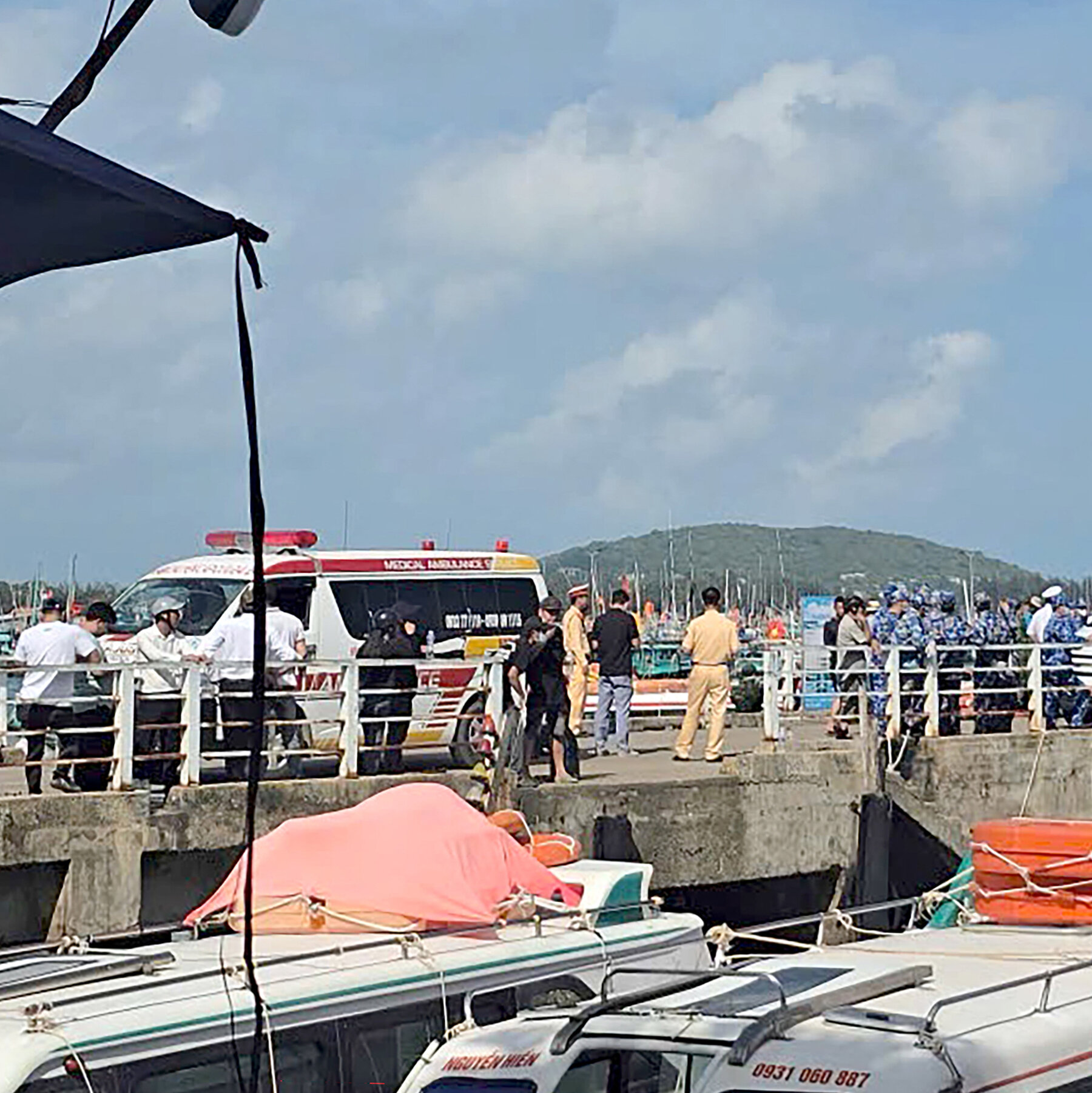
A 36-seat tourist speedboat overturned in the waters off Phu Quoc island in southern Vietnam on 11 July 2026, killing 15 people and reviving a question that the country's booming cruise-and-snorkel industry has so far failed to answer: who is policing the boats.
According to initial local reporting cited by The New York Times, the vessel was carrying 36 passengers and crew when it capsized near the island in the Gulf of Thailand. Fifteen bodies were recovered; the remaining 21 were rescued. Vietnamese authorities had not, as of the publication of the wire item, released a confirmed cause, a full passenger manifest, or a nationality breakdown of those aboard.
The accident lands inside a familiar Vietnamese pattern. Tour-boat disasters in Ha Long Bay, Nha Trang, and now Phu Quoc have produced a near-identical policy cycle: rescue operations, ministerial inspections, brief enforcement crackdowns, then a quiet return to business as usual once the headline cycle moves on. The Vietnam National Administration of Tourism recorded more than 17.5 million international arrivals in 2024; cruise and island-hopping tours sit near the top of that funnel, and the vessels that run them have grown faster than the inspection regime that is meant to supervise them.
What is known, and the gap right behind it
The New York Times dispatch is sparse on mechanism. Local media cited in the filing attributed the capsize to weather, a phrase that, in past Vietnamese maritime incidents, has functioned as a catch-all that papers over hull condition, crew certification, passenger overcrowding, or life-jacket compliance. The wire reporting does not name the operator, the boat class, or the point of departure on the island.
That thinness is itself a story. Vietnam's state-aligned press routinely files early reports through the narrow channel of provincial rescue committees, where figures (the 15 dead, the 36 aboard) harden into official record before any independent investigator can examine the hull or interview the survivors. By the time outside maritime experts are permitted onto the wreckage, the central explanation has usually already been issued from Hanoi.
Why Phu Quoc, and why now
Phu Quoc has been Vietnam's marquee tourism bet for a decade. The southernmost district of Kien Giang province was elevated to a special administrative zone in 2020, a move that fast-tracked land concessions, casino licences, and the construction of a second international airport. Visitor arrivals to the island roughly quadrupled between 2019 and 2024, and the resort-and-day-trip economy that grew up around that passenger flow relies on a fleet of small, fast, often privately owned speedboats to move tourists between the mainland pier at Rach Gia or Ha Tien and the smaller islets where the snorkelling happens.
The structural problem is straightforward. Local boat operators answer to a tourism authority chasing provincial growth targets, a transport ministry writing national safety rules, and a coast guard whose enforcement footprint thins the further a vessel strays from the main ports. When those three lines of accountability overlap, inspections tend to be reactive. The 2026 capsize inherits the same regulatory geometry that produced the 2019 Ha Long Bay disaster, in which eight foreign tourists died aboard a tourist boat that local officials had cleared repeatedly in the months before the incident.
The structural frame, in plain terms
The bigger picture is the gap between Vietnam's export of a tourism success story and the inspection state that has to underwrite it. Vietnam is now routinely described, in the language of the multilateral development banks, as a model of growth: poverty reduction at scale, infrastructure delivered on a five-year cadence, a green-transition plan that the World Bank and Asian Development Bank treat as the regional reference case. That record is real. But it rests on a state apparatus that can plan a $60-billion high-speed rail corridor in months and yet cannot routinely inspect the 200-odd small tourist boats working Phu Quoc on a Sunday morning.
This is not a uniquely Vietnamese failure. Thailand, the Philippines, and Indonesia have all lost tourist vessels to similar gaps over the last decade. But Vietnam's capacity ceiling sits unusually high in some domains and unusually low in others, and the maritime-safety domain has, for at least two governments, stayed in the second column. The press freedom around the story is also thinner than in the headline sectors; foreign correspondents operate inside an accreditation regime that constrains how much independent reporting can be filed in real time, which means the initial dossier on a capsize is, almost by design, a government-edited one.
What comes next, and what to watch
Two things will signal whether this is another cycle of headlines followed by quiet, or something more durable.
First, the operator. If the provincial rescue committee names a single company within 72 hours and announces a vessel-by-vessel audit of speedboats licensed at Phu Quoc piers, the political signal is that Hanoi intends this capsize to be a clampdown case. If no operator is named and the audit is described vaguely as "across the region," the cycle is already bending toward the usual drift.
Second, the survivor testimony. Survivors from the 2026 capsize landed on an island where both Vietnamese and foreign visitors will be processed through provincial immigration. How much of their accounts of life jackets, life-raft access, and the minutes before the capsize reaches the public record will be a cleaner test than any government press conference of how serious the follow-through intends to be.
What remains genuinely uncertain is causality. The sources do not yet specify whether the capsize was a weather event, an overloaded hull, a mechanical failure, or a captain operating outside his licence. Until that question gets a public answer, the 15 confirmed dead sit as a number before a verdict.
This article maps a single incident onto Vietnam's recurring maritime-safety gap. Wire coverage cited above is limited to the initial dispatch; further reporting will update as Vietnamese authorities release an operator name, a cause, and a casualty manifest.
Wire provenance
This editorial synthesis draws on the following public wire/social posts:
- https://en.wikipedia.org/wiki/Phu_Quoc
- https://en.wikipedia.org/wiki/Kien_Giang_province